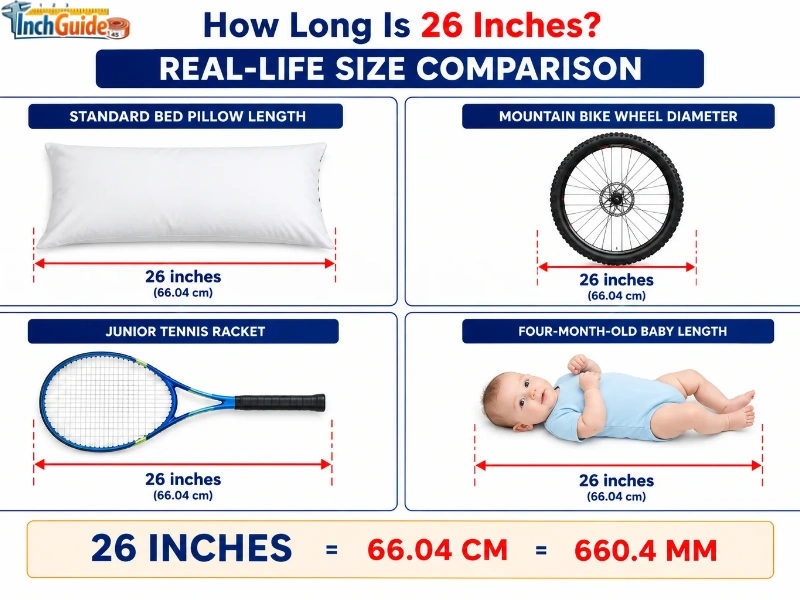

26 inches is equal to 66.04 centimeters, 660.4 millimeters, or 2 feet 2 inches. It is a little longer than two feet and measures about two-thirds of a meter. You can picture this length by looking at a standard bed pillow’s long side, a 26-inch hair extension, or certain sports products made to this size.
Knowing this measurement can help when shopping online, checking product dimensions, planning a home project, or comparing an item with something you already own. However, the meaning of 26 inches depends on what you are measuring. It might describe an item’s length, width, height, diameter, or even the diagonal measurement of a screen.
This guide explains the exact conversions and shows how to estimate the size without relying on a ruler.
Related Guide: How Long Is 5 Inches?
26 Inches at a Glance
Here is a quick reference for converting 26 inches into commonly used measurement units.
| Measurement unit | Equivalent |
|---|---|
| Inches | 26 inches |
| Centimeters | 66.04 cm |
| Millimeters | 660.4 mm |
| Feet and inches | 2 ft 2 in |
| Decimal feet | 2.1667 ft |
| Meters | 0.6604 m |
| Yards | 0.7222 yd |
The simplest way to remember this measurement is two feet plus two inches. If you are more comfortable with metric measurements, remember that it is just over 66 centimeters.
26 Inches to CM
Twenty-six inches equals 66.04 centimeters.
To convert inches into centimeters, multiply the number of inches by 2.54. This works because one inch is defined as exactly 2.54 centimeters.
Calculation:
26 × 2.54 = 66.04 cm
This conversion is useful when a product’s dimensions are listed in inches but you usually measure in centimeters. For example, if an online listing describes a 26-inch item, you can use 66.04 cm to compare it with the space available on a shelf, inside a cupboard, or across a table.
For everyday estimating, you can round the result to 66 cm. Use the more precise figure when a small difference matters, such as when fitting a component or checking a planned opening.
26 Inches to MM
Twenty-six inches is equal to 660.4 millimeters.
A millimeter is one-tenth of a centimeter, so millimeters are useful for more detailed measurements. They often appear in technical drawings, workshop instructions, product specifications, and manufacturing measurements.
The conversion is straightforward:
26 × 25.4 = 660.4 mm
You can also convert the centimeter result into millimeters:
66.04 × 10 = 660.4 mm
If you are measuring a board, metal part, or other material, 660.4 mm gives you the precise equivalent of 26 inches. Do not round the value too early if you need a close fit.
26 Inches to Feet
Twenty-six inches equals 2 feet and 2 inches, or approximately 2.17 feet.
There are 12 inches in one foot. Divide 26 by 12 to convert the measurement into decimal feet:
26 ÷ 12 = 2.1667 feet
For most everyday situations, the feet-and-inches format is easier to picture. Start with a two-foot length, then add another two inches. That gives you the full measurement.
The distinction between decimal feet and feet plus inches is important. The decimal value 2.17 feet does not mean 2 feet and 17 inches. The decimal portion represents a fraction of a foot.
How Big Is 26 Inches?
Imagine measuring a straight line from one end to the other. That line would be 66.04 cm long, or slightly longer than two standard 12-inch rulers placed end to end.
It is a useful size for visualizing medium-length household items and some sports equipment. However, a measurement only makes sense when you know which dimension it describes.
For instance, a 26-inch pillow is measured along its long side, while a 26-inch bicycle wheel refers to a nominal wheel size. A screen advertised as 26 inches is normally measured diagonally, from one corner of the display to the opposite corner.
These are all different ways to describe size. They should not be treated as interchangeable measurements.
For More: How Long Is 7 Inches?
How Long Is 26 Inches Compared to an Object? 9 Everyday Examples
The following examples can help you imagine the measurement. Some are made to a stated 26-inch size, while others are approximate comparisons. Always check the product specifications before using an object as a precise measuring reference.
1. Standard Bed Pillow Length
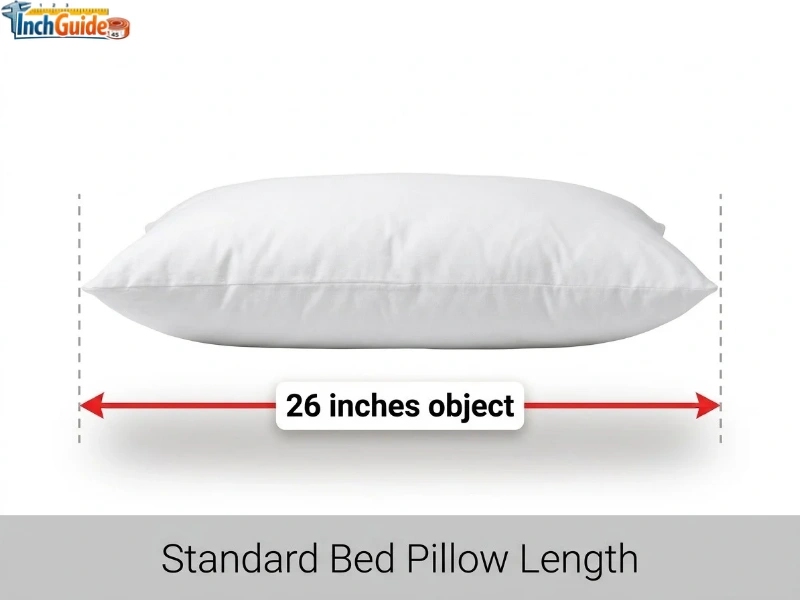
A standard bed pillow measuring 20 × 26 inches is a simple way to picture this length. Its longer side measures 26 inches, which equals 66.04 cm.
Place the pillow flat on your bed and look from one short end to the other. This gives you a familiar reference for understanding how long 26 inches is.
Pillow sizes can vary between brands, so check the label before using one as a precise measurement guide.
2. Mountain Bike Wheel Diameter
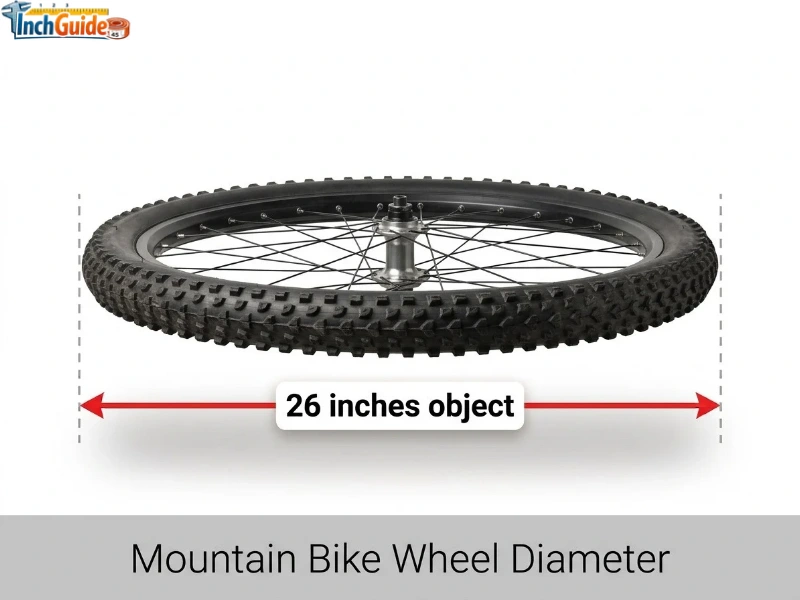
A traditional 26-inch mountain bike wheel can help you visualize a measurement of this size. The label refers to a nominal wheel size rather than necessarily indicating the tire’s exact outside diameter.
The overall diameter depends on the rim and the tire fitted to it. A wider tire may make the complete wheel larger than you expect from the label alone.
Use the wheel as a general visual comparison. If you need an accurate diameter, check the bicycle or tire manufacturer’s specifications.
3. Junior Tennis Racket
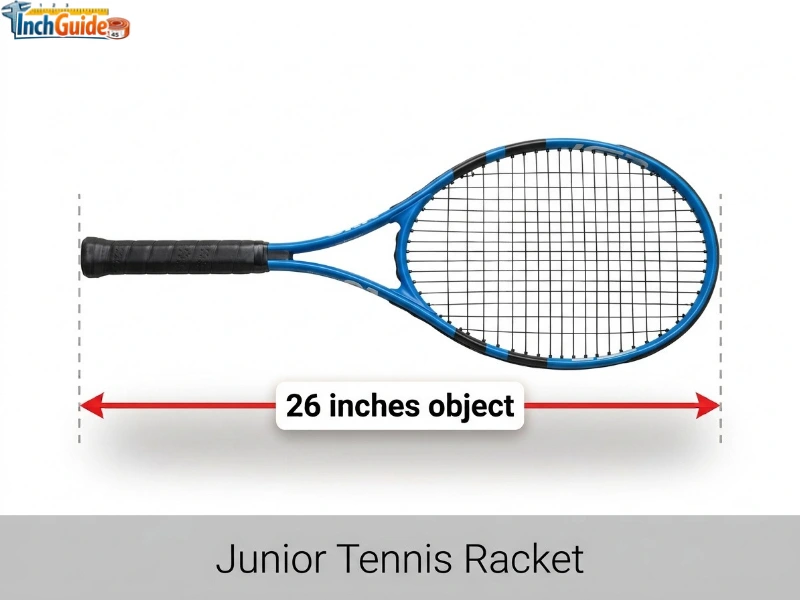
Some junior tennis rackets measure 26 inches from the end of the handle to the farthest point of the racket head. This makes them a useful example of a straight length close to 66 cm.
These rackets are designed for young players who need equipment suited to their size and playing ability. Their long, narrow shape also makes the measurement easy to picture.
Not every junior racket is 26 inches long. Check the product details to confirm the exact length before using it as a reference.
4. Tenor Ukulele Length
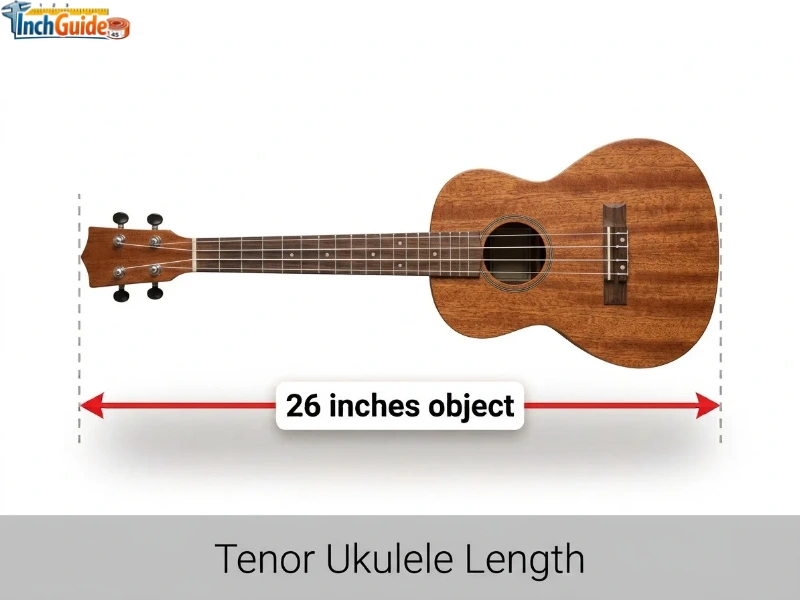
A tenor ukulele can measure around 26 inches from the top of its headstock to the bottom of its body. This overall length is close to 66.04 cm.
Its compact shape makes it an interesting comparison for understanding how much space 26 inches occupies. You can picture the measurement by looking along the instrument from one end to the other.
The exact length depends on the model and manufacturer. Also, do not confuse the overall length with the scale length, which measures the vibrating portion of the strings.
5. Youth Baseball Bat
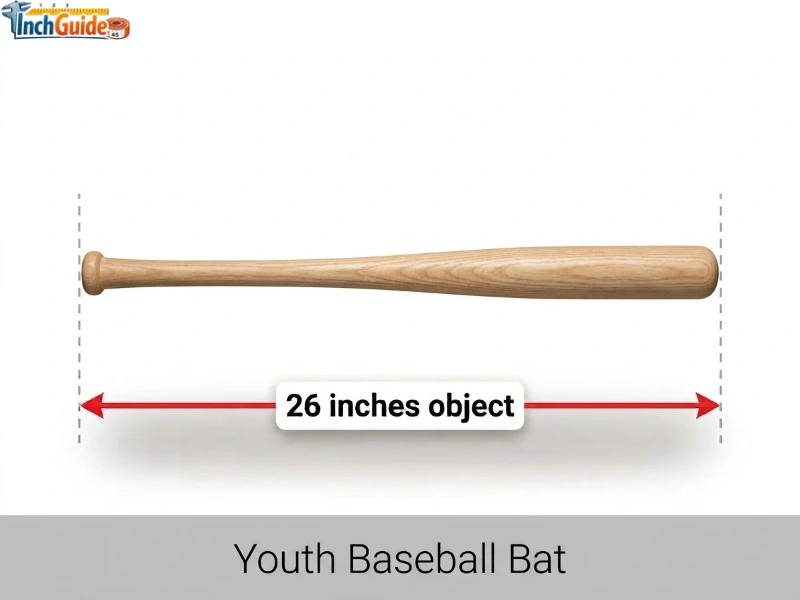
Some youth baseball bats have an overall length of 26 inches. The measurement runs from the knob at the bottom of the handle to the far end of the barrel.
This gives you a straight, easy-to-picture example of a length measuring 66.04 cm. Because a bat is long and narrow, you can compare it with other objects without needing to estimate its width.
Youth bats come in several sizes to suit different players. Check the manufacturer’s stated length instead of assuming every bat for children measures 26 inches.
6. Counter-Height Bar Stool Seat Height

Some counter-height bar stools have a seat height between 24 and 26 inches. A stool with a 26-inch seat height measures about 66.04 cm from the floor to the top of the seat.
This comparison can help you imagine the height of a stool beside a kitchen island or counter. It is especially useful when planning seating for a home dining area.
Remember that seat height is not the same as the stool’s total height. If the stool has a backrest, the full product will be taller, so check both dimensions before buying.
Visit Also: How Long Is 11 Inches?
7. French Baguette Length
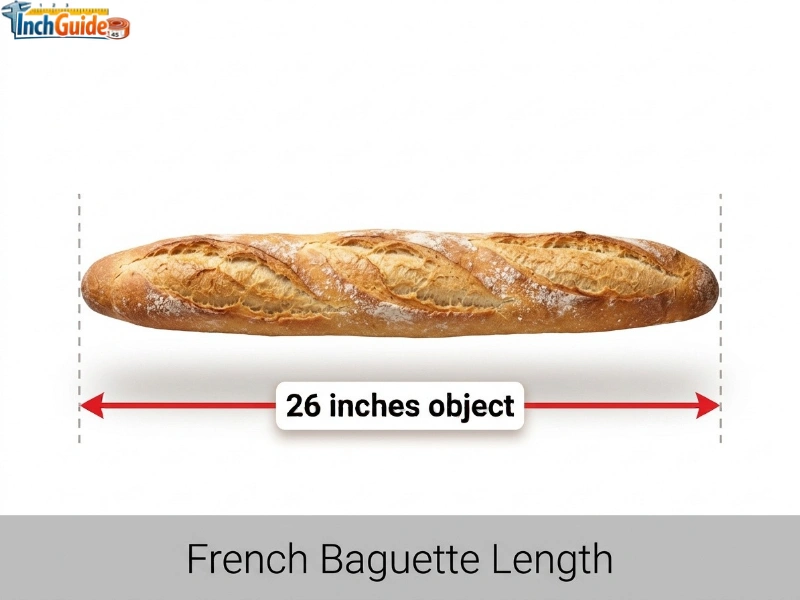
A long French baguette may measure around 25.5 to 26 inches, depending on how it is made. This is approximately 65–66 cm, making it a familiar food-based comparison.
Place the baguette straight on a clean surface to get a better sense of its end-to-end length. Its narrow shape makes it easier to visualize a measurement than a round loaf would.
Baguettes are not made to one universal size. Treat this as an approximate reference rather than an exact way to measure 26 inches.
8. Medium Checked Suitcase Height

Some medium checked suitcases measure around 24 to 26 inches in height, depending on their design and brand. A case measuring 26 inches tall is approximately 66 cm high.
Imagine the distance from the bottom of the suitcase to its highest fixed point. This can help you picture how tall a medium-sized travel case may be when standing upright.
Manufacturers do not always measure luggage in the same way. Some dimensions include the wheels and handles, while others list the case body separately, so check the product specifications before comparing sizes.
9. Four-Month-Old Baby Length

Some babies around four months old may measure approximately 24.5 to 26 inches in length. At 26 inches, the measurement is equal to 66.04 cm.
Baby length is generally measured while the child lies on a flat surface, from the top of the head to the heel. This provides a general way to picture the distance from one end of the body to the other.
Growth differs from one child to another, so this range is only an approximate comparison. A baby’s age alone cannot determine their length; growth charts and guidance from a healthcare professional are more appropriate for assessing individual growth.
How Long Is 26 Inches on a Measuring Tape?
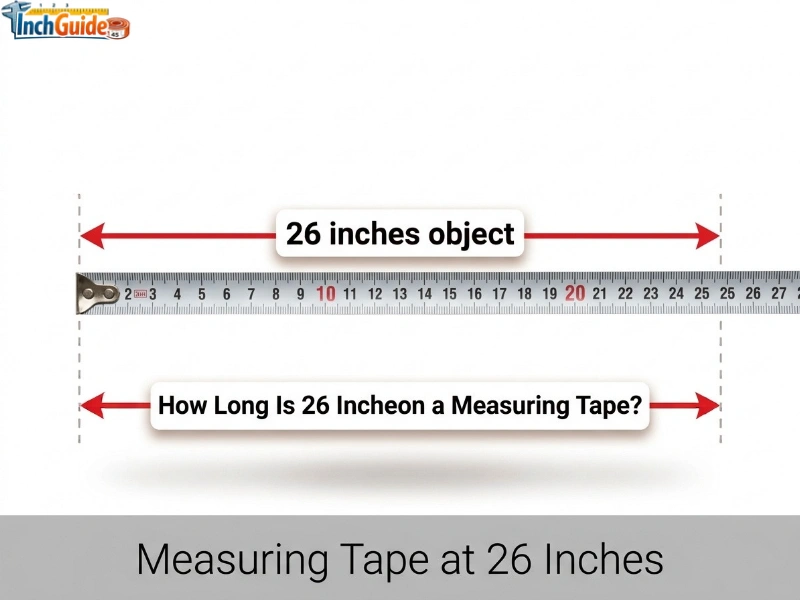
To find 26 inches on a standard tape measure, start at the zero mark and follow the scale to the 26-inch mark. You will pass the 12-inch mark at one foot and the 24-inch mark at two feet.
The 26-inch mark sits two inches beyond the two-foot point. If your tape measure displays feet and inches, look for the 2-foot mark and continue to the 2-inch mark after it.
For a metric tape measure, look for 66.04 cm. Many tapes show centimeters and millimeters, but some only display whole centimeters clearly. In that case, 66 cm is a convenient approximation for everyday tasks.
Keep the tape straight and avoid measuring from the metal hook’s outer edge if the tape’s zero point is designed to compensate for the hook’s movement. A correct starting point makes a difference when you need an accurate result.
See Also: How Long Is 13 Inches?
26 Inches Compared With 24, 25, 27, and 30 Inches
Comparing nearby measurements helps show how much longer or shorter an object is.
| Measurement | In centimeters | Difference from 26 inches |
|---|---|---|
| 24 inches | 60.96 cm | 2 inches shorter |
| 25 inches | 63.5 cm | 1 inch shorter |
| 26 inches | 66.04 cm | Reference measurement |
| 27 inches | 68.58 cm | 1 inch longer |
| 30 inches | 76.2 cm | 4 inches longer |
The difference between 25 and 26 inches is just one inch, or 2.54 cm. You may notice that change when fitting a product into a tight space, but it can be difficult to judge by sight alone.
A 30-inch item is four inches longer than a 26-inch item. That difference is 10.16 cm, which is more noticeable when comparing two straight objects placed side by side.
When checking product sizes online, compare the actual listed dimension rather than relying on a photograph. Perspective can make two items of different lengths appear similar.
Is 26 Inches More Than 2 Feet?
Yes. Twenty-six inches is 2 feet and 2 inches.
Two feet equal 24 inches, so subtracting 24 from 26 leaves two extra inches. In metric units, that additional length is 5.08 cm.
This is a simple way to estimate the measurement without doing a full conversion. Picture a two-foot line, then extend it by another two inches.
Remember that two feet is not the same as 26 inches. The extra two inches may matter when checking a shelf opening, measuring a piece of material, or deciding whether an item will fit into a storage space.
Is 26 Inches Close to 66 Centimeters?
Yes. Twenty-six inches equals 66.04 cm, which is only 0.04 cm more than 66 cm.
That difference is 0.4 millimeters, so rounding the measurement to 66 cm is usually fine for rough estimates. It may not be appropriate for a task that requires precise fitting or manufacturing tolerances.
If a product listing gives dimensions in whole centimeters, you may see the value rounded to 66 cm. If it uses two decimal places, the equivalent is 66.04 cm.
Use the exact conversion when accuracy matters and the rounded figure when you only need a quick mental picture.
How to Estimate 26 Inches Without a Ruler
You do not always need a measuring tool to get a rough idea of this length. A few simple methods can help, although none should replace an actual measurement when precision matters.
- Start with two feet: Two feet equal 24 inches. Add two more inches to reach 26 inches.
- Use a known object: A standard 20-by-26-inch bed pillow may provide a useful comparison if you confirm its size.
- Convert to centimeters: Think of the measurement as approximately 66 cm.
- Mark the endpoints: If you have a straight edge or a piece of string, mark the start and end points, then compare the distance with a known measurement.
- Check the product label: If the item is manufactured to a stated size, its packaging or specifications may be more reliable than estimating by sight.
Your hand span or footsteps can be useful for rough estimates, but their sizes differ from person to person. Avoid assuming that a hand, stride, or arm length equals a fixed number of inches.
Where You May Encounter a 26-Inch Measurement
This length can appear in different settings, from home furnishings to sports equipment and personal accessories. The same number may describe different dimensions depending on the product.
- At home: A pillow’s long side or a panel’s width may be close to this measurement.
- In sports: Selected junior rackets, youth bats, and bicycle products may carry a 26-inch size designation.
- In personal accessories: Hair extensions are available in a stated 26-inch length.
- With electronics: A screen may use a 26-inch diagonal measurement.
- During home projects: Boards and panels can be cut to a width or length of 26 inches.
These examples are not all measured in the same way. A screen’s diagonal, a wheel’s nominal size, and a board’s width should be checked separately before you compare them with a space or another object.
Why a 26-Inch Product May Have Different Overall Dimensions
A product’s advertised size does not always describe its entire outside measurement. Some labels refer to one specific part, while other dimensions are used as product categories or nominal sizes.
For example, a 26-inch screen is measured diagonally across the display. Its outer frame can make the complete device larger than the screen itself. A bicycle wheel’s stated size may also differ from the full outside diameter of the tire.
Clothing accessories and soft products can have their own measurement methods. Hair extensions may be measured when straight, while a stuffed toy’s height may change with its posture.
Before ordering, look for a dimension diagram or a specification table. Check the exact measurement you need, whether it is length, width, height, diameter, diagonal, or overall size.
Common Mistakes When Visualizing 26 Inches
A few small errors can lead to the wrong estimate or an unsuitable purchase.
- Confusing inches with centimeters: Twenty-six inches is 66.04 cm, not 26 cm.
- Treating 26 inches as exactly two feet: Two feet equal 24 inches, so the measurement includes two additional inches.
- Mixing up diagonal and width: A 26-inch display does not usually have a 26-inch horizontal edge.
- Assuming nominal sizes are exact outside dimensions: Bicycle wheel labels and other product categories may use standard size names rather than the precise outside measurement.
- Trusting photographs alone: Camera angles and perspective can make objects look larger or smaller.
- Rounding too early: Approximately 66 cm is fine for estimating, but use 66.04 cm when you need the exact conversion.
The easiest way to avoid these mistakes is to confirm both the unit and the dimension being measured.
26 Inches Quick Reference
Use this summary when you need the conversion without reading the full guide again.
| Question | Answer |
|---|---|
| How long is 26 inches in centimeters? | 66.04 cm |
| How many millimeters are in 26 inches? | 660.4 mm |
| How many feet is 26 inches? | 2.1667 feet |
| What is 26 inches in feet and inches? | 2 feet 2 inches |
| How many meters is 26 inches? | 0.6604 m |
| Is 26 inches longer than 2 feet? | Yes, by 2 inches |
| Is 26 inches close to 66 cm? | Yes, by just 0.04 cm |
Explore more measurement guides for easy size comparisons.
FAQs
1. How long is 26 inches in centimeters?
Twenty-six inches equals 66.04 centimeters. You can calculate this by multiplying 26 by 2.54, the exact number of centimeters in one inch.
2. How many millimeters are in 26 inches?
Twenty-six inches equals 660.4 millimeters. Multiply the inch measurement by 25.4 to convert it into millimeters.
3. How many feet is 26 inches?
Twenty-six inches equals 2.1667 feet, or 2 feet and 2 inches. The feet-and-inches format is often easier to understand for everyday measurements.
4. Is 26 inches more than 2 feet?
Yes. Two feet equal 24 inches, which means 26 inches is two inches longer than two feet.
5. How big is 26 inches compared with a meter?
A meter is 100 centimeters long, while 26 inches equals 66.04 centimeters. Therefore, 26 inches is about 66% of a meter, or a little under two-thirds of a meter.
6. What does 26 inches look like in real life?
You can picture it using the long side of a standard 20-by-26-inch bed pillow or a product specifically made to measure 26 inches. The comparison depends on the object’s stated dimension.
7. How can I measure 26 inches without a ruler?
For a rough estimate, picture two feet plus two inches, or about 66 cm. If you need an accurate result, use a tape measure or a verified object with known dimensions.
8. Does a 26-inch product always measure 26 inches overall?
No. The number may describe a particular dimension, such as a screen’s diagonal, a panel’s width, or a nominal wheel size. Check the manufacturer’s specifications to understand what the measurement represents.
Conclusion
Twenty-six inches equals 66.04 cm, 660.4 mm, and 2 feet 2 inches. It is slightly longer than two feet, making it easier to picture when you start with a familiar length and add two inches.
Real-world examples can help you estimate the size, but the most useful comparison is one with a clearly defined dimension. A pillow’s long side, a straight hair extension, or a product made to a stated length can help you visualize the distance. For screens, wheels, and round objects, remember to check whether the number refers to a diagonal, nominal size, or diameter.
When precision matters, use a tape measure and confirm the exact dimension listed by the manufacturer. A quick conversion is useful for understanding size, while an actual measurement helps ensure that an item will fit where you need it.