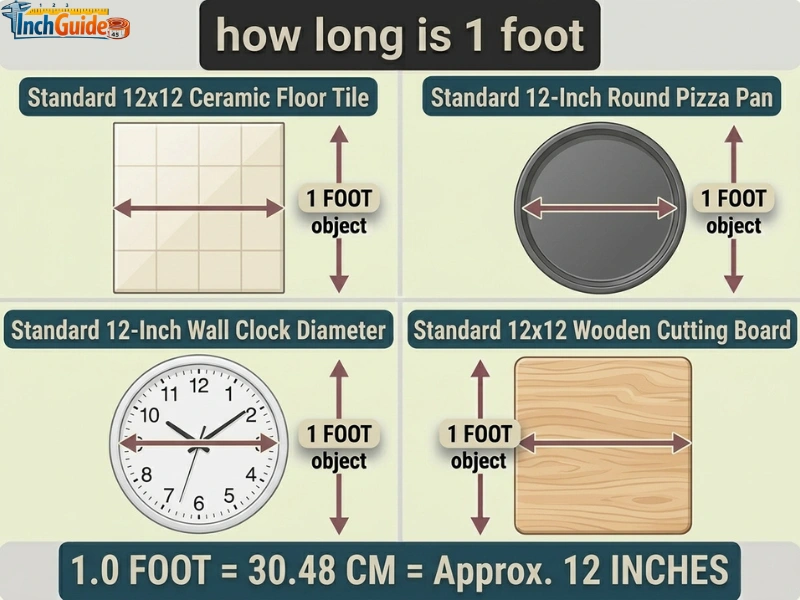

How long is 1 foot? 1 foot is 12 inches, which is exactly 30.48 centimeters or 0.3048 meters. It is a common unit of length used to measure furniture, building materials, household items, and many everyday objects. If you picture a 12-inch measurement, you are picturing 1 foot.
You can understand this length more easily by comparing it with familiar things around your home. A 12 × 12 ceramic floor tile, a 12-inch aluminum foil roll, and a 12-inch wall clock can all provide useful visual references. Some objects have an exact 12-inch measurement, while others are close to it or use 12 inches as a nominal product size.
This guide explains the exact conversions and uses 11 familiar objects to help you understand how long 1 foot is in real life. You will also learn how to estimate this length without a measuring tape and where this measurement is commonly used.
Related Guide: How Long Is 2 Feet?
1 Foot in Different Units
Before comparing everyday objects, it helps to know the exact value of 1 foot in other measurement units. The table below gives the standard conversions.
| Measurement unit | Equivalent |
|---|---|
| Inches | 12 inches |
| Centimeters | 30.48 cm |
| Millimeters | 304.8 mm |
| Meters | 0.3048 m |
| Yards | 0.3333 yards |
| Feet | 1 foot |
These values are based on the standard definition of a foot. One foot always contains 12 inches, and the metric conversions remain the same wherever you use them.
1 Foot in Inches: How Many Inches Is 1 Foot?
One foot equals 12 inches. This is the most important conversion to remember because inches and feet are commonly used together in the United States and other places that use customary measurements.
For example, a 24-inch shelf is 2 feet long, while a 36-inch board is 3 feet long. The same rule works when converting smaller measurements into feet. You simply divide the number of inches by 12.
Here are a few simple examples:
- 6 inches = half a foot
- 12 inches = 1 foot
- 18 inches = 1.5 feet
- 24 inches = 2 feet
- 36 inches = 3 feet
If you have an object that measures 12 inches from one end to the other, its length is exactly 1 foot. Remember that the measurement must describe the correct dimension. A product with a 12-inch diameter is 1 foot across its widest circular measurement, not necessarily 1 foot tall or long.
1 Foot in CM: How Many Centimeters Is 1 Foot?
One foot is equal to 30.48 centimeters. This is the exact metric conversion, not a rounded estimate. It is useful when comparing measurements from countries that commonly use centimeters instead of feet and inches.
For quick mental calculations, you can think of 1 foot as approximately 30.5 cm. However, use 30.48 cm when you need a precise result for a project, product measurement, or calculation.
For example:
- 1 foot = 30.48 cm
- 2 feet = 60.96 cm
- 3 feet = 91.44 cm
- 4 feet = 121.92 cm
The difference between 30 cm and 30.48 cm is small, but it can matter when you are measuring materials that need to fit together. A 30 cm object is slightly shorter than 1 foot by 0.48 cm.
1 Foot in Meters, Millimeters, and Yards
You can also express this measurement in meters, millimeters, and yards. These conversions are useful in construction, engineering, schoolwork, and everyday measuring.
- Meters: 1 foot equals 0.3048 meters. It is a little more than three-tenths of a meter.
- Millimeters: 1 foot equals 304.8 millimeters. This smaller unit is useful for detailed measurements.
- Yards: 1 foot equals one-third of a yard, or approximately 0.3333 yards.
- Inches: 1 foot contains 12 inches.
A simple way to remember the relationship is that 3 feet make 1 yard. Therefore, if you have three lengths of 1 foot placed end to end, their combined length is 1 yard.
What Does 1 Foot Look Like in Everyday Life?
A 12-inch length is easy to picture when you compare it with objects that have familiar dimensions. It is roughly the length of a short household item or the width of some common products.
However, not every object described as a 12-inch item measures exactly 12 inches in every direction. Product labels often refer to a nominal size, which may differ slightly from the item’s finished dimensions. For example, a tile may be sold as 12 × 12 inches even though its actual measurements are a little smaller.
When making a comparison, check whether you are looking at the object’s length, width, height, diameter, or another dimension. This makes the comparison more useful and prevents confusion.
For More: How Long Is 3 Feet?
11 Common Objects That Are About 1 Foot Long
The following objects provide practical ways to imagine a 12-inch measurement. Some have a stated 12-inch size, while others are approximate references. Always check the product’s actual dimensions if you need an accurate measurement.
1. Standard 12×12 Ceramic Floor Tile
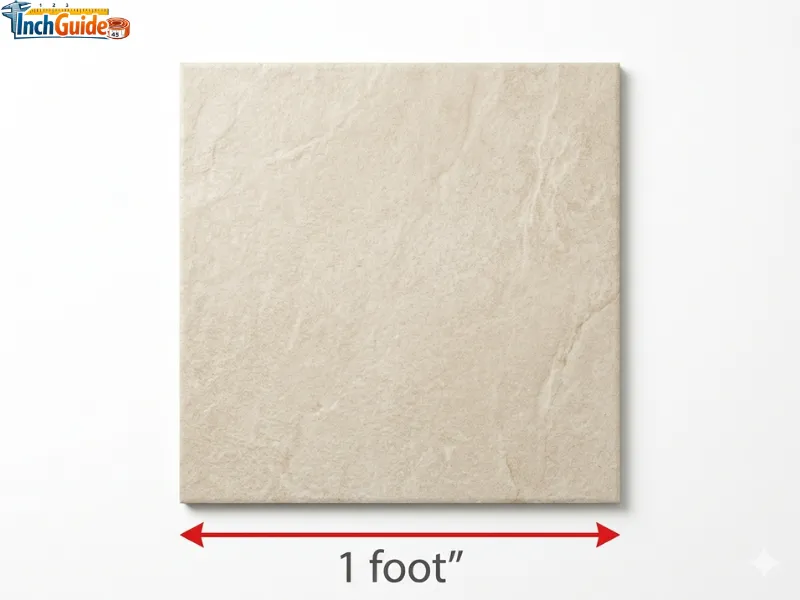
A standard 12 × 12 ceramic floor tile is sold with a nominal size of 12 inches on each side. That means its listed width and length are each designed around a 1-foot measurement. Looking at one side of the tile gives you a useful visual idea of this length.
Keep in mind that the finished tile may measure slightly less than 12 inches. Manufacturers sometimes make small adjustments to allow for grout joints and installation spacing. The actual dimensions can also differ between brands and product ranges.
Even with that small difference, a 12 × 12 tile is a helpful reference. Imagine measuring one side from corner to corner along its edge. That side represents approximately 1 foot.
2. Standard 12-Inch Round Pizza Pan
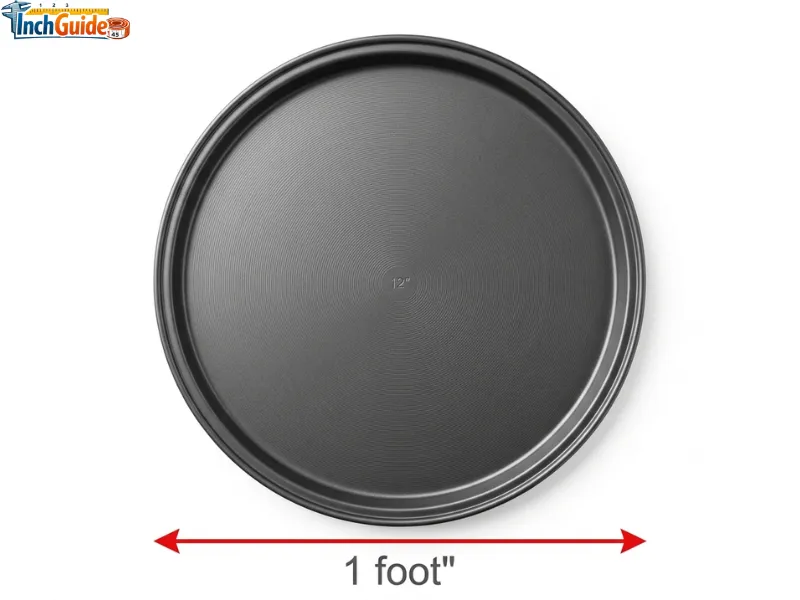
A 12-inch round pizza pan is another familiar way to picture a foot-long measurement. The 12-inch label usually refers to the pan’s nominal diameter. In other words, it describes the distance across the round pan rather than the distance around its edge.
Place the pan on a flat surface and imagine a straight line running through its center from one side to the opposite side. That line gives you the diameter. On a pan sold as 12 inches, this measurement is intended to be about 1 foot.
The usable cooking surface may be smaller if the pan has raised edges or a different design. For a more accurate comparison, check the manufacturer’s listed dimensions instead of assuming every 12-inch pan has an identical diameter.
3. Reynolds Wrap 12-Inch Aluminum Foil Width
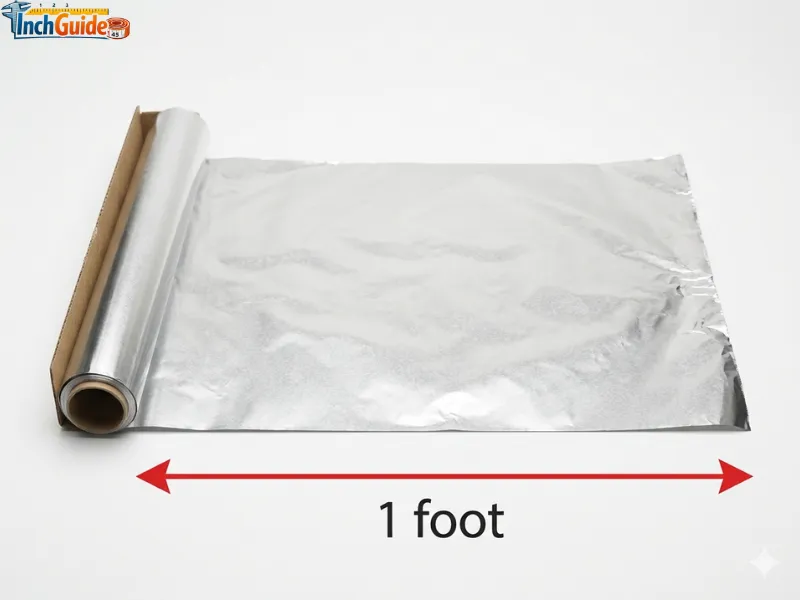
A Reynolds Wrap aluminum foil roll labeled 12 inches wide provides a convenient household reference. The width tells you how far the foil extends from one side to the other when you pull out a sheet. That measurement is designed to be 12 inches, which equals 1 foot.
You can picture the measurement by cutting a piece of foil and looking at its shorter side. If the roll is the 12-inch-wide version, the sheet’s width gives you a direct reference for a foot-long distance.
The length of foil you pull from the roll is a separate measurement. A sheet can be 12 inches wide but several feet long, depending on how much foil you unroll. Always compare the width, not the amount of foil pulled from the roll.
4. Standard 12-Inch Wall Clock Diameter
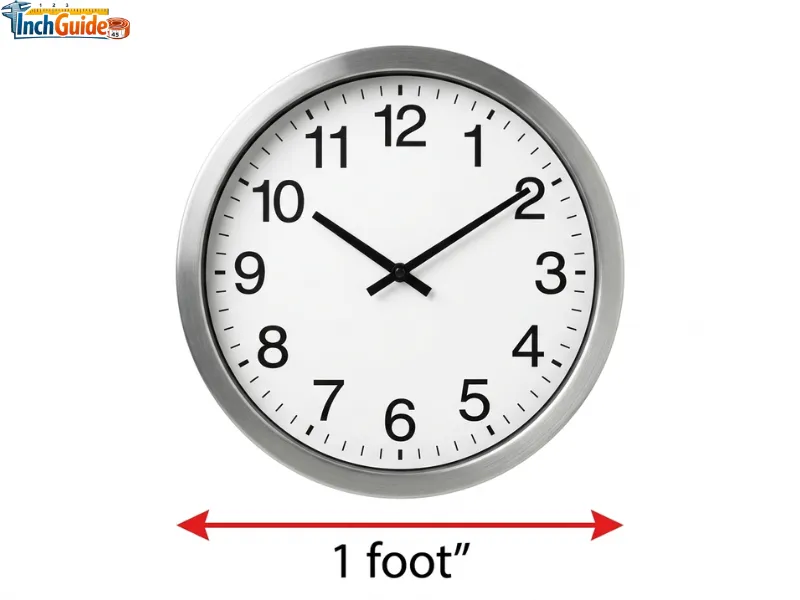
A wall clock sold as a 12-inch model can help you visualize a foot-long distance. Its listed size generally refers to the diameter of the clock, measured across the circular face or the overall clock body, depending on the manufacturer.
To picture the measurement, imagine a straight line passing through the center of the clock. It starts at one outer edge and ends at the opposite edge. On a clock with a 12-inch diameter, this distance is approximately 1 foot.
Some clocks include a thick frame, decorative outer edge, or raised features. These can affect the overall size. Check the product details to see whether the listed diameter describes the face or the complete clock.
5. Standard Hanging File Folder Length
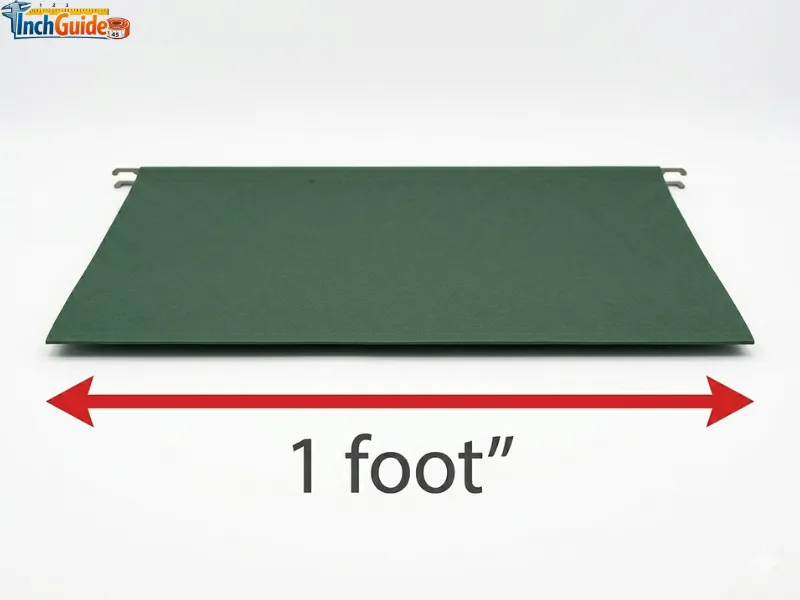
A hanging file folder is a useful office reference because its dimensions are made to fit inside filing drawers and cabinets. However, not every standard hanging file folder is exactly 12 inches long. Its size depends on the paper format and folder design.
Some letter-size hanging folders are close to a 1-foot reference along one dimension, while other measurements can extend beyond 12 inches. The hooks or hanging rails may also add to the folder’s overall width.
If you use this object as a comparison, measure the folder itself from one end to the other rather than relying on the word “standard.” A folder that measures 12 inches along the selected side represents 1 foot; a longer model is only a nearby reference.
6. Standard 12×12 Wooden Cutting Board
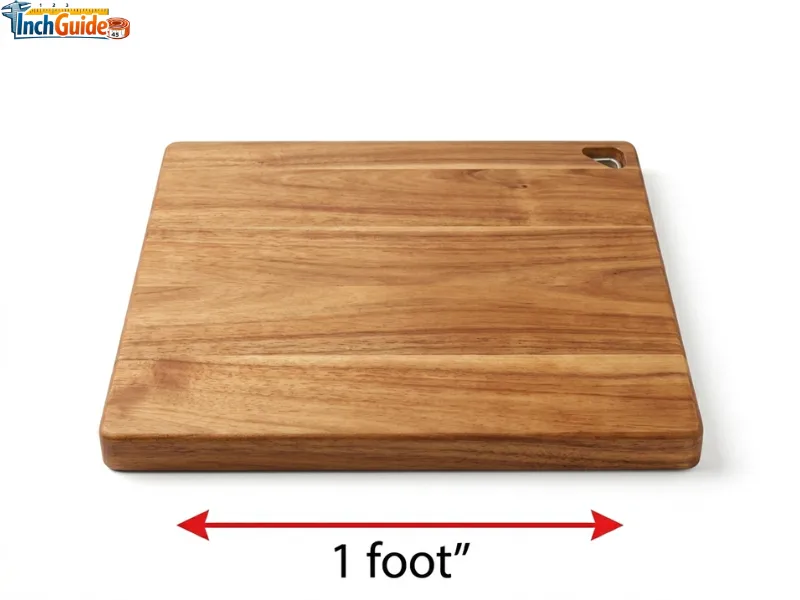
A wooden cutting board sold as 12 × 12 inches is designed around a square shape with sides measuring about 1 foot each. It offers a practical example because the measurement is easy to see along the straight edge of the board.
Place the cutting board on a kitchen counter and look at one side. The distance from one corner to the next along that edge is intended to be around 12 inches. This gives you a useful picture of a foot-long measurement without needing to imagine a long or narrow object.
The exact size can vary with the manufacturer, wood type, and finished design. Some boards have rounded corners or handles that change their overall dimensions. Check the listed measurements if you need the board to fit a particular space.
7. Men’s US Size 12 Shoe Insole
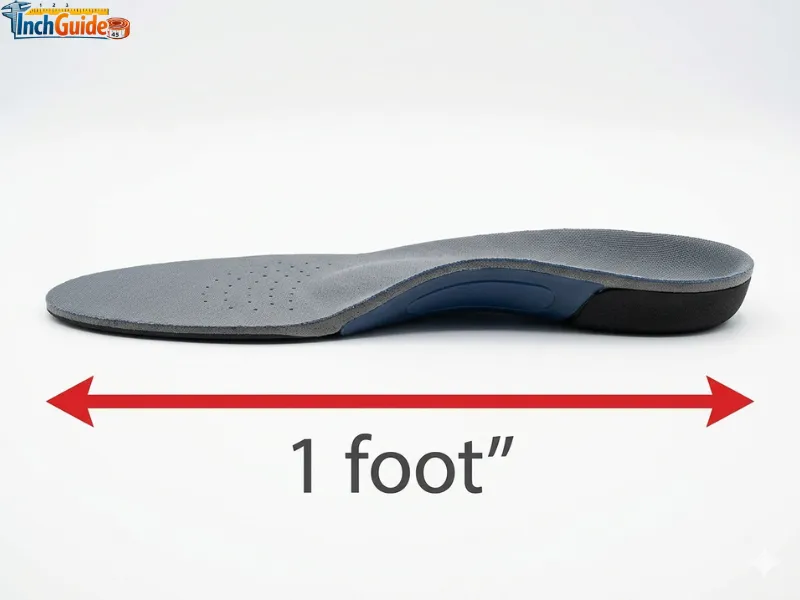
A men’s US size 12 shoe can offer a rough visual reference for a foot-long distance. The insole inside a shoe of this size may be around 12 inches long, but the exact measurement depends on the brand, shoe shape, and sizing system.
The insole is the part that rests beneath the foot. To check its length, remove it if the shoe allows and measure from the heel end to the toe end. This gives you a more useful comparison than measuring the outside of the shoe, which may include extra material around the toe and heel.
Do not assume every size 12 shoe has a 12-inch insole. Shoe sizes describe a size category, not a guaranteed measurement in inches. Use this example as an estimate and check the actual insole when accuracy matters.
8. Standard Kraft Paper Roll Width
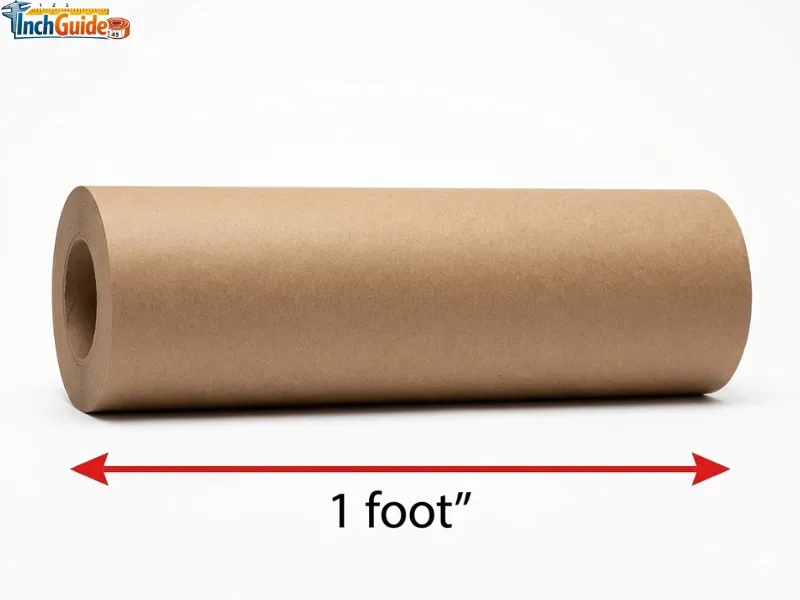
Kraft paper is commonly sold in rolls for wrapping, packaging, crafts, and school projects. Some rolls are available in a 12-inch width, giving you a direct reference for 1 foot. The width is measured from one edge of the paper to the other when a sheet is unrolled.
If you have a roll labeled 12 inches wide, pull out a short piece and look across its width. That side-to-side distance represents one foot. The paper can continue for many feet in the direction you unroll it, but its width stays the same.
Not all kraft paper rolls are 12 inches wide. They are available in different widths, so check the package label or product specifications before using one as a measuring reference.
9. Standard 2-Liter Soda Bottle Height
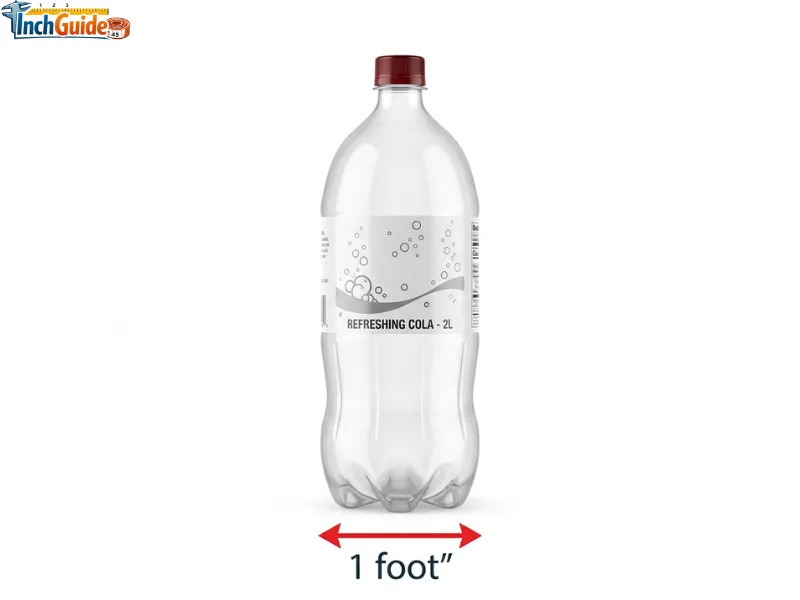
A 2-liter soda bottle can help you picture a measurement close to 1 foot. Many familiar bottles are around a foot tall, although their height changes with the bottle’s shape, brand, and packaging design.
To compare it with a 12-inch length, measure from the bottom of the bottle to the top of its cap. This is the overall height. Some bottles have a wider body and shorter shape, while others are taller and narrower.
A 2-liter label tells you the bottle’s capacity, not its height. That is why this example should be treated as an approximate reference rather than an exact 12-inch object. If you need a precise comparison, measure the bottle you have at home.
10. Standard 12-Inch Charger Plate
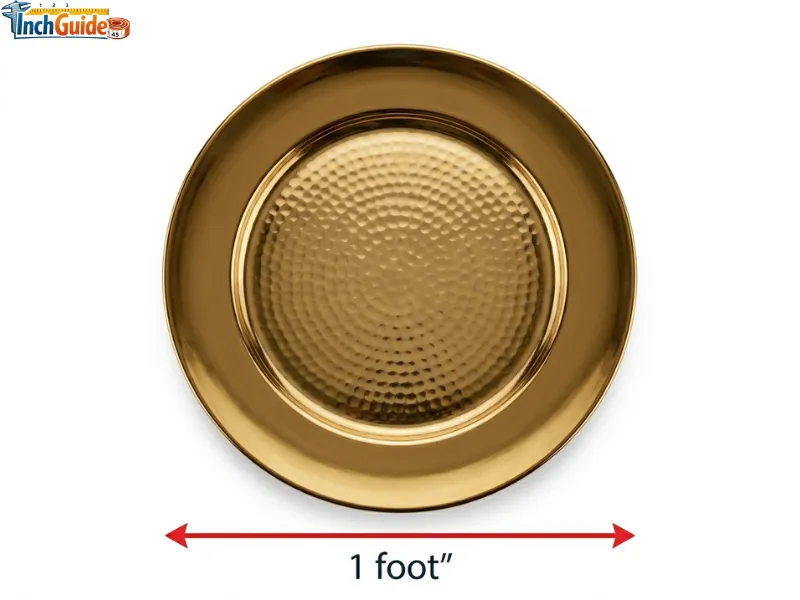
A 12-inch charger plate is a large decorative plate placed beneath dinnerware at a table setting. Its listed diameter can give you a helpful visual example of a foot-long measurement. The distance across the center of the plate is the dimension to compare.
Imagine drawing a straight line from one edge of the plate to the opposite edge, passing through the middle. If the charger is designed with a 12-inch diameter, that line is approximately 1 foot long.
Charger plates come in different sizes, and decorative rims may affect the overall diameter. Some products are listed by their approximate outside measurement. Check the product description if you want to use one as a reliable measuring reference.
Visit Also: How Long Is 5 Feet?
11. Standard Vinyl Record Sleeve Width — 12-Inch Single
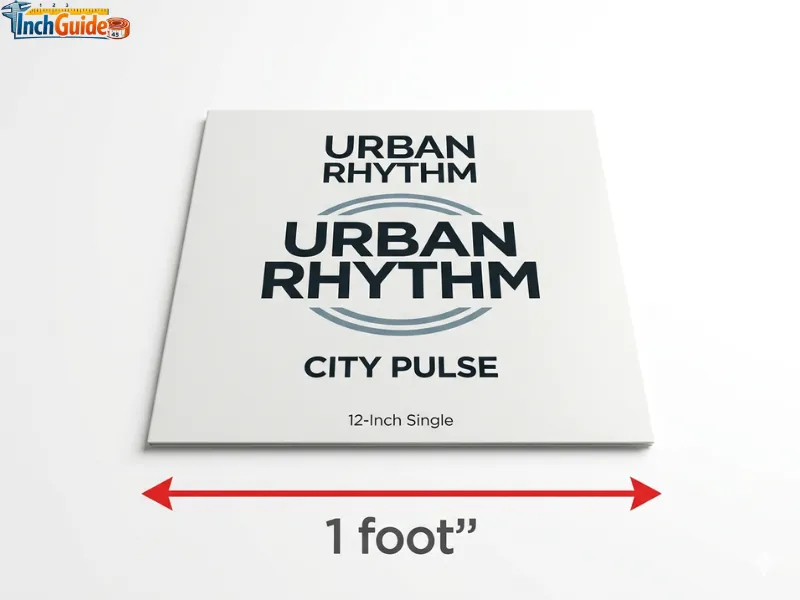
A 12-inch vinyl single is a familiar music format, and its record size gives you a useful starting point for picturing a foot-long measurement. The disc itself is commonly described as a 12-inch record because of its nominal diameter.
The outer paper or cardboard sleeve is usually a little wider than the record so it can hold the disc safely. That means the sleeve’s width may be greater than 12 inches. If you compare the sleeve with a foot-long distance, treat it as a close visual reference rather than an exact 12-inch measurement.
For a more accurate comparison, measure the record or sleeve separately. The disc diameter and sleeve width are two different dimensions, and the sleeve’s outer size depends on its design and manufacturer.
1 Foot vs 9 Inches vs 18 Inches
| Measurement | CM | Real-Life Object |
| 9.0 inches | 22.86 cm | Round cake pan, pillar candle |
| 10.0 inches | 25.40 cm | Standard pie pan, Fire HD 10 screen |
| 11.0 inches | 27.94 cm | 3-ring binder height, hacksaw blade |
| 12.0 inches | 30.48 cm | Floor tile, pizza pan, wall clock |
| 13.0 inches | 33.02 cm | Standard laptop screen diagonal |
| 15.0 inches | 38.10 cm | Standard laptop screen width |
| 18.0 inches | 45.72 cm | Standard carry-on bag short side |
How Does 1 Foot Compare With Other Common Lengths?
Comparing nearby measurements can make a foot easier to understand. A few inches may not seem like much, but the difference becomes noticeable when you place objects side by side.
| Length | Equivalent in inches | Difference from 1 foot |
|---|---|---|
| Half a foot | 6 inches | 6 inches shorter |
| 1 foot | 12 inches | Same length |
| 1.5 feet | 18 inches | 6 inches longer |
| 2 feet | 24 inches | 12 inches longer |
| 3 feet | 36 inches | 24 inches longer |
A 6-inch object is half as long as 1 foot. An 18-inch object is half a foot longer. A 24-inch object is twice as long, while 36 inches is three times the length.
These comparisons are useful when estimating the size of furniture, shelves, household items, and materials. They also help when reading product dimensions that use inches instead of feet.
How Can You Measure 1 Foot Without a Measuring Tape?
You do not always need a measuring tape to estimate a foot-long distance. A few everyday methods can help you get close, although a proper measuring tool is better when accuracy matters.
Try these methods:
- Use a 12-inch ruler: A standard 12-inch ruler gives you a direct reference. Place it beside the object and compare the length.
- Use a known 12-inch product dimension: If you own a product with a verified 12-inch width or diameter, use that dimension as a reference.
- Mark a straight line: If you know a surface is 12 inches long, mark its two endpoints. You can use the marked distance for a quick comparison.
- Use a measuring app carefully: Some phones offer measurement features through their cameras. These can help with estimates, but results may vary with lighting, camera position, and object shape.
- Compare with a measured piece of material: A strip of paper, wood, or cardboard cut to exactly 12 inches can serve as a reusable reference.
Avoid relying on hand spans, shoe sizes, or guessed body measurements when precision is important. These vary from person to person and can lead to noticeable errors.
Where Are One-Foot Measurements Commonly Used?
A foot-long measurement appears in many everyday settings. It is especially useful when an object is large enough that inches are convenient but not so large that yards are needed.
Common uses include:
- Home improvement: Tile edges, small shelves, trim pieces, and some building materials may be listed in 12-inch dimensions.
- Cooking and dining: Pans, trays, charger plates, and kitchen accessories may use inch-based product sizes.
- Office supplies: Paper products, folders, and storage accessories often list their width or length in inches.
- Packaging: Kraft paper, foil, and wrapping materials may be sold by roll width.
- Music equipment: Records, sleeves, and some audio components use nominal inch sizes.
- General measuring: A foot is useful for estimating short distances, checking furniture dimensions, and planning the placement of household objects.
The important point is to identify which side or dimension the measurement describes. A 12-inch diameter is not the same as a 12-inch height, and a product’s nominal size may not match its finished dimensions exactly.
Is 1 Foot the Same as 30 Centimeters?
No. One foot is exactly 30.48 centimeters, while 30 centimeters is slightly shorter. The difference is 0.48 cm, or 4.8 millimeters.
For a quick estimate, 30 cm is close enough to help you picture a foot-long distance. However, it should not replace the exact conversion when you are cutting materials, fitting parts, or completing a precise measurement task.
If you are converting between the two units, remember:
- 1 foot = 30.48 cm
- 30 cm = approximately 0.9843 feet
- 0.48 cm = 4.8 mm
This small difference is easy to overlook, but it can matter when two pieces need to fit together accurately.
See Also: How Long Is 6 Feet?
FAQs
1. How long is 1 foot exactly?
One foot is exactly 12 inches, 30.48 centimeters, or 304.8 millimeters. It is also equal to 0.3048 meters. These are standard conversions, so the values do not change between countries.
2. Is 1 foot longer than 30 cm?
Yes. One foot is 30.48 cm, making it 0.48 cm longer than 30 centimeters. The difference is small, but it matters when you need an accurate measurement.
3. How many inches make up one foot?
There are 12 inches in one foot. This is a fixed measurement relationship. For example, 24 inches equal 2 feet, and 36 inches equal 3 feet.
4. Is one foot half a yard?
No. One foot is one-third of a yard. A full yard contains 3 feet, or 36 inches.
5. What household objects are close to 1 foot long?
Some useful references include a 12 × 12 ceramic tile side, a 12-inch foil roll width, a 12-inch clock diameter, and a 12 × 12 cutting board side. Check the actual product dimensions because nominal sizes can differ from finished measurements.
6. Can I measure 1 foot with my hand?
You can use your hand to make a rough estimate, but it will not give you an exact result. Hand spans vary between people. Use a ruler or measuring tape when you need a reliable 12-inch measurement.
7. How many millimeters are in 1 foot?
One foot contains 304.8 millimeters. This conversion is useful for technical work, detailed measurements, and projects that use the metric system.
8. Why do some products labeled 12 inches measure slightly differently?
Many product sizes are nominal measurements. This means the label describes a standard or intended size rather than guaranteeing that every finished item measures exactly 12 inches. Manufacturing methods, edges, frames, and product designs can create small differences.
9. Is a 12-inch measurement the same as a 12-inch diameter?
Both describe a distance of 12 inches, but they refer to different dimensions. A 12-inch length measures from one end to another, while a 12-inch diameter measures straight across a circle through its center.
10. How can I convert inches into feet?
Divide the number of inches by 12. For example, 24 inches divided by 12 equals 2 feet. Similarly, 18 inches divided by 12 equals 1.5 feet.
Conclusion
1 foot is a short but useful measurement equal to 12 inches, 30.48 centimeters, and 0.3048 meters. It is commonly used for household products, building materials, office supplies, and everyday measuring tasks.
You can picture this length by looking at the side of a 12 × 12 ceramic tile, the width of a 12-inch foil roll, or the diameter of a 12-inch wall clock. Other objects, such as a 2-liter soda bottle, a men’s size 12 shoe insole, and a vinyl record sleeve, may provide approximate comparisons, but their dimensions can vary.
The easiest way to remember the measurement is simple: 12 inches make 1 foot. When you need an exact result, use a ruler or measuring tape and check the specific dimension you are measuring. This will help you avoid confusing an object’s height with its width, diameter, or overall length. every day, this measurement becomes effortless. You will never wonder what one foot looks like again.