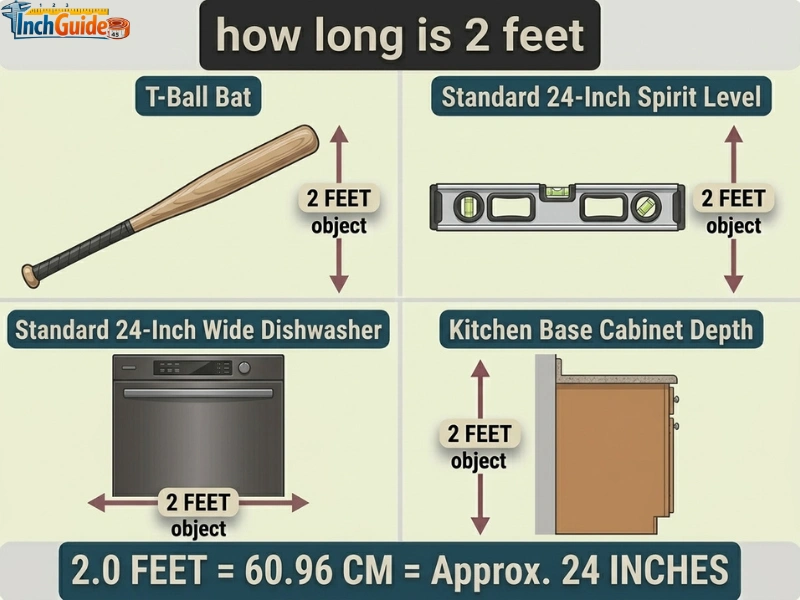

How long is 2 feet? 2 feet is equal to 24 inches, 60.96 centimeters, or 0.6096 meters. It is slightly longer than 60 centimeters and measures two-thirds of a yard. This length appears in many everyday items, including household furniture, sports equipment, tools, and appliances.
If you are trying to imagine how long 2 feet is without using a measuring tape, comparing it with familiar objects can make the measurement easier to understand. A 24-inch T-ball bat, a spirit level, or the width of a standard dishwasher can provide a helpful visual reference.
Not every object in this article measures exactly 24 inches. Some examples are close comparisons, while others have a specific product dimension. The actual size may vary depending on the manufacturer, model, and design.
Related Guide: How Long Is 1 Foot?
2 Feet In Conversion Table
| Unit | Value |
| Inches | 24 inches — exactly |
| Millimeters | 609.6 mm |
| Centimeters | 60.96 cm |
| Meters | 0.6096 m |
| Yards | 0.6667 yd — exactly two-thirds of a yard |
What Does a 2-Foot Length Actually Look Like?
Imagine placing two standard 12-inch rulers end to end. Their combined length would be 24 inches, which is exactly 2 feet. This gives you a simple way to picture the measurement without needing a special measuring tool.
In metric units, this distance is 60.96 cm. It is slightly longer than a 60-centimeter measuring stick, so that comparison can also help you understand its size.
A two-foot length is useful for visualizing medium-sized household objects. It is longer than a typical school ruler but shorter than many full-sized furniture pieces and appliances.
You may come across this measurement in different directions:
- Length: The end-to-end measurement of a tool or wooden log.
- Width: The side-to-side measurement of a shelf or appliance.
- Height: The vertical measurement of a luggage case or another object.
- Depth: The distance from the front to the back of a cabinet.
Remember that these dimensions describe different directions. An object can be two feet wide without being two feet tall or deep.
2 Feet in Inches: How Many Inches Is 2 Feet?
Two feet equals 24 inches. This conversion is simple because one foot always contains 12 inches. Therefore, multiplying 2 by 12 gives you the total number of inches.
The formula is:
Feet × 12 = Inches
For this measurement:
2 × 12 = 24 inches
So, if someone asks how many inches are in two feet, the answer is 24 inches.
You can use the same formula to convert other measurements:
- 1 foot = 12 inches
- 1.5 feet = 18 inches
- 2 feet = 24 inches
- 2.5 feet = 30 inches
- 3 feet = 36 inches
This conversion is especially useful when measuring furniture, shelves, tools, and building materials. Many product descriptions use inches, while people may be more familiar with feet.
2 Feet in CM: How Many Centimeters Is 2 Feet?
Two feet is equal to 60.96 centimeters. To calculate this conversion, you need to know that one foot contains 30.48 centimeters.
Multiply the number of feet by 30.48:
2 × 30.48 = 60.96 cm
This means a two-foot object measures slightly more than 60 centimeters. The difference is less than one centimeter, but it can matter when you need an accurate measurement.
Centimeters are commonly used for measuring household items, clothing, and smaller furniture dimensions. Inches and feet are also common in product specifications, particularly in countries that use the imperial measurement system.
For example, if a shelf is listed as 2 feet wide, its width is 60.96 cm. This makes it easier to compare the shelf with products whose dimensions are listed in metric units.
2 Feet in Meters, Millimeters, and Other Units
The same measurement can be expressed in several units. Knowing these conversions helps when reading product labels, comparing international measurements, or working on a home project.
Here are some useful equivalents:
- Meters: 2 feet = 0.6096 meters.
- Millimeters: 2 feet = 609.6 millimeters.
- Yards: 2 feet = approximately 0.667 yards.
- Centimeters: 2 feet = 60.96 centimeters.
- Inches: 2 feet = 24 inches.
To convert feet into meters, multiply by 0.3048. For millimeters, multiply by 304.8. These formulas also work for other foot measurements.
For example, if a shelf is listed as 2 feet wide, its width is 609.6 millimeters. If the same shelf is described in centimeters, its width is 60.96 cm.
These conversions are helpful when shopping online because manufacturers may list dimensions in different units. Always check whether the measurement refers to the item’s width, height, depth, or overall length.
Visit Also: How Long Is 3 Feet?
How Long Is 2 Feet Compared to an Object? 11 Common Examples
Looking at familiar objects is one of the easiest ways to understand a measurement. Some products are manufactured in a 24-inch size, while others have one dimension that comes close to this length.
The following examples show how a two-foot measurement appears in furniture, sports equipment, musical instruments, tools, and household appliances. Keep in mind that some examples are approximate rather than exact.
1. IKEA LACK Floating Shelf
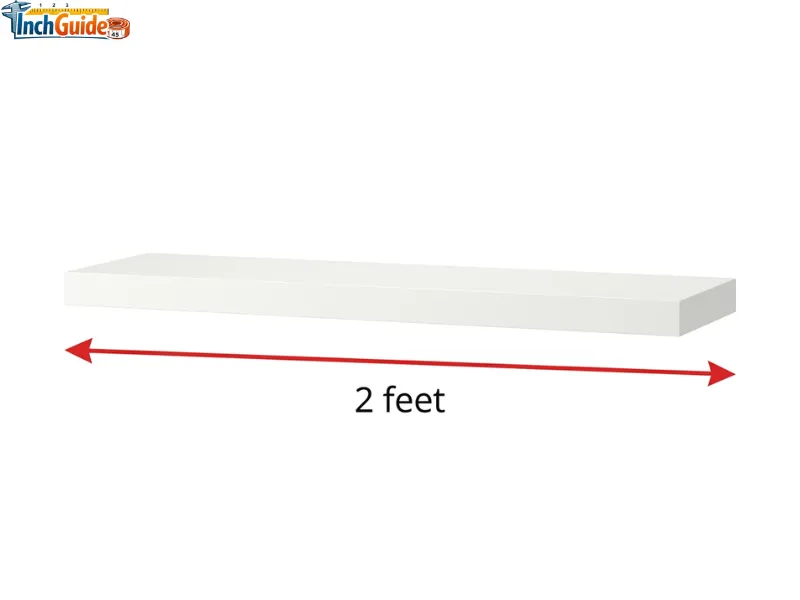
The IKEA LACK floating shelf is a useful example of an object that comes close to 2 feet in width. One commonly available model measures approximately 60 cm (23.62 inches) across, which is just 0.38 inches shorter than 2 feet.
This small difference makes the shelf a practical visual reference for understanding a 24-inch measurement. When you look at it from the front, its width is almost the same as the distance between two points placed 2 feet apart.
You can compare the shelf’s side-to-side width with two standard 12-inch rulers placed together. Although it is not exactly 2 feet wide, it provides a close everyday comparison.
2. T-Ball Bat
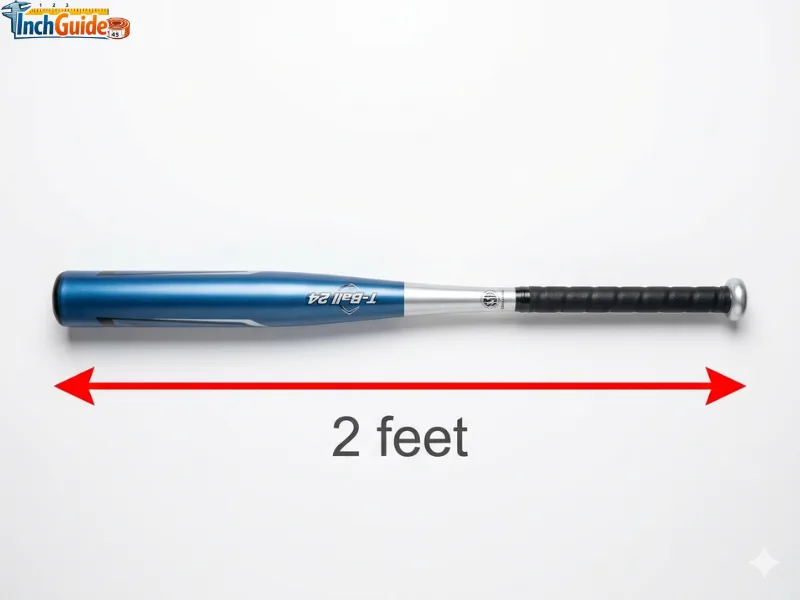
A 24-inch T-ball bat is an exact example of something that measures 2 feet long. Its total length, from the bottom of the handle to the tip of the barrel, is 24 inches, which equals 2 feet.
These bats are designed for young children who are learning to play baseball. Their length makes them easier for beginners to handle while practicing their swings.
If you place a 24-inch T-ball bat horizontally, you can see exactly how long 2 feet is. It is one of the clearest sports equipment examples of this measurement.
3. Acoustic Guitar Body
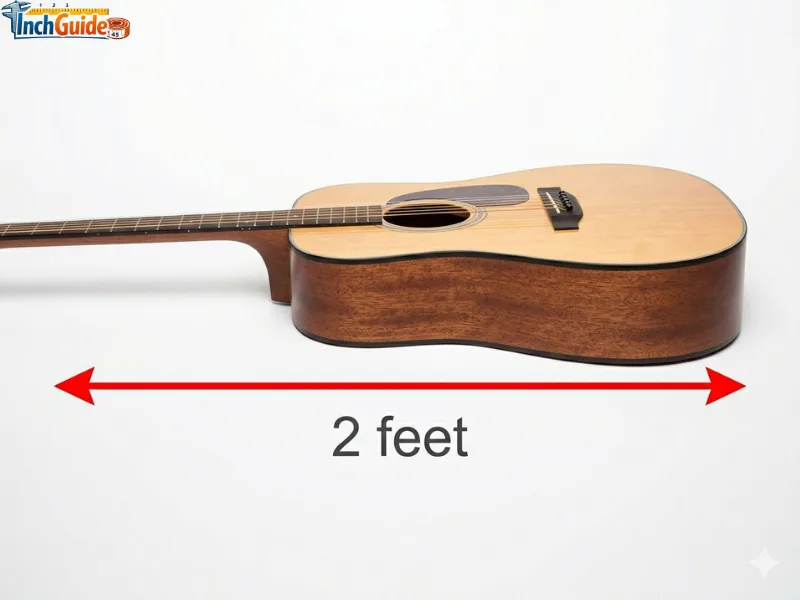
An acoustic guitar body can help you picture a length approaching 2 feet, although most standard guitar bodies are shorter than 24 inches. Depending on the guitar style, the body length may be around 18 to 20 inches.
This means the body is approximately 4 to 6 inches shorter than 2 feet. The measurement runs from the upper body near the neck joint to the bottom edge, not along the full guitar.
Although it is not an exact two-foot example, its size provides a familiar comparison. The actual body length depends on the guitar’s shape and model.
4. Standard 24-Inch Spirit Level
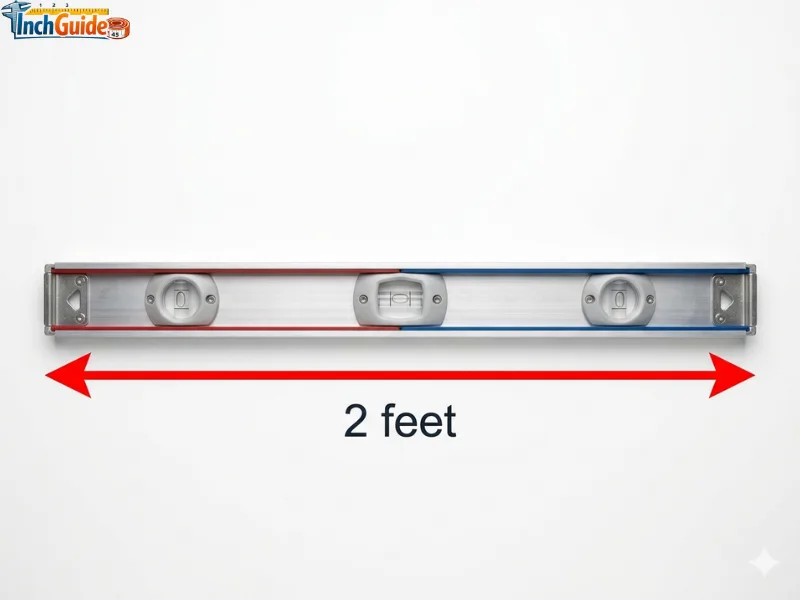
A 24-inch spirit level is an exact example of a tool that measures 2 feet in length. Its measurement runs from one end of the tool to the other, giving you a direct 24-inch reference.
Spirit levels are commonly used in construction, woodworking, and home improvement. They help workers check whether surfaces are horizontally level or vertically straight.
If you place a 24-inch spirit level on a flat surface, its full length shows exactly how much space 2 feet covers. Remember to check the product specifications because spirit levels are also sold in other sizes.
5. Carry-On Rolling Luggage
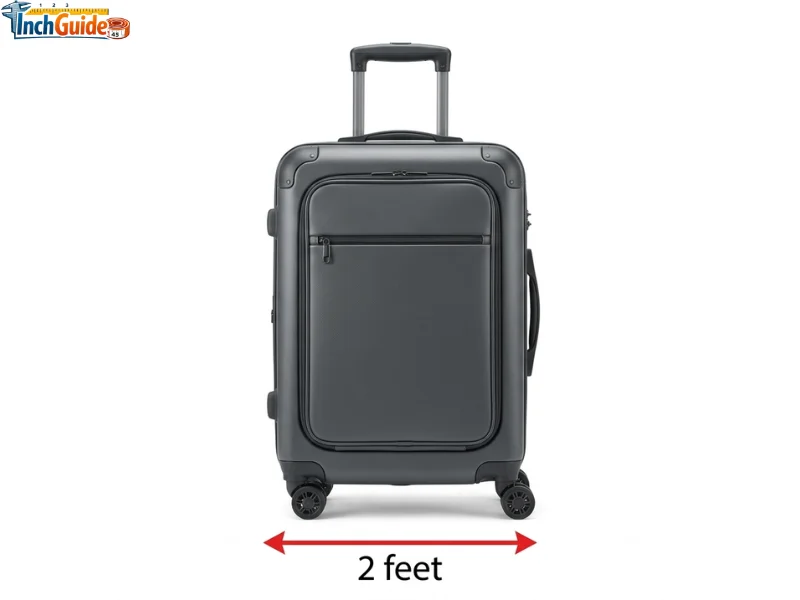
Some rolling luggage models measure around 24 inches in height, making them close to 2 feet tall. This measurement is taken vertically from the bottom of the suitcase to its highest fixed point, although the exact measuring method can vary.
A suitcase measuring 24 inches from bottom to top provides a useful visual comparison. You can imagine the same distance by placing two 12-inch rulers vertically, one above the other.
However, not every carry-on suitcase is 2 feet tall. Some are shorter, and airline size restrictions vary. Always check the manufacturer’s dimensions, including wheels and handles, before using a suitcase as a reference.
6. Fireplace Log
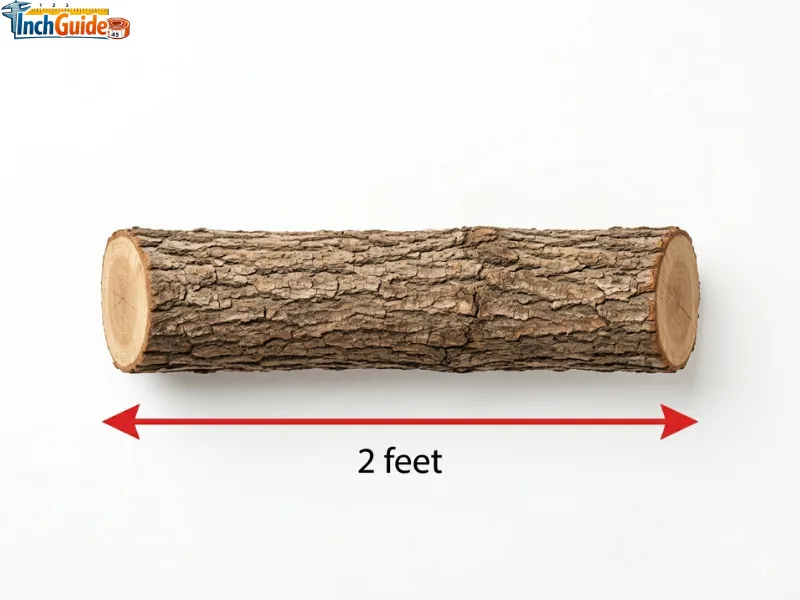
A fireplace log cut to 24 inches provides an exact example of a piece of wood that is 2 feet long. The measurement runs from one cut end to the other, regardless of how thick or wide the log is.
Some fireplaces and wood-burning stoves use logs of different lengths. A 24-inch log is suitable for certain larger fireplaces, but smaller appliances may require shorter pieces.
You can picture 2 feet by looking at the full length of a log cut to this size. Its natural shape makes it easy to understand how a straight-line measurement can be applied to an everyday material.
7. Standard 24-Inch Wide Dishwasher
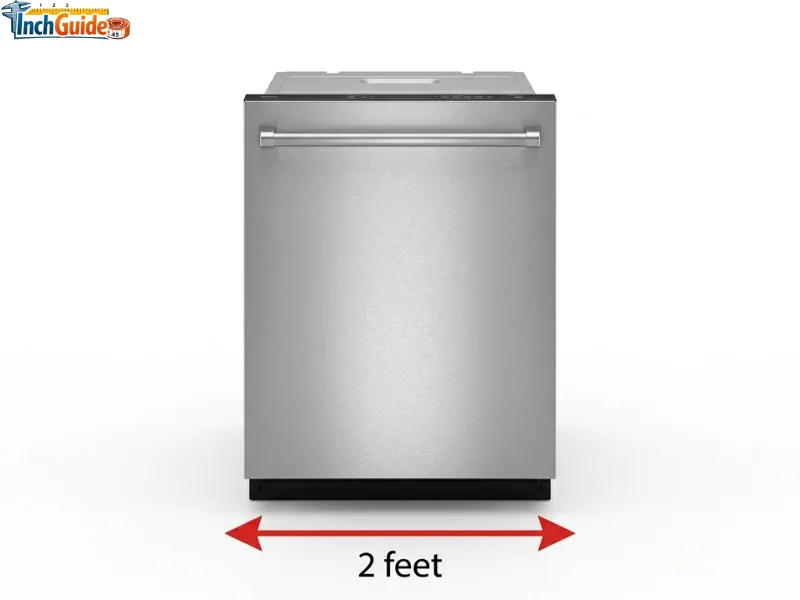
Many standard built-in dishwashers are approximately 24 inches wide, which means their front-facing width is equal to 2 feet. This distance is measured horizontally from the left side of the appliance to the right side.
This makes a standard-width dishwasher a useful household example of a two-foot measurement. When you look at the appliance from the front, you can imagine a 24-inch line running across its body.
Not all dishwashers have this width. Compact and portable models can be narrower, so check the manufacturer’s specifications before treating a particular appliance as an exact 2-foot reference.
8. Standard 24-Inch Children’s Bicycle Wheel Diameter
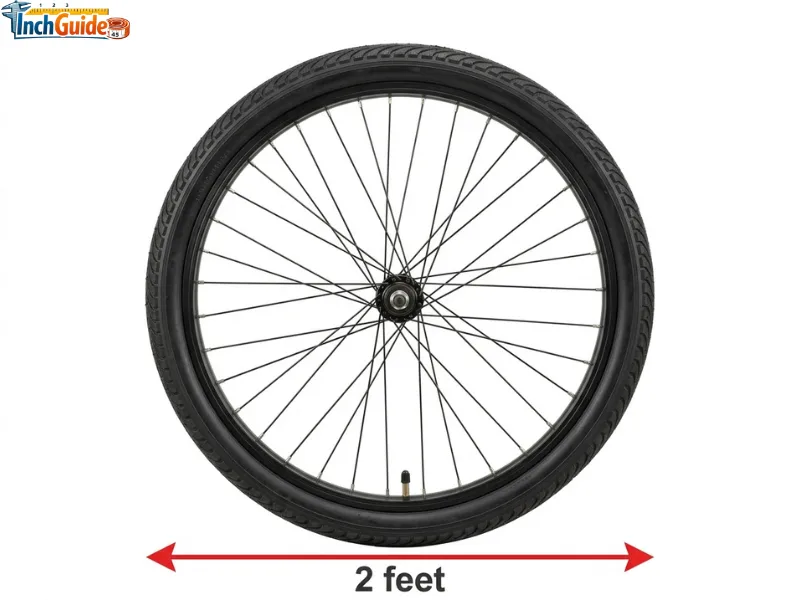
A children’s bicycle with a nominal 24-inch wheel size provides a useful comparison for understanding 2 feet. The size refers to the wheel category, rather than guaranteeing that the outside edge of the inflated tire measures exactly 24 inches.
The wheel is measured across its center, from one side of the tire to the opposite side. Its actual outside diameter can vary depending on the rim and tire design.
A 24-inch bicycle wheel is therefore a close visual reference for a two-foot measurement. Looking at the complete wheel helps you imagine a circular object with a nominal size of 2 feet.
9. Standard 24-Inch Wide Bifold Closet Door — Single Panel
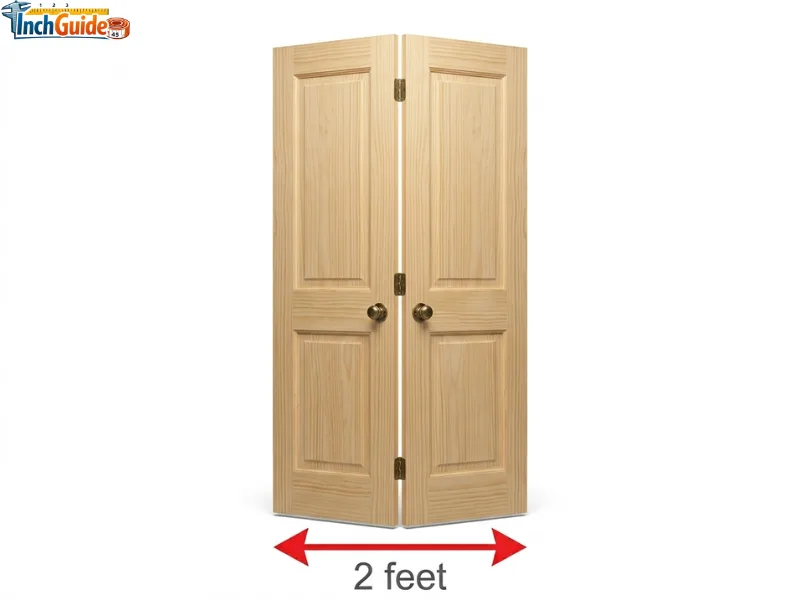
Some bifold closet door designs use individual panels that are approximately 24 inches wide. This makes a 24-inch panel a useful example of a part that measures 2 feet across.
The measurement refers to the width of one panel, not the full height or combined width of the entire door. Bifold doors are made in different configurations, so panel dimensions depend on the selected design.
If a panel is exactly 24 inches wide, it measures 2 feet from one side to the other. This gives you a practical way to visualize the measurement in a home setting.
10. Kitchen Base Cabinet Depth
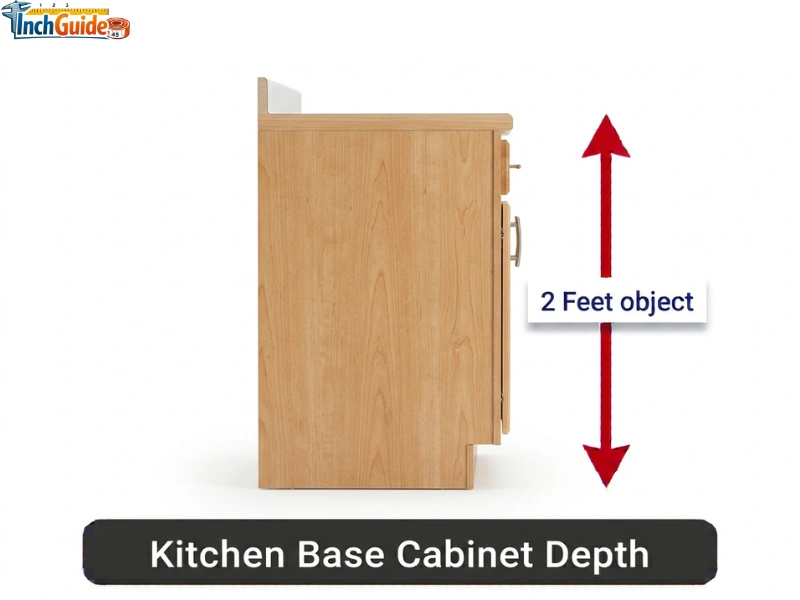
A standard kitchen base cabinet is commonly designed with a depth of around 24 inches. This means the distance from the back of the cabinet toward its front is approximately 2 feet.
This dimension is important when planning kitchen layouts because cabinets need enough depth to provide useful storage and support countertops. The exact measurement can vary depending on the cabinet design and whether doors or other projections are included.
A cabinet with a 24-inch depth is a practical example of how 2 feet looks in a kitchen. Imagine measuring from the wall behind the cabinet straight out to its front edge.
11. Compact Washing Machine
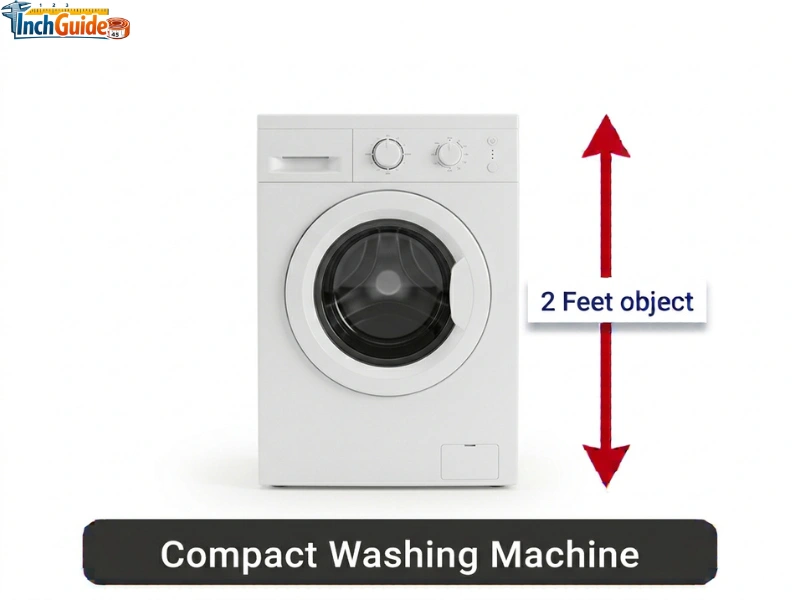
Some compact washing machines are approximately 24 inches wide, making their front-facing measurement close to 2 feet. The width is measured horizontally from one side of the machine to the other.
This size is useful in smaller laundry areas where space is limited. A machine with a 24-inch width gives you a clear idea of how much side-to-side space a two-foot appliance occupies.
However, compact washing machines are available in different widths. Check the model’s specifications before assuming it measures exactly 2 feet, and remember to leave extra room for hoses, connections, and installation.
For More: How Long Is 6 Feet?
How Does 2 Feet Compare With Other Common Measurements?
Comparing nearby measurements can help you understand the difference between a shorter and a longer distance. Two feet sits between 18 inches and 30 inches, making it a useful reference for everyday sizing.
| Measurement | In inches | In centimeters |
|---|---|---|
| 1 foot | 12 inches | 30.48 cm |
| 1.5 feet | 18 inches | 45.72 cm |
| 2 feet | 24 inches | 60.96 cm |
| 2.5 feet | 30 inches | 76.2 cm |
| 3 feet | 36 inches | 91.44 cm |
| 4 feet | 48 inches | 121.92 cm |
The difference between one foot and two feet is another full foot, or 12 inches. Similarly, three feet is one foot longer than the measurement discussed in this article.
These comparisons are useful when choosing furniture, checking storage space, or planning a room layout. For example, a 24-inch shelf is shorter than a 36-inch shelf by exactly one foot.
Is 2 Feet Long, Short, or Medium-Sized?
Whether a measurement is considered long or short depends on what you are measuring. Two feet may be a considerable length for a small shelf, but it is relatively short for a dining table or a full-size door.
In everyday situations, this measurement can be described as a medium-sized length. It is large enough to be useful for many household objects but small enough to fit into compact spaces.
Here are a few ways to understand its size:
- For furniture: A two-foot shelf or cabinet section is a practical size for smaller spaces.
- For tools: A 24-inch tool can provide enough length for certain construction and repair tasks.
- For appliances: A two-foot width is common among some compact household machines.
- For sports equipment: A 24-inch bat or wheel offers a clear example of this measurement.
- For home projects: This length can be useful when planning shelves, storage areas, and small installations.
The important thing is to consider the object’s purpose. A two-foot measurement can be large in one situation and small in another.
How Can You Measure 2 Feet Without a Measuring Tape?
You do not always need a measuring tape to estimate a two-foot distance. Several simple methods can help you get close to the measurement, although a proper measuring tool is best when accuracy matters.
Use a 12-Inch Ruler Twice
A standard 12-inch ruler measures one foot. Place it on a flat surface, mark its end, and move it forward by another 12 inches. The combined distance will be 24 inches.
Make sure the ruler begins exactly where the previous measurement ends. Any gap or overlap can affect the final result.
Use a 24-Inch Measuring Tool
A 24-inch spirit level or another tool with a verified 24-inch length can serve as a reference. Place it beside the area you want to measure and compare the distance from one end to the other.
Check the tool’s actual stated length before relying on it. Not every tool that looks two feet long has an exact 24-inch measurement.
Estimate With a 60-Centimeter Reference
A 60-centimeter measuring stick is close to two feet. It is about 0.96 cm shorter than 60.96 cm, so it can help with a rough visual estimate.
This method is suitable for casual comparisons but not for projects that require precise dimensions.
Use Your Hand Span Carefully
You can also estimate a distance by using the span between your thumb and little finger. However, hand sizes vary from person to person, so this method is not reliable for exact measuring.
If accuracy is important for furniture installation, cutting materials, or fitting appliances, use a ruler or measuring tape instead.
Where Is a 2-Foot Measurement Commonly Used?
A two-foot dimension appears in many everyday products and home projects. It can describe the width of an appliance, the length of a tool, or the depth of a storage unit.
Some common uses include:
- Home improvement: Measuring shelves, cabinet spaces, and small installations.
- Construction: Checking tool lengths and planning certain building components.
- Furniture planning: Comparing the width or depth of compact furniture.
- Laundry areas: Checking the available space for compact washing machines.
- Sports equipment: Understanding the nominal size of children’s bicycle wheels and small training bats.
- Storage: Planning shelves, cupboards, and other spaces for household items.
Before purchasing an item, look at its complete dimensions. A product listed as 24 inches wide may have a different height and depth, so checking only one measurement can lead to fitting problems.
See Also: How Long Is 5 Feet?
FAQs
1. How long is 2 feet in simple terms?
Two feet is 24 inches or 60.96 centimeters. You can picture it as two standard 12-inch rulers placed end to end. It is slightly longer than a 60-centimeter measuring stick.
2. Is 2 feet exactly 24 inches?
Yes. Two feet is exactly 24 inches because one foot contains 12 inches. Multiplying 12 by 2 gives 24 inches.
3. Is 2 feet the same as 60 centimeters?
No. Two feet equals 60.96 centimeters, while 60 centimeters is slightly shorter. The difference is 0.96 cm, which is less than one centimeter.
4. How many millimeters are in 2 feet?
Two feet contains 609.6 millimeters. You can get this answer by multiplying 2 by 304.8, because one foot equals 304.8 millimeters.
5. How many meters is 2 feet?
Two feet equals 0.6096 meters. This is a little more than 0.6 meters and is useful when converting imperial measurements into the metric system.
6. What common object is about 2 feet long?
A 24-inch T-ball bat and a 24-inch spirit level are two useful examples. Some IKEA LACK shelves are also close to this length, depending on the model.
7. Can I measure 2 feet with a ruler?
Yes. If you have a standard 12-inch ruler, measure once and then repeat the measurement directly after the first section. The combined distance will be 24 inches.
8. Is 2 feet half of a yard?
No. One yard equals 3 feet, or 36 inches. Two feet is therefore two-thirds of a yard, not half. Half a yard is 18 inches, which equals 1.5 feet.
Conclusion
Two feet is a simple measurement that equals 24 inches, 60.96 centimeters, or 0.6096 meters. It is easy to understand when you compare it with familiar items such as a 24-inch spirit level, a T-ball bat, or a kitchen base cabinet with a standard 24-inch depth.
The examples in this article also show why it is important to identify the correct dimension. A dishwasher may be two feet wide, while a luggage case may be close to two feet tall. These measurements describe different directions, even though they represent a similar distance.
If you need a quick estimate, two 12-inch rulers placed together can help you visualize the length. For accurate work, however, use a measuring tape or ruler and check the object’s actual specifications.
Understanding how two feet compares with inches and centimeters makes it easier to read product dimensions, plan household spaces, and estimate everyday measurements.day. All of them are 2 feet — they have been measuring it quietly, in every room of your home, your entire life.