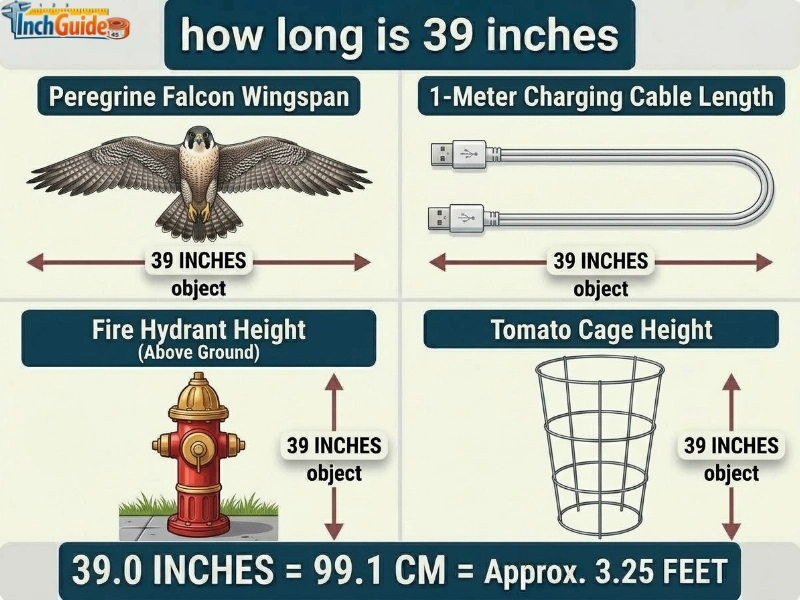

How long is 39 inches? 39 inches is equal to 3 feet 3 inches, 99.06 centimeters, or 990.6 millimeters. It is just 0.94 centimeters shorter than one meter. You can picture this length by looking at objects such as a one-meter charging cable, a tomato cage, or the wingspan of certain birds.
The exact meaning of 39 inches depends on what you are measuring. For example, a length of 39 inches may describe the height of an object, the width of a product, or the distance between two points. These measurements are not interchangeable, so it is important to consider the direction in which the measurement is taken.
If you need to visualize 39 inches without a measuring tape, familiar objects can help you estimate the distance. The examples below provide a practical starting point, while the conversion table gives you the exact measurements.
Related Guide: How Long Is 38 Inches?
39 Inches in Feet, Centimeters, Meters, and Millimeters
Converting 39 inches into other units makes this measurement easier to understand. Inches and feet are commonly used in the United States, while centimeters and meters are widely used in many other countries.
| Measurement Unit | Equivalent to 39 Inches |
|---|---|
| Inches | 39 inches |
| Feet | 3.25 feet |
| Feet and inches | 3 feet 3 inches |
| Centimeters | 99.06 cm |
| Millimeters | 990.6 mm |
| Meters | 0.9906 m |
| Yards | 1.0833 yards, approximately |
These conversions are useful when measuring household items, checking product specifications, planning a home project, or comparing measurements from different countries.
For example, if a product description lists a length of 99.06 cm, you now know that it is exactly equivalent to 39 inches. If the same measurement is listed as 0.99 meters, it is approximately the same length.
How Many Feet Is 39 Inches?
There are 12 inches in one foot. To convert inches into feet, divide the number of inches by 12.
39 ÷ 12 = 3.25 feet
Therefore, 39 inches equals 3.25 feet, which can also be written as 3 feet 3 inches.
The decimal measurement and the feet-and-inches measurement describe the same length. The difference is simply how the result is written.
Here is an easy way to calculate it:
- Start with 36 inches, which equals 3 feet.
- Subtract 36 from 39 inches.
- The remaining measurement is 3 inches.
- Combine the measurements to get 3 feet 3 inches.
This conversion is especially helpful when measuring furniture, equipment, shelves, and other objects described in feet and inches. If you see a measurement of 3.25 feet on a product page, you can understand it as 3 feet and 3 inches.
How Many Centimeters Are in 39 Inches?
One inch equals exactly 2.54 centimeters. To convert 39 inches into centimeters, multiply 39 by 2.54.
39 × 2.54 = 99.06 centimeters
This means 39 inches is equal to 99.06 cm.
Centimeters are useful for measuring smaller household objects and comparing product dimensions. For example, a cabinet listed as 99.06 cm tall has the same height as a cabinet listed as 39 inches, provided both measurements refer to the same part of the product.
You may also see this measurement rounded to 99.1 cm or 99 cm. The rounded values are easier to read, but they are less precise than 99.06 cm.
When accuracy matters, use the original measurement and avoid rounding until the final step.
Is 39 Inches Almost 1 Meter?
Yes. Thirty-nine inches is almost one meter long, but it is slightly shorter.
One meter equals 100 centimeters, or approximately 39.37 inches. Meanwhile, 39 inches equals 99.06 centimeters.
The difference is:
100 − 99.06 = 0.94 centimeters
So, 39 inches is just 0.94 cm shorter than one meter. This is less than one centimeter, making the two measurements very close.
This comparison is particularly useful when reading measurements from products made in countries that use different measurement systems. A one-meter cable, for instance, is slightly longer than a 39-inch cable.
However, do not treat the measurements as exactly equal when precision matters. For general size comparisons, they are close enough to help you picture the same approximate length.
For More: How Long Is 26 Inches?
How Long Is 39 Inches Compared to an Object? 11 Common Examples
You can better understand a measurement when you compare it with things you already recognize. The following 11 examples include animals, household products, outdoor equipment, and everyday objects.
Keep in mind that not every item listed below measures exactly 39 inches. Some are close matches, while others have a range of sizes that includes or approaches 39 inches. Use each example as a visual reference rather than a guaranteed measurement.
1. Peregrine Falcon Wingspan
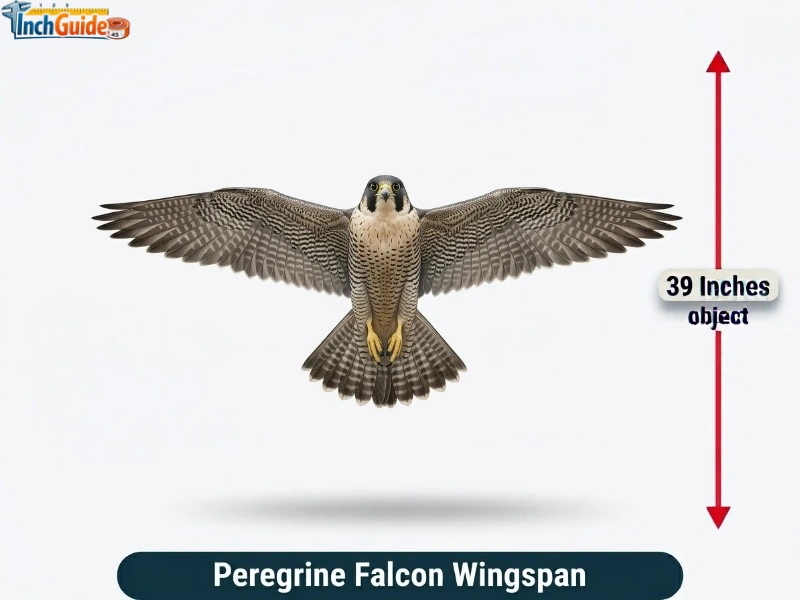
A peregrine falcon is a powerful bird of prey known for its pointed wings and fast hunting dives. Its wingspan can measure approximately 39.4 to 43.3 inches, depending on the bird. The lower end of this range is close to 39 inches.
A wingspan is the distance from the tip of one extended wing to the tip of the other. It does not describe the bird’s body length or standing height. This distinction matters because the wings stretch much farther across than the bird’s body alone.
Imagine a peregrine falcon with its wings fully extended. The distance across its wings would be slightly greater than 39 inches. This can help you picture a length of just over three feet, although an actual bird’s wingspan varies.
2. Barn Owl Wingspan
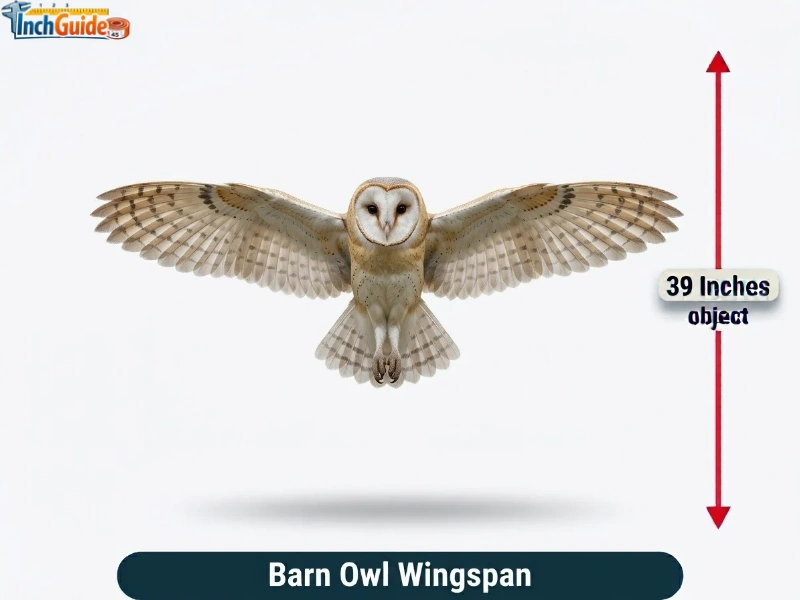
The barn owl is known for its pale face, rounded wings, and quiet flight. Its wingspan can range from approximately 39.4 to 49.2 inches. The smallest measurements in this range are close to 39 inches, while larger owls can span considerably more.
Like the peregrine falcon, the barn owl is a useful example because its wingspan provides a wide measurement across the body. When the wings are open, the distance from one wingtip to the other can approach the length you are trying to visualize.
The comparison is approximate, not exact. A barn owl’s wingspan changes with its size, and it will not measure 39 inches every time. Still, it gives you a natural example of a measurement slightly longer than three feet.
3. A 1-Meter Charging Cable
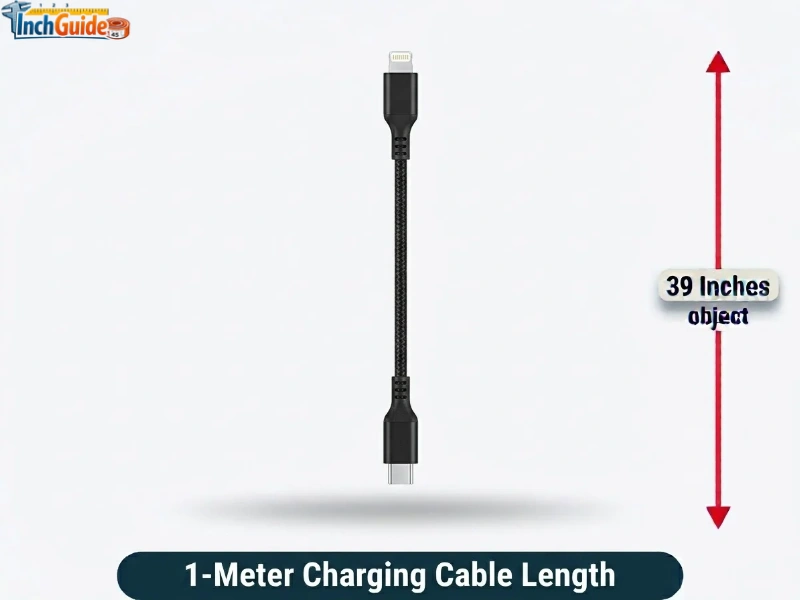
A one-meter charging cable measures approximately 39.37 inches when fully stretched out. That makes it one of the closest everyday comparisons to 39 inches.
You may have a cable of this length for charging a phone, tablet, or another electronic device. If you lay it straight on a flat surface without stretching or pulling it, the distance from one end to the other gives you a helpful visual reference.
Remember that the cable’s advertised length may refer to the cable itself rather than the entire product, including connectors. Its usable length can also feel shorter when the cable bends around furniture or connects to a device.
A one-meter cable is a convenient comparison because its length is close to 39 inches. It is still slightly longer, so use an actual measurement if you need an exact 39-inch distance.
4. Road Bike Wheelbase

The wheelbase of a bicycle is the distance between the centers of its front and rear wheels. On some medium-sized road bikes, this measurement can be around 39 to 40 inches, depending on the frame design and size.
This is different from the overall length of the bicycle. The wheelbase measures the distance between the wheel centers, while the handlebars, wheels, and other components extend beyond those points.
Picture a road bike standing upright with both wheels on the ground. The distance between the two wheel centers may be close to 39 inches. That provides a useful example of how a three-foot-plus measurement appears on a real object.
Not all road bikes have the same wheelbase. Frame geometry, wheel size, and the intended riding style can change the measurement. Check the manufacturer’s specifications if you need to compare a particular bicycle with 39 inches.
5. Floor-Standing Tower Speaker Height
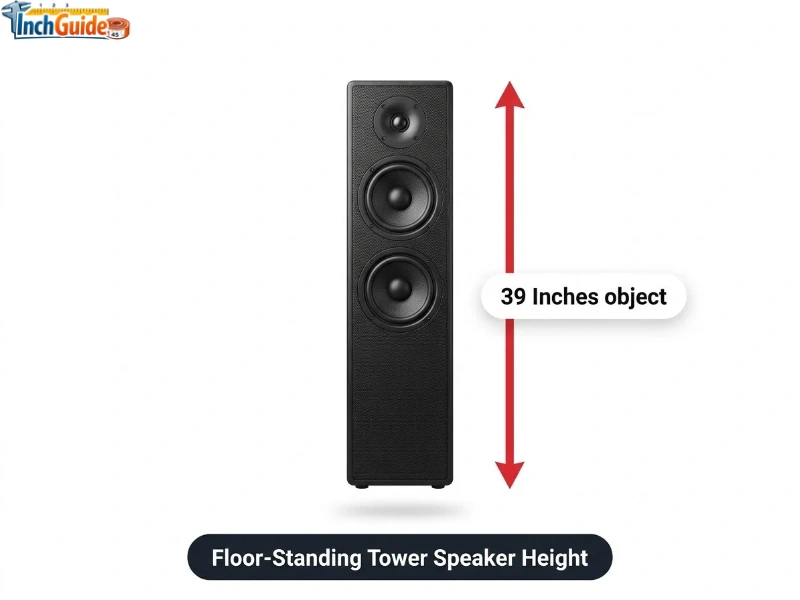
A floor-standing tower speaker is a tall audio unit designed to stand on the floor rather than sit on a desk or shelf. Depending on the model, its height may fall around 36 to 45 inches, placing some models close to 39 inches.
Imagine a speaker standing beside a television cabinet or entertainment unit. A model measuring 39 inches tall would reach slightly above three feet from the floor. This can help you picture the height when planning where to place a speaker in a living room.
The measurement may change depending on whether the manufacturer includes feet, spikes, or other attachments. Some speakers are also much taller or shorter than this example.
If you are buying a speaker, check its listed height rather than relying on the product category. The comparison works best as a general visual reference for a tall, floor-standing item.
Visit Also: How Long Is 14 Inches?
6. Tomato Cage Height

A tomato cage is a garden support that helps tomato plants grow upright and keeps their branches from spreading onto the ground. Many garden cages are available in heights around 36 to 42 inches, so a 39-inch model fits within this range.
Picture a metal or plastic cage placed around a young tomato plant. A cage measuring 39 inches tall would extend a little more than three feet above the ground. It gives you a practical example of how this measurement looks in a garden.
The actual height depends on the design. Some cages are shorter for compact plants, while taller versions support larger varieties. The way a cage is installed can also affect how much of its height remains above the soil.
If you need a support that is exactly 39 inches high, check the product dimensions before buying. A cage’s listed height may describe its full size rather than the portion that remains visible after installation.
7. Red Panda Total Length Including Its Tail
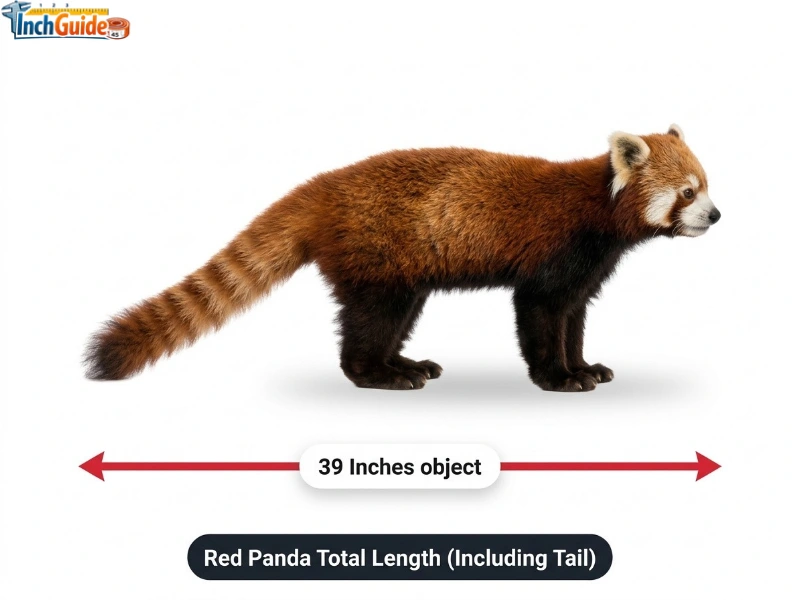
A red panda is a small mammal with reddish fur, a rounded face, and a long, bushy tail. Adult red pandas typically have a body length of around 22 to 24.6 inches, plus a tail measuring approximately 14.6 to 18.6 inches.
When the body and tail measurements are combined, the total can be roughly 36.6 to 43.2 inches. That range includes measurements close to 39 inches.
This comparison helps show how separate body parts can add up to a total length of around three feet and three inches. However, the measurement describes the animal’s body plus its tail, not its height when standing or climbing.
Red pandas vary in size, so 39 inches is only an approximate comparison. The combined length can be shorter or longer depending on the individual animal.
8. North American River Otter Length

The North American river otter has a long, streamlined body, short legs, and a thick tail that helps it swim. Its total body length, including the tail, can range from approximately 35.5 to 53 inches.
Because this range includes 39 inches, a river otter can be a useful example for visualizing a measurement of this size. An otter near the lower end of the range would be around three feet and a few inches long.
Its body is not the only part contributing to that measurement. The total length includes the tail, which forms a substantial portion of the animal’s overall size. This is why the length should not be confused with the distance from the top of the head to the ground.
River otters differ in size, so not every individual will be close to 39 inches. The example simply shows that a mammal can have a total body length of approximately three feet.
9. Ball Python Adult Length

A ball python is a nonvenomous snake native to parts of Africa. Adult ball pythons commonly measure around 36 to 60 inches long, although their size varies with age and sex.
A snake measuring 39 inches would be just over three feet long. If you imagine a flexible measuring tape following a snake’s body from its head to the tip of its tail, the total could reach this length even though the snake may be curled into a much smaller shape.
This is an important distinction when comparing the length of an animal with a straight object. A snake’s body can bend and coil, so the space it occupies on the ground may be much shorter than its full body length.
A ball python is a variable example rather than an exact 39-inch match. Use it to understand the approximate length, not to estimate the size of an individual snake.
10. Fire Hydrant Height Above Ground
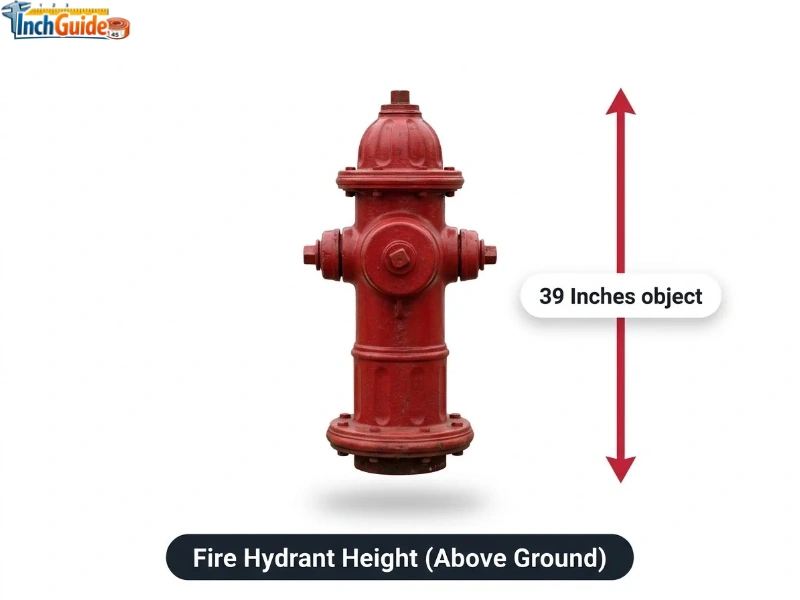
A fire hydrant is a water connection used by firefighters and emergency services. Many common hydrant designs stand roughly 30 to 40 inches above the ground, although dimensions vary by model and local requirements.
A hydrant measuring 39 inches above ground would be slightly more than three feet tall. You can picture this by imagining a hydrant standing beside a pavement or road, with its top rising above the surrounding ground.
The important detail is that the measurement should specify what is being measured. A hydrant’s visible height above ground may differ from its full height, which can include sections below the surface.
Hydrant designs are not identical everywhere. Their height depends on the model, installation, and local standards. If you need a precise measurement for a construction or safety project, consult the manufacturer’s specifications and applicable requirements.
11. Parking Bollard Height

A parking bollard is a short, sturdy post used to protect buildings, guide vehicles, or prevent cars from entering restricted areas. Some bollards measure approximately 36 to 42 inches above the ground, putting 39 inches near the middle of that range.
Imagine a bollard installed near a shop entrance or along a pedestrian walkway. A post measuring 39 inches tall would stand a little above three feet from the ground. This gives you a familiar outdoor reference for the measurement.
Bollards come in different shapes and sizes. Some are short posts designed to mark boundaries, while others are taller or installed at different depths. Their visible height may also differ from their total length because part of the post can be buried.
For a specific installation, use the product’s stated dimensions. A 39-inch bollard is a reasonable example of this height, but the measurement is not universal across all bollards.
How Do You Measure 39 Inches Accurately?
The simplest way to measure 39 inches is to use a tape measure marked in inches. If your tape measure includes both inches and centimeters, you can also check the result in metric units.
Follow these steps:
- Place the starting point correctly. Set the beginning of the tape at one end of the object or distance you want to measure.
- Keep the tape straight. Avoid bends, twists, or slack that could change the reading.
- Find the 39-inch mark. Count along the inch markings until you reach 39 inches, or use the 3-foot mark and continue another 3 inches.
- Check the endpoint. See whether the other end of the object lines up with the mark.
- Record the measurement clearly. Write it as 39 inches or 3 feet 3 inches to avoid confusion.
If you are measuring an object that is difficult to move, make sure the tape follows the correct direction. For example, measure a speaker’s height vertically from its base to its highest point, not diagonally from one corner to another.
For greater accuracy, check whether the object has feet, caps, handles, or other parts that should be included. Product specifications sometimes list the main body separately from attached components.
See Also: How Long Is 17 Inches?
Can You Measure 39 Inches Without a Measuring Tape?
Yes, you can estimate 39 inches without a measuring tape, although your result may not be exact. A straight object with a known length can help you mark the distance in smaller sections.
For example, if you have a ruler that measures 12 inches, you can mark three full ruler lengths to reach 36 inches and then add another 3 inches. This gives you 39 inches in total.
You can also use a one-meter cable as a close reference. Since one meter is approximately 39.37 inches, it is about 0.37 inches longer than 39 inches. That makes it useful for a rough comparison, but not a substitute for a precise measurement.
Other helpful methods include:
- Using a yardstick and adding the remaining 3 inches to its 36-inch length.
- Marking a straight line on paper or cardboard and checking it against a known measurement.
- Using a digital measuring tool on a suitable device, if it has been checked for accuracy.
- Comparing the distance with an object whose exact dimensions you already know.
Avoid relying on hand spans, footsteps, or estimates based on body size when accuracy matters. These methods vary from person to person and can produce noticeable errors over a distance of 39 inches.
What Should You Check When Buying a 39-Inch Product?
When a product is described as 39 inches, check which dimension the number represents. It could refer to height, width, length, depth, or another measurement.
This matters because two products with a 39-inch measurement may have very different shapes. A 39-inch-high speaker is not the same as a 39-inch-wide shelf, even though the number is identical.
Before making a purchase, check the following details:
- Height: The vertical distance from the bottom to the top.
- Width: The distance from one side to the other.
- Length: The distance along the object’s longest dimension, where applicable.
- Depth: How far the product extends from front to back.
- Overall dimensions: Whether handles, feet, connectors, or other attachments are included.
Also check whether the manufacturer uses inches or centimeters. A listing that shows 99 cm is close to 39 inches, while 100 cm is slightly longer. Small differences may not matter for a loose fit, but they can matter when a product must fit inside a cabinet, between two walls, or within a fixed space.
If the item needs to fit into a specific opening, measure the available space before buying. Allow for any clearance needed for doors, cables, ventilation, or installation. This is more reliable than assuming a product will fit based only on its headline measurement.
Explore more measurement guides for easy size comparisons.
FAQs
Is 39 inches longer than 3 feet?
Yes. Three feet equals 36 inches, so 39 inches is 3 inches longer than 3 feet. It is equal to 3 feet 3 inches.
How many feet and inches are in 39 inches?
Thirty-nine inches equals 3 feet 3 inches. There are 36 inches in 3 feet, with 3 inches remaining.
How many centimeters is 39 inches?
Thirty-nine inches equals exactly 99.06 centimeters. The conversion is calculated by multiplying 39 by 2.54.
Is 39 inches close to 100 centimeters?
Yes. One hundred centimeters equals one meter, while 39 inches equals 99.06 centimeters. The difference is just 0.94 centimeters.
Is 39 inches the same as 1 meter?
No. One meter is approximately 39.37 inches, making it slightly longer than 39 inches. The difference is about 0.94 centimeters.
How can I visualize 39 inches without a ruler?
A one-meter charging cable is a useful reference because it measures approximately 39.37 inches. You can also use a 36-inch yardstick and add another 3 inches for a closer estimate.
How do I measure 39 inches at home?
Use a tape measure and mark the distance from one endpoint to the other. You can also measure 3 feet first, then continue another 3 inches to reach 39 inches.
What common objects are about 39 inches long?
A one-meter charging cable is very close to 39 inches. Some road bike wheelbases, tower speakers, tomato cages, and parking bollards may also be around this measurement, depending on their designs and dimensions.
Conclusion
Thirty-nine inches is equal to 3 feet 3 inches, 99.06 centimeters, and 0.9906 meters. It is a little longer than three feet and just under one meter, making it easier to picture when you compare it with familiar objects.
A one-meter charging cable is one of the closest everyday references because it measures approximately 39.37 inches. Other examples, such as a tomato cage, a floor-standing speaker, or a parking bollard, may also be close to 39 inches, but their dimensions vary by model.
Remember to check whether a measurement refers to an object’s height, width, length, or total span. This is especially important when purchasing products or planning a space where a particular size must fit.
For a quick estimate, think of 39 inches as three feet plus another three inches. For an exact result, use a tape measure or convert the measurement using the appropriate formula.