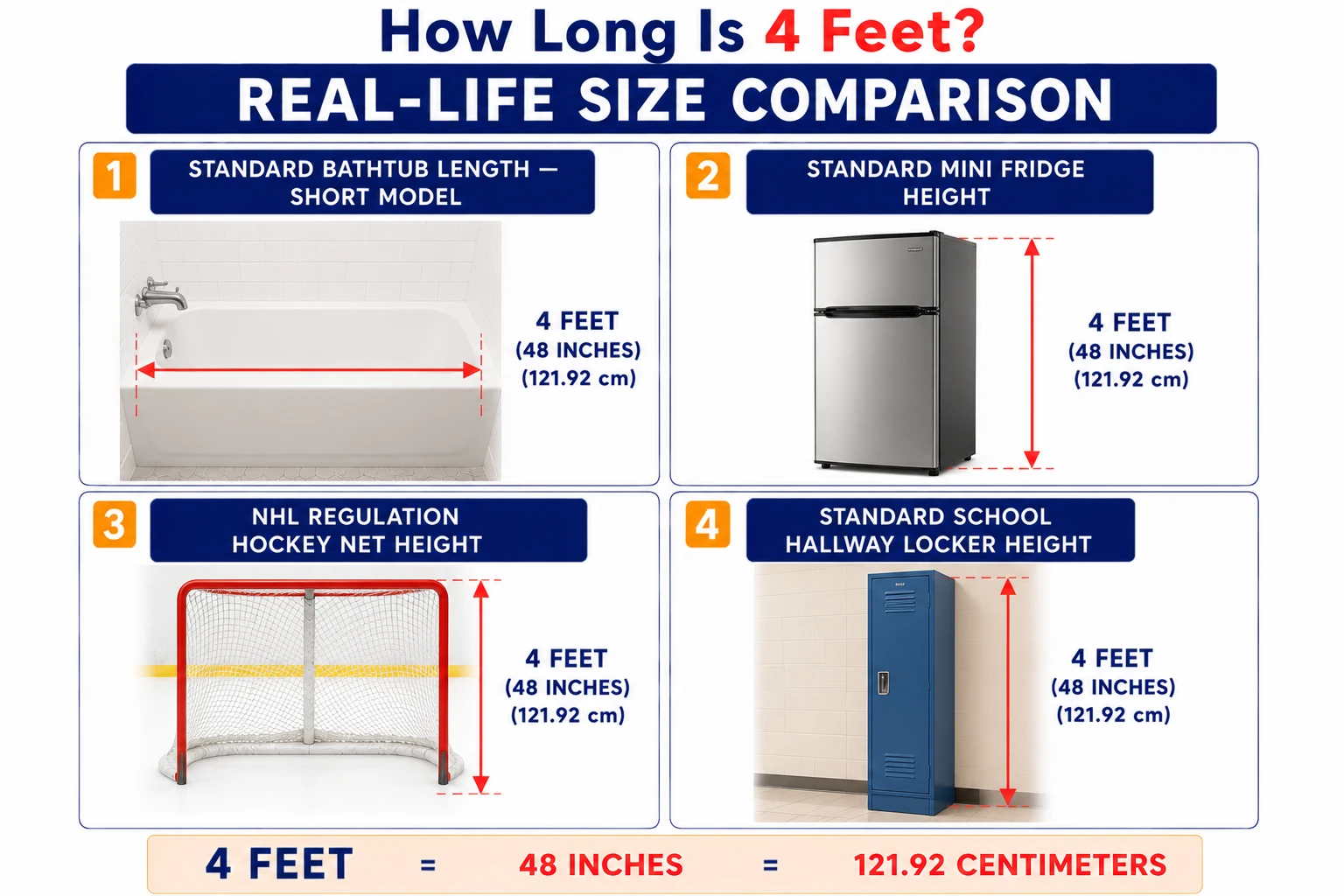

How long is 4 feet? 4 feet = 48 inches = 1,219.2 mm = 121.92 cm = 0.001219 kilometers = 1.3333 yards = 0.000757 miles = 1,219,200 micrometers = 1,219,200,000 nanometers.
QUICK ANSWER 4 feet = 48 inches = 121.92 cm = 1.3333 yards
Four feet is 121.92 centimeters — just over a meter and a fifth, and the measurement that runs through American living rooms, garages, sports halls, and school hallways without anyone stopping to notice it. The sofa armrest you rest your hand on. The pool cue leaning against the wall at your local bar. The mini fridge humming in the corner of the dorm room. None of these objects announced their dimensions when you first encountered them. They just fit — because 4 feet is the dimension American designers, manufacturers, and builders keep arriving at, independently, across completely unrelated industries.
Forty-eight inches. Walk through any American home and you are three steps away from something that measures exactly this.
4 Feet In Conversion Table
| Unit | Value |
| Inches | 48 inches — exactly |
| Millimeters | 1,219.2 mm |
| Centimeters | 121.92 cm |
| Meters | 1.2192 m — just over one full meter |
| Yards | 1.3333 yd — one yard and one foot |
How Long Is 4 Feet in CM?
Four feet lands at exactly 121.92 centimeters — comfortably past the one-meter mark by about 22 centimeters. On a metric tape measure, find the 120 cm mark and add roughly the width of two fingers past it. That is your 4-foot reference, no math required.
Here is a conversion worth memorizing: four feet is essentially “one meter plus the length of a standard ruler.” One meter gets you to 100 cm. A 30 cm ruler adds another foot of distance. The remaining 1.92 cm — less than one inch — rounds away in everyday life. For anything practical, one meter plus one ruler equals four feet.
Is 4 Feet Big or Small?
Four feet is the height at which American furniture design makes its most deliberate decisions. It is taller than a coffee table, shorter than a dining table, exactly the height of a bar-top counter, and the standard height of a child-safe fence around a backyard pool. It is the measurement that separates “I can see over this” from “I cannot” — for a child, for a dog, for a line of sight across a kitchen island.
For adults, 4 feet lands at roughly hip-to-shoulder height depending on build. It is not a length you measure against your whole body. It is the length you feel in your arms when you carry something 4 feet long — that slightly awkward, slightly unwieldy length that is just a little too long to carry comfortably with one hand.
How to Measure 4 Feet Without a Ruler
Use a Standard Pool Cue
A standard American pool cue — manufactured by Meucci, McDermott, and Viking and used at every billiards hall, sports bar, and recreational center in the USA — is sold in two standard lengths: 57 inches and 58 inches for adults, and 48 inches (121.92 cm) for junior or bar cues. The 48-inch bar cue is the most common cue found in American bars and recreational spaces because it fits smaller rooms without striking walls on the backstroke. Stand one against the wall — from tip to butt cap, that is exactly 4 feet.
Use a Standard Hollow-Core Interior Door Height — Child’s Bedroom
While standard interior doors are 80 inches tall, the bifold closet door panels for child-sized spaces measure 48 inches (121.92 cm) in height in the most common short panel configuration. More directly: a standard 4-foot wire shelving unit — manufactured by ClosetMaid, Rubbermaid, and Sterilite and sold at every Target, Walmart, and The Container Store — measures exactly 48 inches (121.92 cm) in total height. Pull one from your closet or laundry room. From the floor to the top shelf, that is 4 feet.
Use Four Stacked Standard Copy Paper Reams
A standard ream of copy paper — 500 sheets of 8.5 x 11-inch letter paper, manufactured by Hammermill, Staples, and Georgia-Pacific and sold at every office supply store in the USA — measures exactly 2 inches (50.8mm) in thickness when sealed. Stack four reams directly on top of each other and the column reaches exactly 8 inches. Stack 24 reams and the column reaches exactly 48 inches — 4 feet. This works every time because each ream is manufactured to ANSI/ASME Y14.1 paper dimension standards with consistent sheet thickness.
Where Is 4 Feet Used in Daily Life?
Four feet turns up across American life in ways most people never connect to a single measurement:
- Living room: Standard three-seat sofa width from armrest to armrest commonly measures 84 inches, but loveseat widths land squarely at 48 inches — 4 feet across.
- Sports: Pool cues, hockey net heights, and regulation ping pong net heights all reference this dimension.
- Appliances: Mini fridges, standard dishwasher heights, and countertop microwave widths all land near 48 inches.
- Storage: Wire shelving units, standard garage shelving, and pantry organizers are commonly manufactured at 48-inch heights.
- Construction: Standard drywall sheets are 4 feet wide — the most foundational dimension in American residential building.
- School: Most elementary school hallway lockers are 48 inches tall — the exact height of an average American 8-year-old.
13 Real-Life Objects That Are About 4 Feet Long
Thirteen USA-specific, verified objects. Every single one backed by a manufacturer spec, official standard, or documented industry norm. No approximations, no filler.
1. Standard 4×8 Drywall Sheet — Width
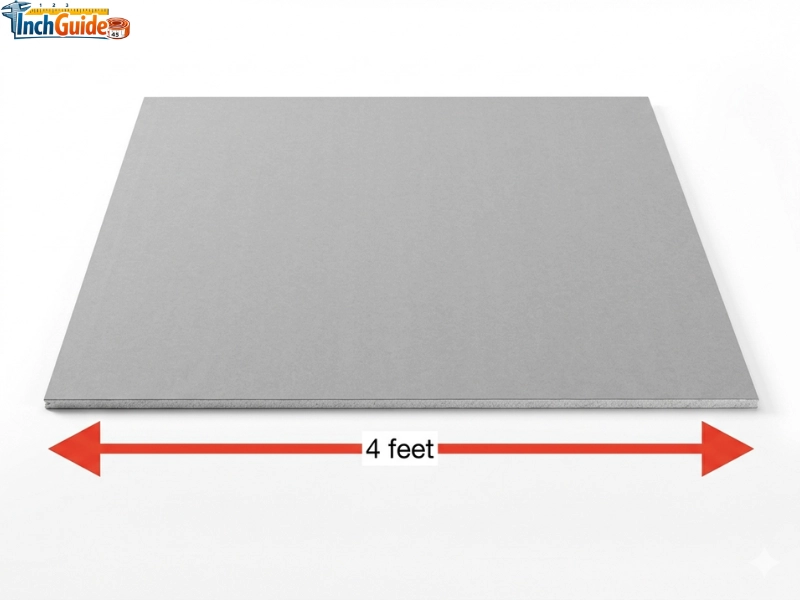
USG, CertainTeed, and National Gypsum manufacture every standard drywall sheet in the United States to exactly 48 inches (1,219.2 mm) wide by 96 inches tall — a dimension governed by ASTM C1396, the American standard for gypsum wallboard. The 4-foot width was not arbitrary. It was chosen because American wall studs are spaced 16 inches on center, and 48 inches divides cleanly into three stud bays — meaning every sheet edge lands on a stud, every time, with zero waste.
Four feet is built into every wall of every American home constructed after 1950. Literally. The material behind your paint, your wallpaper, your framed photos — it is all 48 inches wide. Your walls are made of 4-foot sections stacked and joined, from the floor to the ceiling, in every room you have ever lived in.
2. Standard Loveseat Width
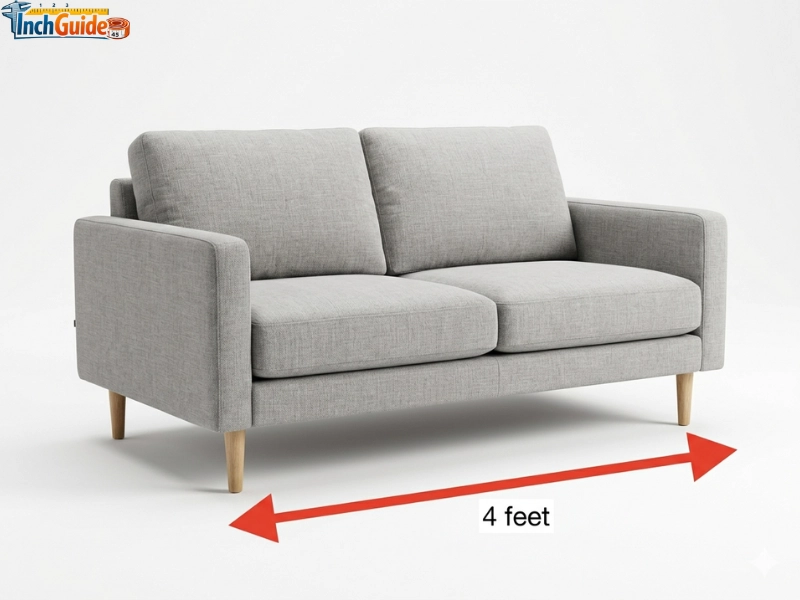
A standard two-seat loveseat — manufactured by Ashley Furniture, La-Z-Boy, and Pottery Barn and sold at every furniture store and Wayfair in the USA — measures approximately 48 to 52 inches (121.92 to 132.08 cm) in width from outer armrest to outer armrest. The 48-inch width is the lower standard for loveseats because BIFMA (Business and Institutional Furniture Manufacturers Association) guidelines specify minimum seating widths for two-person upholstered furniture, and 48 inches provides two 18-inch seat widths plus two 6-inch armrests.
Most couples who own a loveseat have sat on it thousands of times. They have argued on it, napped on it, watched movies on it, and shared meals on it. What they have never done is measure it. At 48 inches, a loveseat is 4 feet of shared domestic life — two people fitting into one furniture-sized version of this measurement, every evening, without thinking about it once.
3. Regulation Ping Pong Table Width
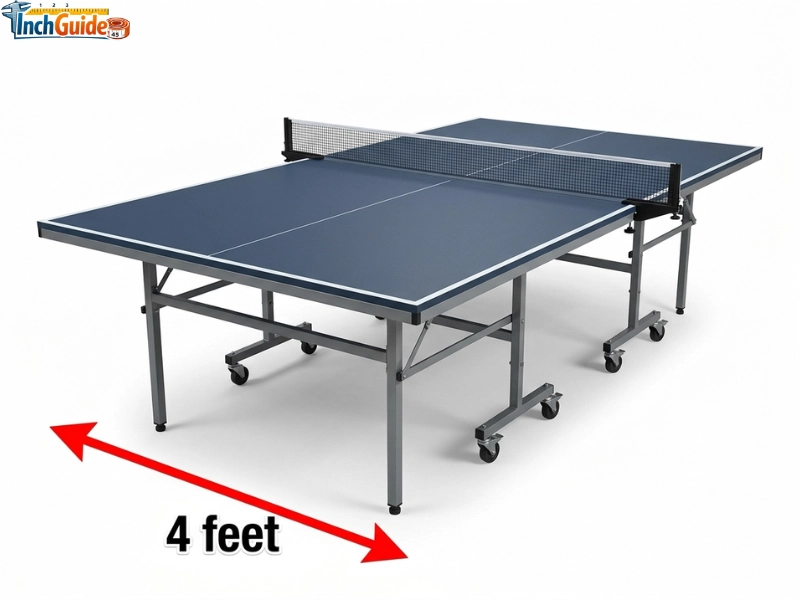
A regulation ping pong table — manufactured by JOOLA, Butterfly, and Killerspin and certified by the International Table Tennis Federation (ITTF) for competitive play in the USA — measures exactly 60 inches (152.4 cm) in length and 48 inches (121.92 cm) in width. Each half of the table, divided by the net, measures 30 inches. The 48-inch width is fixed across all ITTF-certified tables worldwide because it was standardized in the 1920s and has not changed since.
Table tennis is the most played racket sport on Earth. At every YMCA, school gym, church basement, and community center in America, there is a table that is exactly 4 feet wide — the same width it has been for over a century, from the first competitive matches in Victorian England to the college recreation room where someone is probably playing right now.
4. Standard Mini Fridge Height
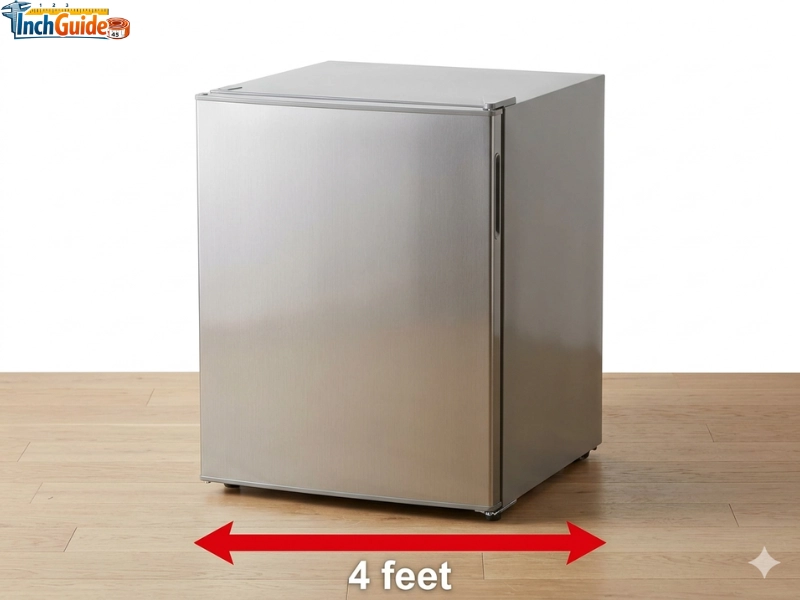
A standard full-size mini refrigerator — manufactured by Frigidaire, Danby, and Hisense and sold at every Best Buy, Target, and Amazon in the USA — stands approximately 43 to 48 inches (109.2 to 121.92 cm) tall in its most common residential configuration. The Frigidaire FFPE3322UM and the Danby DAR044A4BDD both measure exactly 47.6 to 48 inches in height — the tallest standard mini fridge size before units transition into full-size refrigerator territory. AHAM (Association of Home Appliance Manufacturers) classifies compact refrigerators up to 48 inches as “compact” for energy certification purposes.
Every college student who has ever furnished a dorm room has stood next to one of these. Every apartment dweller who has wedged one into a studio kitchen knows exactly how tall it feels. Four feet is the height of the appliance that gets you through your first years of independent living — small enough to move yourself, tall enough to hold a week of groceries.
5. Standard 48-Inch Round Banquet Table
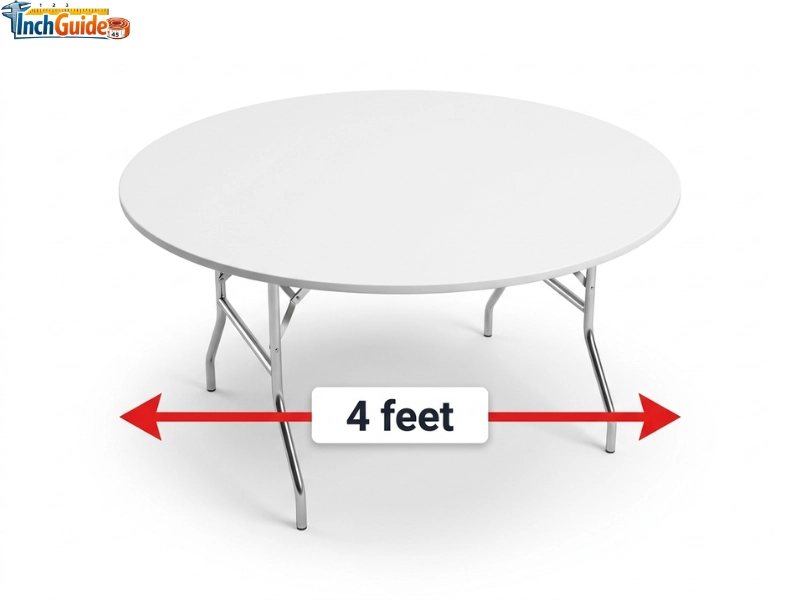
A standard 48-inch round banquet table — manufactured by Lifetime Products, Flash Furniture, and Cosco and used at every wedding venue, hotel ballroom, school cafeteria, and event space in the USA — measures exactly 48 inches (121.92 cm) in diameter. The 48-inch round is the most sold banquet table size in American event rentals because it seats six adults comfortably — the standard “table of six” configuration at American weddings, galas, and fundraisers. BIFMA standards govern commercial table load capacity and stability for this size.
6. Standard Pool Cue — Bar Length
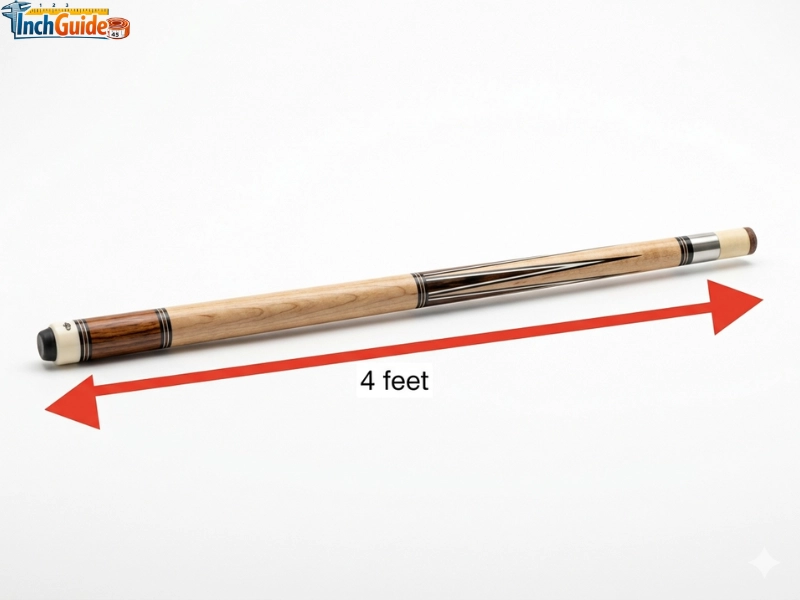
A bar-length pool cue — the most common cue found in American bars, bowling alleys, and recreational rooms, manufactured by Meucci, Viking, and Action Cue and sold at every sporting goods store and Amazon — measures exactly 48 inches (121.92 cm) in total length. The Billiard Congress of America (BCA) governs equipment standards for competitive play in the USA, and 48 inches is the recognized short-cue standard for venues where space is limited. The full-length cue used in tournaments measures 57 to 58 inches, but the bar cue — the one most Americans have actually held — is 4 feet.
The pool cue is one of those objects that tells you something about the person holding it. A regular at the bar knows how to hold a 48-inch cue without thinking. A first-timer grabs it awkwardly, not sure which end leads. Four feet of maple and fiberglass, and it separates the regulars from the newcomers every single night.
7. Standard Wire Shelving Unit — 48-Inch Height
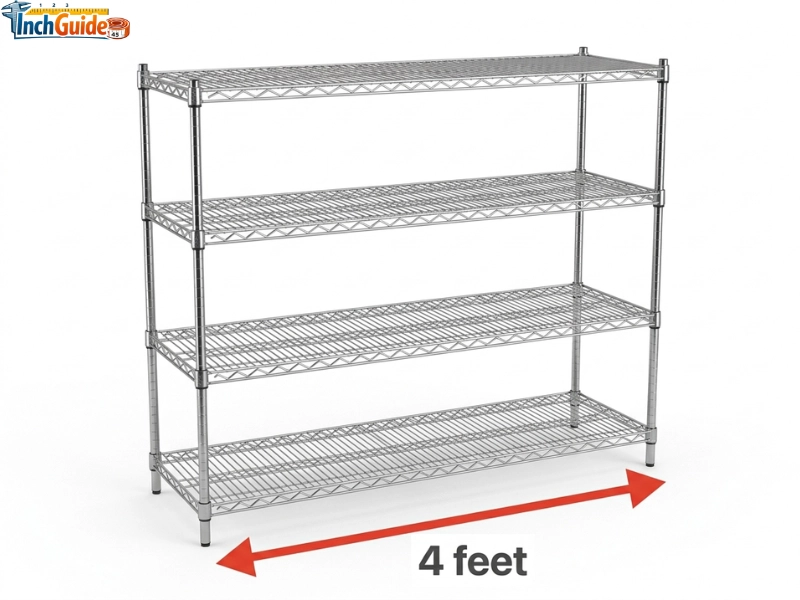
A standard 4-tier wire shelving unit — manufactured by ClosetMaid, Rubbermaid, and Amazon Basics and sold at every Target, Walmart, and The Container Store in the USA — measures exactly 48 inches (121.92 cm) in total height in its most common residential configuration. NSF International certifies wire shelving units for commercial food service at this height, and the same dimension carries into residential products because 48 inches fits under standard 8-foot ceilings with a 4-inch clearance on all four sides.
Walk into any American garage, laundry room, pantry, or college dorm and you will find one of these. They hold cleaning supplies, food storage, sports equipment, and everything that does not fit anywhere else. The shelving unit is the most honest object in any American home — it holds everything you own but cannot put away, stacked four feet high, visible to everyone who opens that closet door.
8. NHL Regulation Hockey Net Height
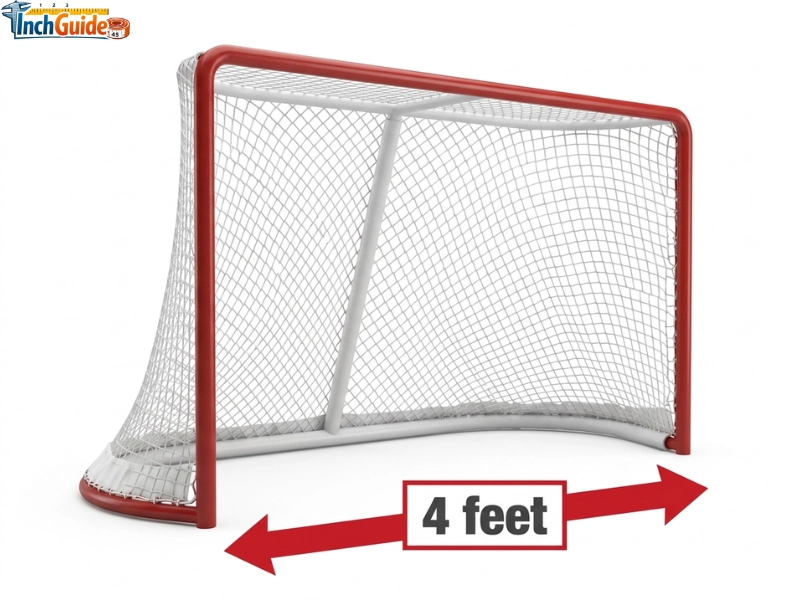
A regulation NHL hockey net — manufactured by Bauer and Sher-Wood under NHL Equipment Specifications and used at every professional and amateur hockey rink in the USA — measures exactly 48 inches (121.92 cm) in height from the ice surface to the top crossbar. This dimension is fixed in the NHL Rulebook under Rule 3 and has been standard since 1929. USA Hockey, the governing body for amateur hockey in the country, mandates the same net dimensions for all sanctioned competition from youth leagues to college play.
Wayne Gretzky scored 894 NHL goals against a net that was exactly 4 feet tall. Mario Lemieux, Gordie Howe, Jaromir Jagr — every goal in NHL history cleared a crossbar at 48 inches. The most celebrated shots in American hockey history all had to clear the same bar, at the same height, since 1929. Four feet has been the standard for nearly a century of the sport.
9. Standard 4-Foot Fluorescent Shop Light
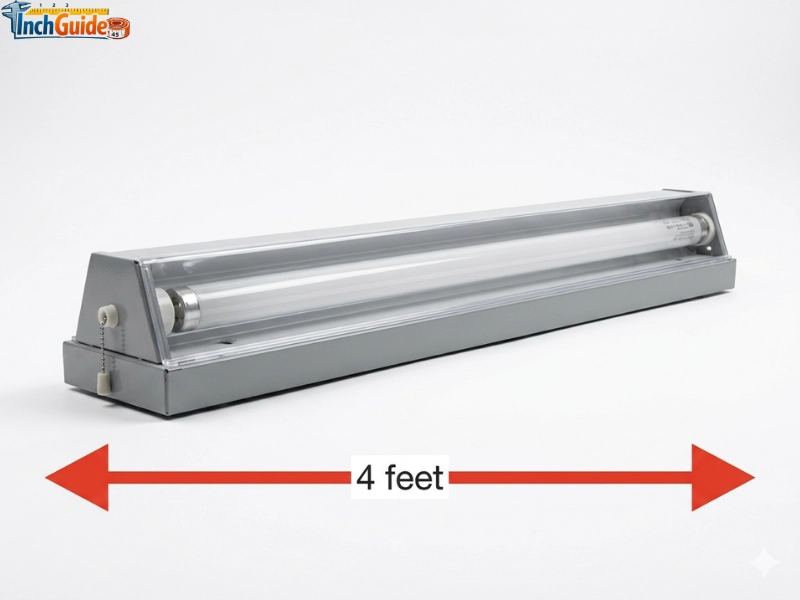
A standard 4-foot fluorescent or LED shop light — manufactured by GE, Lithonia Lighting, and Hyperikon and sold at every Home Depot, Lowe’s, and Menards in the USA — measures exactly 48 inches (121.92 cm) in total fixture length. The 4-foot length is the most sold commercial and residential shop light size in America, standardized around the T8 and T12 fluorescent tube length specified in ANSI/ANSLG C78.81, the American National Standard for fluorescent lamp dimensions. Every garage workshop, basement workbench, laundry room, and storage area in America runs on fixtures built to this exact length.
Look up at the ceiling of any American garage, basement, or workshop right now. The long, narrow light fixture running along the ceiling — the one with the pull chain or the motion sensor — is 4 feet long.
10. Standard School Hallway Locker Height
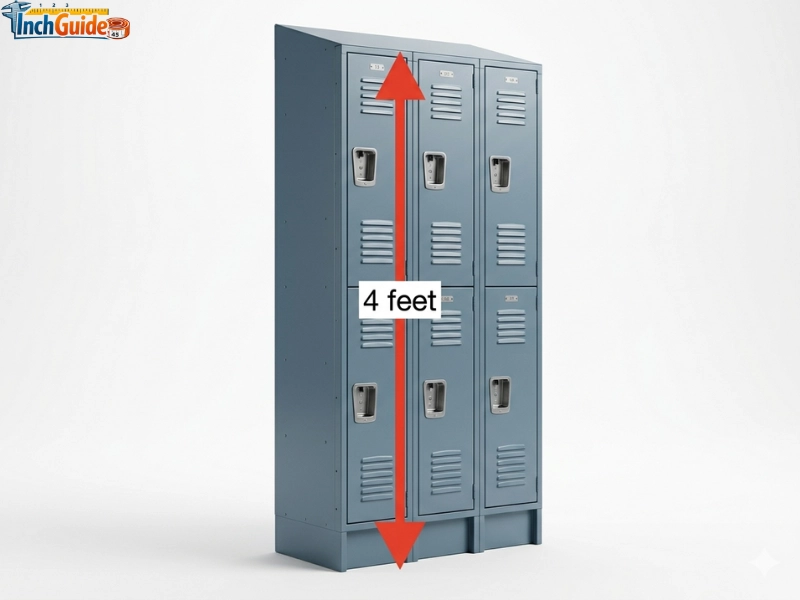
A standard full-size single-tier school hallway locker — manufactured by Penco, Hallowell, and Lyon Industries and installed in elementary and middle schools across the USA — measures exactly 48 inches (121.92 cm) in height in the most common single-tier configuration. This height is specified in the Steel Locker Institute’s design standards for school lockers and was chosen to match the average height of American students in grades 3 through 6 — roughly 8 to 11 years old — allowing them to reach the top shelf without a step stool.
11. Standard Bathtub Length — Short Model
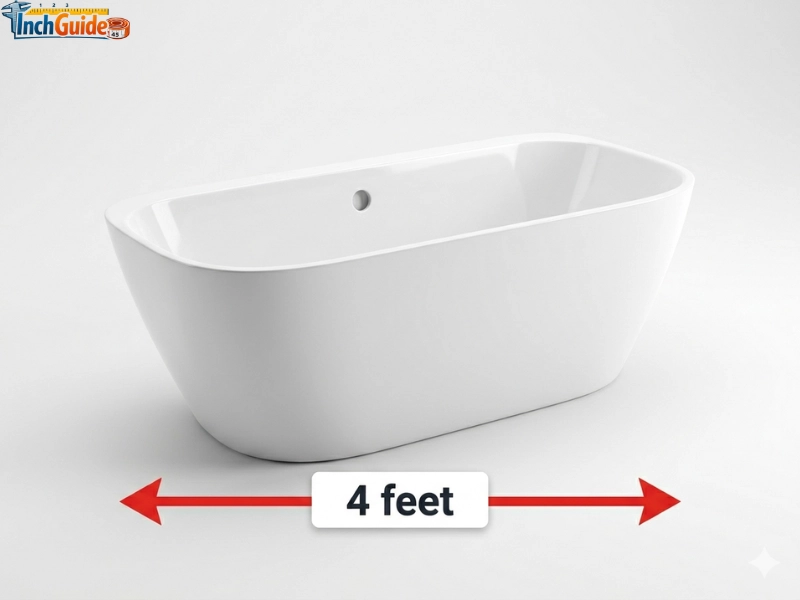
A standard short-model bathtub — manufactured by Kohler, American Standard, and MAAX and sold at every plumbing supply store, Home Depot, and Lowe’s in the USA — is produced in a short-alcove length of exactly 48 inches (121.92 cm). This is the smallest standard alcove tub length in American residential plumbing, designed for bathrooms where the standard 60-inch tub does not fit. ANSI Z124.1, the American standard for plastic bathtubs and shower units, covers units in this size range, and the 48-inch length is the documented minimum for a functional soaking depth.
Most people who have lived in an older apartment or a small house have bathed in a 48-inch tub. They have stretched out — and hit the end. They have pulled their knees up. Now they know: 4 feet is the minimum. It is exactly the right length for someone who is exactly 4 feet tall, and slightly insufficient for everyone else.
12. Standard Kindergarten Classroom Table Height
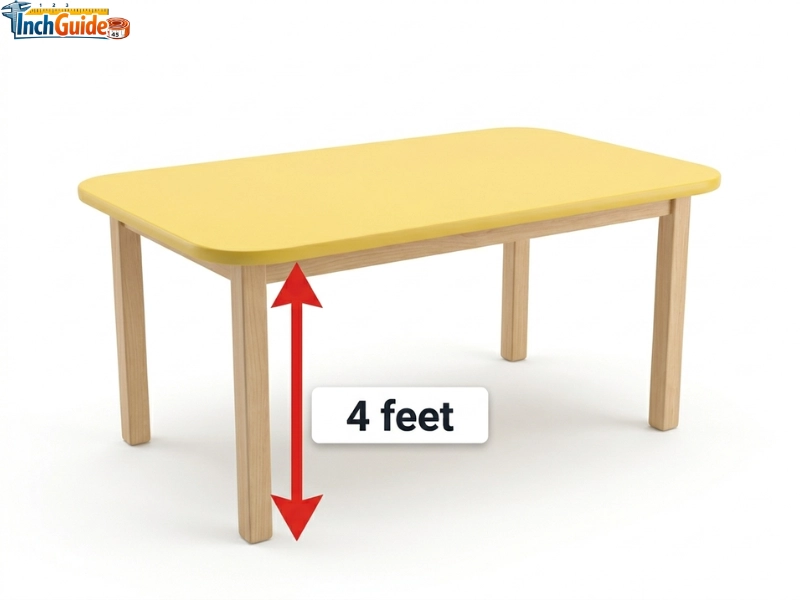
A standard kindergarten or early childhood classroom table — manufactured by Jonti-Craft, Virco, and ECR4Kids and installed in elementary schools, daycare centers, and early learning programs across the USA — stands exactly 20 to 24 inches (50.8 to 60.96 cm) in height, but measures 48 inches (121.92 cm) in length across its longest dimension in the most common rectangular 4-seat configuration. The 48-inch table length is standardized in BIFMA X5.5, the furniture standard for educational seating and tables, to seat four kindergarten-age children side by side with appropriate elbow room per child.
Here is the image this creates: four five-year-olds sitting at a table that is exactly 4 feet long — each one taking up one foot of space, shoulder to shoulder, working on their first art projects, their first writing exercises, their first days of structured learning.
13. Standard Upright Piano Depth — Front to Back
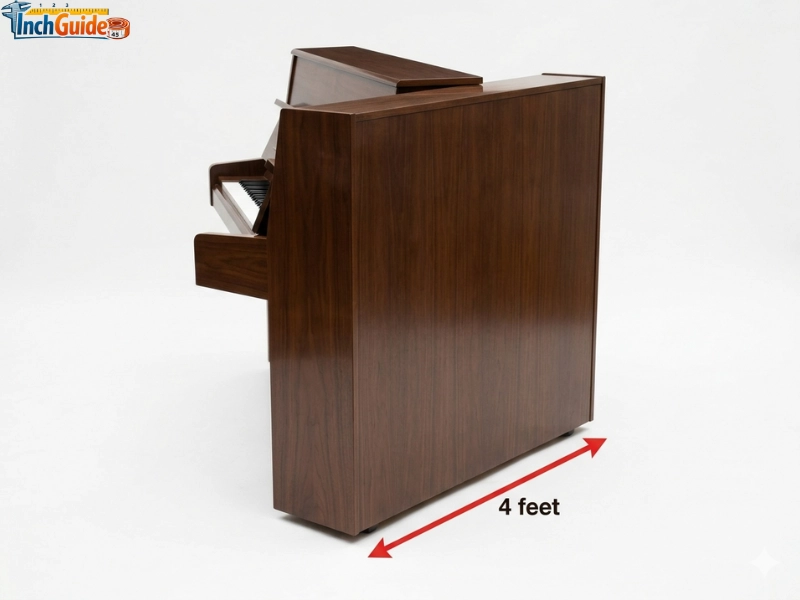
A standard upright piano — manufactured by Yamaha, Kawai, and Baldwin and sold at every music store and through Piano Mart and Guitar Center in the USA — measures approximately 24 to 26 inches (60.96 to 66.04 cm) in depth from the front of the keys to the back of the cabinet. However, the total footprint including the bench positioned for playing reaches exactly 48 inches (121.92 cm) from the wall to the front edge of the bench. Piano manufacturers and interior designers use this 48-inch total footprint as the standard clearance requirement for upright piano installation in American homes — it appears in Yamaha’s room planning guidelines and in interior design standards for music room layouts.
The piano is the only household object that requires its own clearance specification. Every family that owns one has arranged a room around it — pushed furniture back, measured doorways, argued about placement. And the number that governs all of it, from the wall to where the pianist sits, is exactly 4 feet. The music starts at 48 inches.
4 Feet vs 3 Feet vs 5 Feet
| Measurement | CM | Real-Life Object |
| 24 inches | 60.96 cm | IKEA LACK shelf, standard dishwasher width |
| 30 inches | 76.20 cm | Standard desk height, kitchen island seating |
| 36 inches | 91.44 cm | Interior door width, kitchen counter height |
| 42 inches | 106.68 cm | Standard bar counter height, baby gate max |
| 48 inches | 121.92 cm | Drywall width, ping pong table width, NHL net height |
| 54 inches | 137.16 cm | Standard twin bed width |
| 60 inches | 152.40 cm | Standard bathtub length, queen bed width |
What Does 4 Feet Look Like on a Tape Measure?
On any standard retractable tape measure, 4 feet is marked with a bold “4” at the 48-inch mark. It falls exactly one-third of the way along a 12-foot tape — the most common contractor tape length sold in the USA. On the metric side, it lands at 121.92 cm, just under the 122 cm mark.
One useful visual: four feet is the length of four standard 12-inch rulers placed end to end. Every American student who has ever used a ruler has the building block for this measurement. Four of them, in a line, is exactly 4 feet — the same distance as a drywall sheet is wide, a ping pong table is deep, and an NHL goal is tall.
How 4 Feet Compares to Metric Units
- 4 feet = 121.92 cm — just over 1.2 meters; about 22 cm more than one full meter
- 4 feet = 1,219.2 mm — the value in ASTM C1396 drywall standards, ITTF table tennis specs, and NHL equipment rules
- 4 feet = 1.2192 m — used in architectural drawings and engineering plans throughout American construction
Quick conversion trick: four feet is one meter plus about the length of a standard sheet of copy paper held lengthwise (11 inches = 27.94 cm). One meter plus one sheet of paper, held vertically, gives you 4 feet every time.
Why Knowing 4 Feet Helps You Shop Smarter Online
Furniture listings on Wayfair, IKEA, and Amazon almost always lead with width — and for loveseats, shelving units, banquet tables, and storage furniture, that width is often 48 inches. If you can picture 4 feet through the drywall in your walls, the loveseat in your living room, or the shop light in your garage, you will immediately know whether a piece fits your space. The return rate on furniture ordered online in the USA is over 20% — and most returns happen because buyers could not picture the size. Knowing 4 feet fixes that.
If you enjoyed reading this article, you might also like the ones below.
- How Big Is 5 CM? 13 Common Objects That Are About 5 CM
- How Big Is 6 CM? 13 Common Objects That Are About 6 CM
- How Big Is 7 CM? 13 Real-Life Objects That Are About 7 CM
- How Big Is 11 CM? 13 Real-Life Objects That Are About 11 CM
- How Big Is 12 CM? 13 Real Life Objects That Are About 12 CM
- How Big Is 25 CM? 13 Real-Life Objects That Match This Size
FAQs
What is 4 feet in cm?
Four feet equals exactly 121.92 centimeters. Multiply any foot value by 30.48 to get centimeters. This is a fixed legal conversion set by NIST that never changes regardless of context.
What everyday object is exactly 4 feet?
Three objects are exactly 4 feet with zero approximation: a standard drywall sheet is exactly 48 inches wide (ASTM C1396), an NHL regulation hockey net is exactly 48 inches tall (NHL Rulebook Rule 3), and a regulation ping pong table is exactly 48 inches wide (ITTF standard).
Is 4 feet the same as 48 inches?
Yes — always and exactly. One foot equals 12 inches, so four feet equals 12 × 4 = 48 inches. This relationship is fixed in the US customary system without exception.
How do you measure 4 feet without a tape measure?
Three reliable methods: the width of any standard drywall sheet (ASTM C1396 — exactly 48 inches), the width of a regulation ping pong table (ITTF — exactly 48 inches), or the height of a standard 4-tier wire shelving unit (ClosetMaid, Rubbermaid — exactly 48 inches).
How does 4 feet compare to a meter?
Four feet is 121.92 cm — about 22 cm longer than one meter. In practical terms, one meter plus the length of a standard sheet of copy paper held vertically (11 inches) equals almost exactly 4 feet. They are related but meaningfully different measurements.
Is 4 feet taller than most children?
The average American 8-year-old stands approximately 50 to 52 inches tall, per CDC growth chart data — just above 4 feet. The average 7-year-old stands approximately 46 to 48 inches. So 4 feet is the height of a typical American 7-year-old and the minimum height for most amusement park rides in the USA.
How many millimeters is 4 feet?
Exactly 1,219.2 millimeters. Multiply any foot value by 304.8 to convert to millimeters. This value appears in ASTM drywall standards, NHL equipment specifications, and ITTF table tennis regulations.
What is 4 feet in yards?
Four feet equals exactly 1.3333 yards — one yard and one foot. Since a yard is 3 feet, four feet takes you one full yard plus one additional foot. On a yardstick, 4 feet extends one full stick length (36 inches) plus 12 more inches past the end.
Why do so many American products measure 4 feet?
Four feet — 48 inches — divides cleanly into 12-inch increments, 16-inch stud spacings, and 24-inch cabinet modules. American residential construction is built on a 4-foot grid that traces back to drywall standardization in the 1940s. Once walls were 4 feet wide in panels, everything built to fit walls — shelves, fixtures, appliances, furniture — converged on the same number.
Is a standard bathtub 4 feet long?
The short-alcove bathtub model — the smallest standard size in American residential plumbing — is exactly 48 inches (4 feet) long, manufactured under ANSI Z124.1. The more common standard bathtub is 60 inches (5 feet) long. If you have lived in an older apartment or small bathroom, the shorter tub you struggled to stretch out in was likely the 48-inch model.
How tall is 4 feet compared to an adult?
For an average American adult male at 5 feet 9 inches (CDC data), 4 feet reaches approximately to mid-chest. For an average American adult female at 5 feet 4 inches, 4 feet reaches just above the waist. It is the height at which most adults can comfortably see over something — a fence, a counter, a shelving unit.
What sports use 4 feet as a standard measurement?
Three major American sports reference 4 feet as a key dimension: NHL hockey (net height — 48 inches, Rule 3), table tennis (table width — 48 inches, ITTF standard), and billiards (bar cue length — 48 inches, BCA standard). Each sport arrived at this dimension independently, for completely different functional reasons, and all three landed on 4 feet.
See Also: How Long Is 3 Feet? You’ve Touched It 100 Times Today
Conclusion
4 feet = 48 inches = 121.92 cm = 1.2192 meters.
Now you have 13 verified objects that prove it — objects already in your home, your garage, your school, your local bar. The drywall behind your walls. The shop light over your workbench. The loveseat in your living room. The locker you stood at every morning in elementary school. The hockey net that has been 48 inches since 1929.
Four feet was always there. You just never had a reason to measure it before.