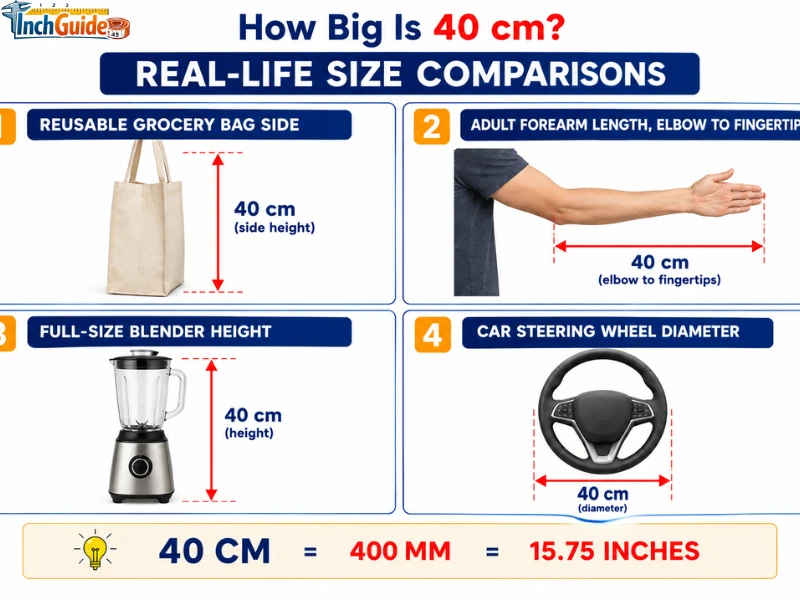

How big is 40 cm? 40 cm equals 15.75 inches, 400 millimeters, 0.40 meters, and about 1.31 feet. It is just under 16 inches and 10 cm longer than a standard 30 cm ruler.
That conversion gives you the number, but it does not always make the size easy to imagine. If you are looking at a product dimension, measuring furniture, checking storage space, or simply wondering what forty cm looks like, a familiar object can make the measurement much easier to understand.
The important thing is to remember that 40 cm does not have to describe only length. It can be a width, height, depth, or diameter. A Forty centimeters measurement on one object may therefore look quite different from Forty centimeters on another.
This guide uses practical comparisons to give you a better physical sense of the measurement without pretending that every object has an exact Forty centimeters dimension.
Related Guide: How Big Is 45 CM
The Basic Size of 40 cm
The easiest way to understand forty cm is to place it between measurements you may already know.
- 40 cm = 400 mm
- 40 cm = 0.40 meters
- 40 cm = 15.75 inches
- 40 cm = 1.31 feet
- 40 cm = 1 foot 3.75 inches
- 40 cm is 10 cm longer than 30 cm
- 40 cm is 0.64 cm shorter than 16 inches
So, if you picture a normal 30 cm ruler and mentally add another 10 cm, you have a simple visual starting point for Forty centimeters.
It is also useful to think of Forty centimeters as four equal sections of 10 cm. That makes the measurement easier to estimate when you do not have a tape measure nearby.
40 cm to Inches
40 cm is equal to approximately 15.75 inches.
The exact conversion comes from dividing centimeters by 2.54:
40 ÷ 2.54 = 15.748 inches
For everyday use, 15.75 inches is the easiest figure to remember.
Another useful comparison is 16 inches. A 16-inch length equals 40.64 cm, so 40 cm is only 0.64 cm shorter than 16 inches. That makes 16 inches a useful visual reference when you are trying to picture forty centimeters.
If a product listing says something is Forty centimeters wide, you can think of it as being just a little narrower than 16 inches.
40 cm to Feet
When converted into feet, 40 cm is approximately 1.31 feet.
In feet and inches, that is:
40 cm = 1 foot 3.75 inches
This is a useful way to understand how much space Forty centimeters occupies. It is clearly longer than one foot, but it is still well below two feet.
For quick estimation, you can remember 40 cm as about 1 foot 4 inches. The rounded figure is not the exact conversion, but it is convenient when you only need a rough idea of the size.
What Can 40 cm Represent?
One reason this measurement can be confusing is that the same number can describe different dimensions.
A product might be:
- 40 cm wide
- 40 cm long
- 40 cm tall
- 40 cm deep
- 40 cm in diameter
These are not interchangeable.
For example, a circular fan guard with a Forty centimeters diameter has a completely different shape from a rectangular tray that is Forty centimeters long. Both contain the same linear measurement, but they occupy space differently.
This distinction becomes especially important when checking whether something will fit into a shelf, cupboard, vehicle, desk area, or storage space.
Visit Also: How Big Is 24 CM
8 Familiar Objects That Can Help You Picture 40 cm
The following comparisons are meant to help you visualize the measurement. Some are close to Forty centimeters, while others can reach around Forty centimeters depending on their design or model.
1. Car Steering Wheel Diameter
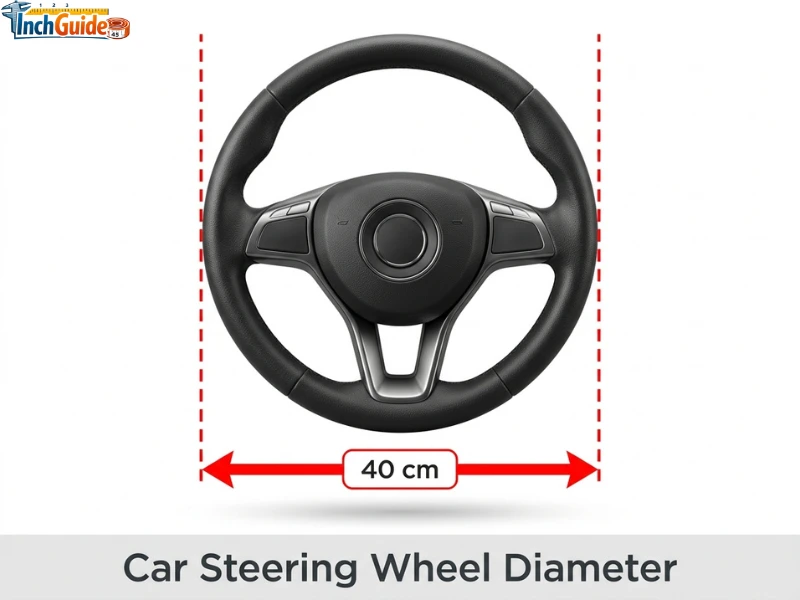
A car steering wheel can give you a useful visual reference for 40 cm because many standard steering wheels fall close to this range.
A typical steering wheel may measure around 37 to 39 cm across, depending on the vehicle. That means it is slightly smaller than Forty centimeters rather than exactly Forty centimeters. One current universal steering-wheel cover listing, for example, describes compatibility with wheels around 37–39 cm in diameter.
If you have a regular passenger car nearby, looking straight across the steering wheel gives you a practical sense of a measurement that is close to forty centimeters.
2. Large Pizza Box Side
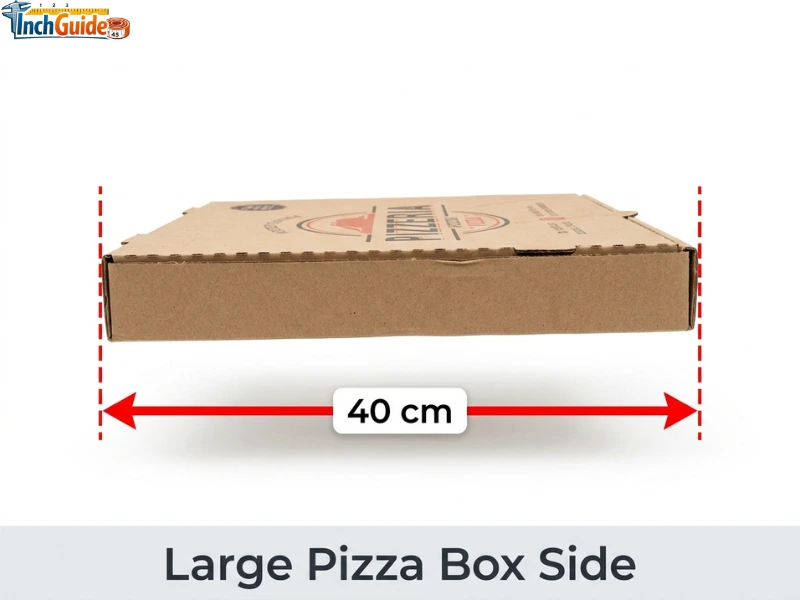
A large pizza box can also provide a useful reference because many large pizzas are sold in boxes with a side approaching 40 cm.
The exact box dimensions depend on the pizza size and packaging design. A Forty centimeters side would be about 15.75 inches, so you can picture a large square pizza box with one side almost 16 inches long.
This is particularly useful because a square object makes the measurement easy to visualize. Imagine placing a measuring tape across one side of the box rather than measuring around it.
3. Plastic Clothes Hanger Width
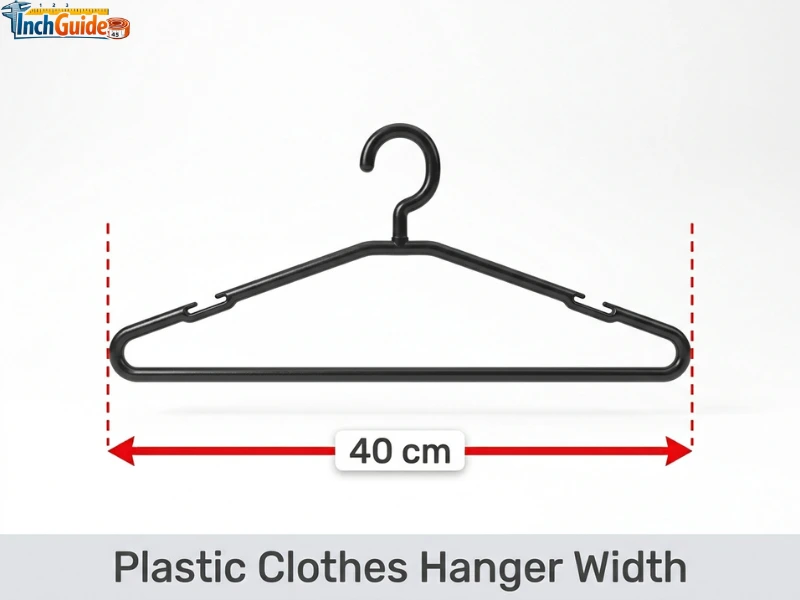
A wide plastic clothes hanger can approach the 40 cm range from one shoulder edge to the other.
Hanger sizes are not completely standardized, so some are narrower and others are wider. A larger adult hanger can therefore work as an approximate reference rather than an exact Forty centimeters object.
If you place the hanger flat on a table and measure its widest horizontal section, you can see how close its width comes to forty centimeters.
4. Full-Size Blender Height
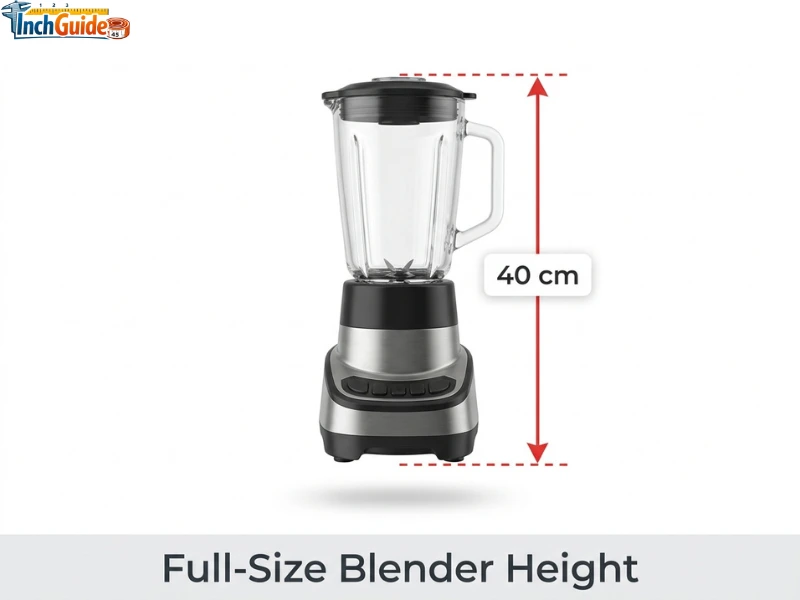
A full-size countertop blender can sometimes approach 40 cm in total height, especially when the jar, lid, and base are measured together.
However, blender dimensions vary substantially between models. Some are noticeably shorter, while larger models can reach or exceed the Forty centimeters range.
That makes a blender a useful approximate height comparison, not a universal Forty centimeters standard. If you are checking a product specification, always use the manufacturer’s listed height instead of assuming that every full-size blender is forty centimeters tall.
For More: How Big Is 28 Cm
5. Adult Forearm Length, Elbow to Fingertips
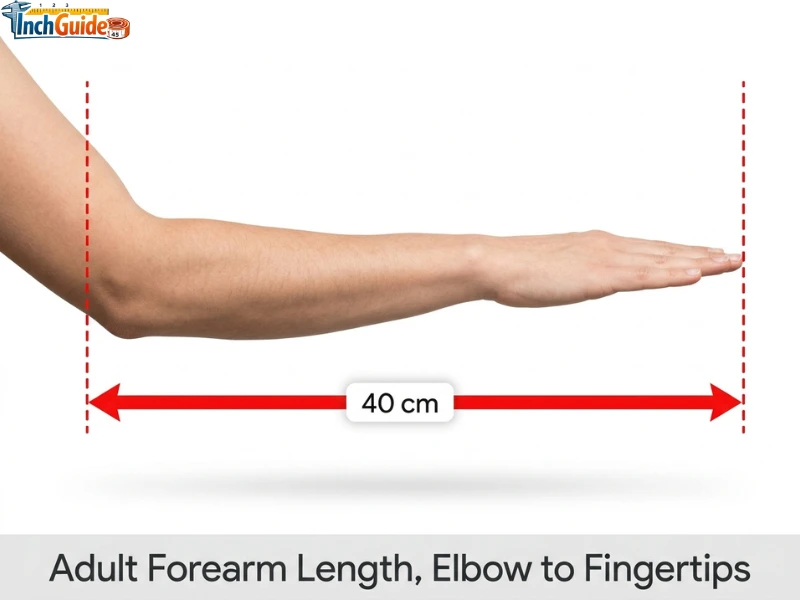
An adult forearm measured from the elbow to the fingertips can provide a human-body comparison for 40 cm.
This reference is naturally approximate because arm length differs from person to person. For some adults, the distance can be close to Forty centimeters; for others, it may be shorter or longer.
Still, if you extend your arm and look at the distance from your elbow to your fingertips, you can get a rough physical impression of how long Forty centimeters feels.
For accurate measuring, however, a person’s arm should never replace a ruler or tape measure.
6. Large Serving Tray Length
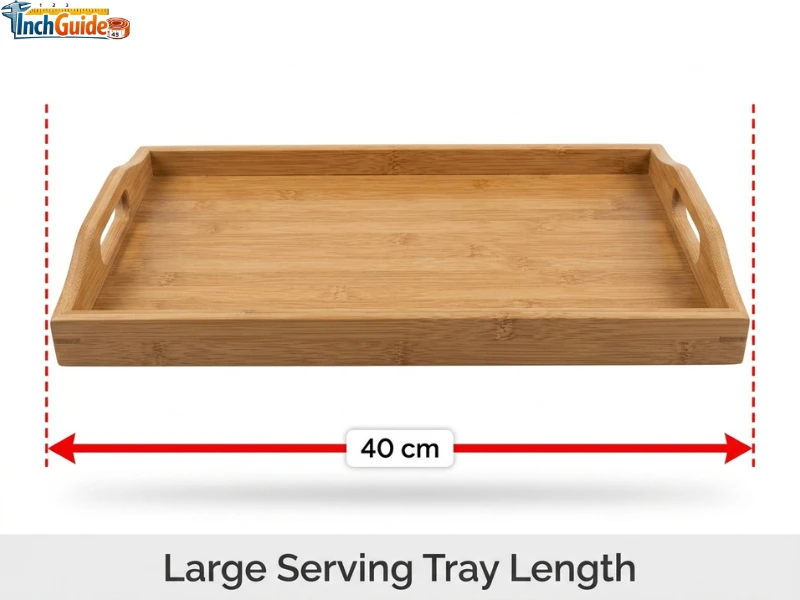
A large serving tray is another practical way to picture forty centimeters.
Many larger rectangular trays are designed with a long side somewhere around this range, although dimensions differ between products. A tray measuring 40 cm on its longest side would be 15.75 inches long.
Imagine placing the tray lengthwise across a table. Its long edge would extend noticeably beyond a 30 cm ruler, giving you a clear sense of the extra 10 cm.
7. Reusable Grocery Bag Side
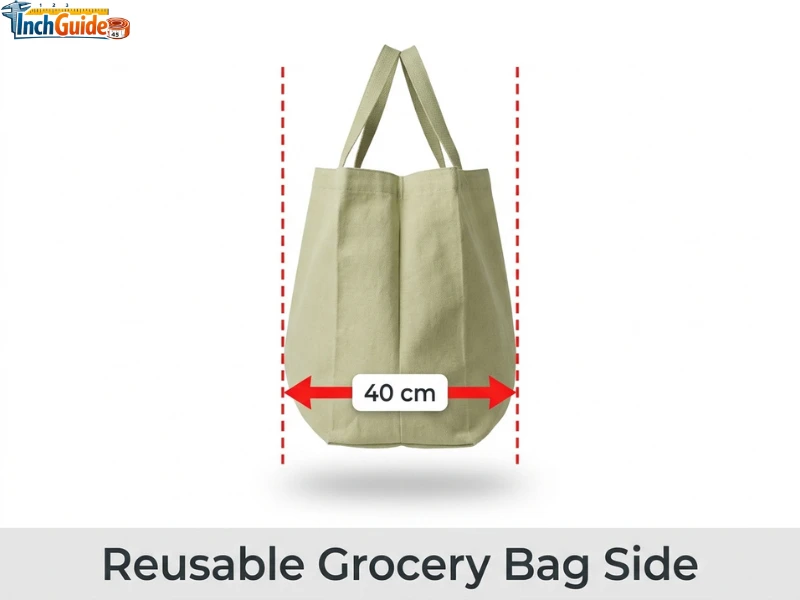
A large reusable grocery bag can have a side dimension approaching 40 cm, particularly when its height or broad side panel is measured.
Bag dimensions vary considerably. A compact reusable bag may be much smaller, while a large shopping tote can be substantially taller.
For visualization, imagine a large reusable bag with one side measuring about Forty centimeters. That gives you a practical idea of how much vertical or horizontal space forty centimeters can occupy in an everyday object.
8. 15–16 Inch Laptop Width
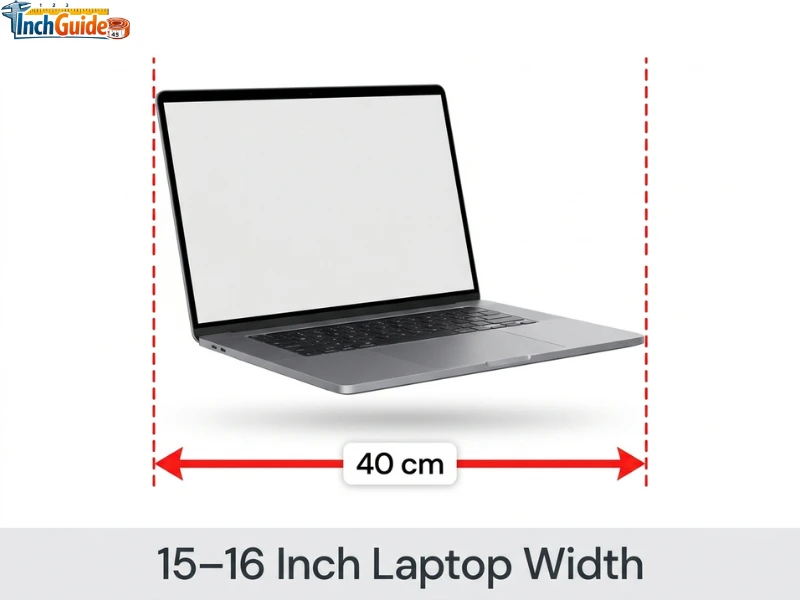
A 15- or 16-inch laptop is often brought up when people try to picture 40 cm, but there is an important detail: the screen-size number is the diagonal measurement, not the laptop’s width.
Actual laptop bodies are generally narrower than 40 cm. For example, published dimensions for 15.6-inch laptop displays are around 34.54 cm wide for the 16:9 screen itself, although the complete laptop body can differ by model.
So a 15–16-inch laptop is better treated as a nearby size reference, rather than an exact Forty centimeters object. If you want to know whether a laptop is Forty centimeters wide, check the manufacturer’s physical width specification.
40 cm Compared With Nearby Measurements
Looking at nearby centimeter values can sometimes make the size easier to understand than looking at a single conversion.
| Measurement | Inches | Difference from 40 cm |
|---|---|---|
| 30 cm | 11.81 in | 10 cm shorter |
| 35 cm | 13.78 in | 5 cm shorter |
| 40 cm | 15.75 in | — |
| 45 cm | 17.72 in | 5 cm longer |
| 50 cm | 19.69 in | 10 cm longer |
This shows why 40 cm feels noticeably larger than a standard 30 cm ruler. It adds a full 10 cm, or almost four inches.
At the same time, it remains 10 cm shorter than half a meter.
Is 40 cm Almost 16 Inches?
Yes. 40 cm is very close to 16 inches.
The difference is only about 0.64 cm.
That makes “almost 16 inches” one of the easiest mental shortcuts for remembering the size. If you are familiar with a 16-inch object, picture it just slightly shorter and you are very close to 40 cm.
For exact measurements, however, use Forty centimeters rather than treating 16 inches and Forty centimeters as identical.
How Does 40 cm Look on a Ruler?
A standard 30 cm ruler ends 10 cm before you reach 40 cm.
So, if you place a 30 cm ruler on a straight surface and continue the same line for another 10 cm, the total distance becomes 40 cm.
You can think of it as:
30 cm + 10 cm = 40 cm
This is one of the simplest ways to estimate the measurement when you have a familiar school ruler but not a longer measuring tool.
See Also: How Big Is 50 CM
Can You Estimate 40 cm Without Measuring?
You can make a rough estimate, but the method you choose matters.
Try these references:
- Think of four 10 cm sections placed end to end.
- Picture a 30 cm ruler plus another 10 cm.
- Think of a length slightly shorter than 16 inches.
- Use a large household item that you have already measured and know to be close to Forty centimeters.
- For a circular item, remember that the measurement may refer to its diameter, not its outside edge.
These methods are useful for visualization and quick decisions. They should not replace an actual measurement when a precise fit matters.
Why 40 cm May Look Different From One Object to Another
Forty centimeters is a fixed length, but objects are not one-dimensional.
A Forty centimeters line can appear on:
- a long narrow tray
- a wide circular object
- a square storage item
- the height of an appliance
- the width of a product
The shape changes how much physical space the object occupies.
For example, a 40 cm × 40 cm square has two 40 cm dimensions and covers 1,600 square centimeters. A single 40 cm measurement, by contrast, tells you only one linear dimension.
That is why product listings should always be read carefully. “Forty centimeters” by itself does not tell you whether the number refers to height, width, depth, length, or diameter.
Where You Might Encounter a 40 cm Measurement
Forty centimeters is a practical size that can appear in many product specifications and everyday measurements.
You may encounter it when looking at:
- home storage products
- furniture dimensions
- shelves and organizers
- kitchen equipment
- household appliances
- luggage and bags
- tools
- craft supplies
- home décor
- pet accessories
This is especially useful when shopping online. A product may look small in a photograph because the picture gives you no reliable sense of scale. Reading a listed dimension such as Forty centimeters gives you a much more useful idea of its physical size.
A Simple Way to Remember Forty Centimeters
If you want one easy mental image, remember this:
Forty cm is almost 16 inches and exactly 10 cm longer than a 30 cm ruler.
That gives you two independent references.
The first helps if you are familiar with inches. The second works well if you normally use metric measurements.
Once you connect forty centimeters with those two references, it becomes much easier to estimate the size of shelves, bags, trays, tools, and other objects when you see dimensions listed online.
Measuring 40 cm Correctly
When accuracy matters, use a ruler, measuring tape, or another suitable measuring tool.
For a straight length:
- Start at the zero mark.
- Keep the measuring tool straight.
- Extend it to the Forty centimeters point.
- Mark the endpoint if you need to transfer the measurement.
- Recheck the measurement if the object has an irregular shape.
For a circular object, measure straight across the center if you need the diameter.
For an object such as a box or appliance, measure the specific dimension requested: width, height, depth, or length.
40 cm in One Quick Reference
- Centimeters: Forty centimeters
- Millimeters: 400 mm
- Meters: 0.40 m
- Inches: 15.75 in
- Feet: 1.31 ft
- Feet and inches: 1 ft 3.75 in
- Compared with 30 cm: 10 cm longer
- Compared with 16 inches: 0.64 cm shorter
The core number to remember is simple: Forty centimeters is just under 16 inches.
Explore our centimeter measurement guides for more size comparisons.
FAQs
How many inches is 40 cm?
Forty centimeters equals approximately 15.75 inches. It is slightly shorter than 16 inches.
How many feet is 40 cm?
Forty centimeters equals approximately 1.31 feet, or 1 foot 3.75 inches.
Is 40 cm close to 16 inches?
Yes. Sixteen inches equals about 40.64 cm, so 40 cm is only about 0.64 cm shorter.
How long is 40 cm compared with a standard ruler?
A standard 30 cm ruler is 10 cm shorter than 40 cm. You would need another 10 cm beyond the ruler’s end to reach 40 cm.
What does 40 cm look like in real life?
Forty centimeters is a little under 16 inches. Depending on the object, it can be similar to the diameter of a large circular item, the length of a serving tray, or the width or height of a larger household product.
Is 40 cm a large measurement?
Forty centimeters is a moderate everyday measurement. It is longer than a standard 30 cm ruler but much shorter than half a meter.
What is 40 cm in millimeters and meters?
40 cm equals 400 mm and 0.40 meters.
Can you measure 40 cm without a tape measure?
You can estimate it using a 30 cm ruler plus 10 cm, four 10 cm sections, or a familiar object that you know is close to 40 cm. For precise work, use an actual measuring tool.
Final Takeaway
So, how big is 40 cm? It is 15.75 inches, 400 mm, 0.40 meters, or about 1.31 feet.
The easiest visual shortcut is to think of a 30 cm ruler with another 10 cm added to it. You can also picture a length just a little shorter than 16 inches.
Real objects can make the measurement easier to imagine, but their dimensions are not always standardized. A steering wheel, clothes hanger, blender, tray, grocery bag, or laptop may come close to 40 cm in one dimension while differing in another.
That distinction matters. Forty centimeters is exact; the object comparison is only as accurate as the object’s actual dimensions. When precision matters, check the listed measurement or measure the object directly.