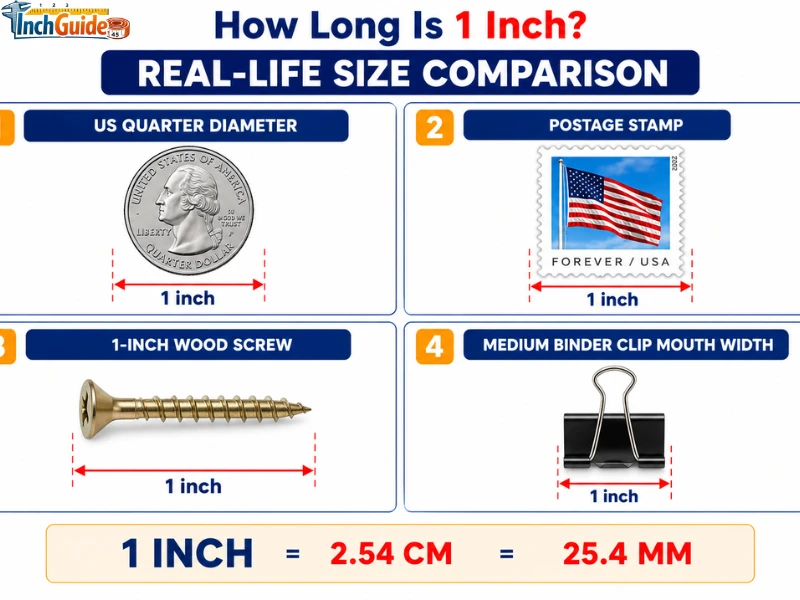

How long is 1 inch? One inch is exactly 2.54 centimeters or 25.4 millimeters. It is also one-twelfth of a foot, so it represents a fairly small distance.
Knowing the conversion is easy. The harder part is picturing that distance when you do not have a ruler nearby. A number such as 2.54 cm may be accurate, but it does not always tell you what one inch actually looks like in everyday life.
One inch is small enough to appear in tiny hardware, craft materials, office supplies, clothing accessories, and product dimensions. You may see it used for width, length, thickness, diameter, or even the size of a manufactured part.
That is why a good visual reference needs to explain what part of an object is being measured. A one-inch ring, for example, is not the same thing as a one-inch-long screw. Both represent one inch, but they measure different dimensions.
Related Guide: How Long Is 3 Inches
Start With the Exact Measurement
Before using everyday objects as references, it helps to establish the exact size.
1 inch = 2.54 cm = 25.4 mm
This is not a rounded conversion. The international inch is defined as exactly 25.4 millimeters.
Here are the most useful equivalents:
- 1 inch = 2.54 centimeters
- 1 inch = 25.4 millimeters
- 1 inch = 0.0254 meters
- 1 inch = 0.0833 feet
- 1 inch = 1/12 of a foot
- 1 inch = 1/36 of a yard
So when someone asks how long is one inch, the most precise answer is 2.54 cm.
For everyday estimating, however, you may not think in decimals. You may find it easier to picture a short line a little longer than 2.5 cm.
1 Inch to CM
1 inch to cm = 2.54 cm.
The conversion is based on the exact relationship between the two units.
To convert inches into centimeters, multiply the inch measurement by 2.54.
For example:
- 1 inch × 2.54 = 2.54 cm
- 2 inches × 2.54 = 5.08 cm
- 3 inches × 2.54 = 7.62 cm
- 4 inches × 2.54 = 10.16 cm
This also works in reverse. If you have a centimeter measurement and want inches, divide the centimeters by 2.54.
For a small measurement such as one inch, the difference between 2.50 cm and 2.54 cm may seem tiny. But if accuracy matters, especially in construction, crafts, manufacturing, or product fitting, that difference should not be ignored.
1 Inch to MM
One inch is 25.4 millimeters.
Millimeters are particularly useful when dealing with small objects because they make tiny differences easier to describe.
For example:
- 1 inch = 25.4 mm
- ½ inch = 12.7 mm
- ¼ inch = 6.35 mm
- ¾ inch = 19.05 mm
- 1½ inches = 38.1 mm
If a product specification says that a part is 25.4 mm wide, you can immediately understand that it is exactly one inch across.
This is especially useful when comparing metric and imperial product specifications.
How Big Is 1 Inch in Everyday Life?
So, how big is 1 inch when you are looking at a real object?
Think of a straight distance measuring 2.54 cm. It is not a large measurement, but it is not so tiny that it disappears from view. You can easily see the difference between one inch and two inches when the two lengths are placed side by side.
A one-inch measurement can describe the width of a small object, the diameter of a round part, the thickness of something, or the length of a short component.
There is no single object that represents one inch in every situation. The most useful reference depends on which dimension is one inch.
For example, a 1-inch button measures one inch across its face. A 1-inch screw measures one inch from the tip to the appropriate point near its head. A 1-inch binder refers to its ring size.
That difference is important when visualizing measurements.
A Better Way to Think About One Inch
Instead of asking whether an entire object is one inch, ask:
“Which part of this object measures one inch?”
That simple question makes size comparisons much more accurate.
A useful one-inch reference can be:
- a length
- a width
- a diameter
- a thickness
- a ring opening
- a product dimension
This is why some familiar objects may look larger than one inch even though one of their dimensions is exactly one inch.
Visit Also: How Long Is 14 Inches
8 Useful One-Inch References
The following examples are chosen to give you different ways to visualize the measurement. Some are manufactured to a one-inch specification, while others are close visual references.
1. US Quarter Diameter
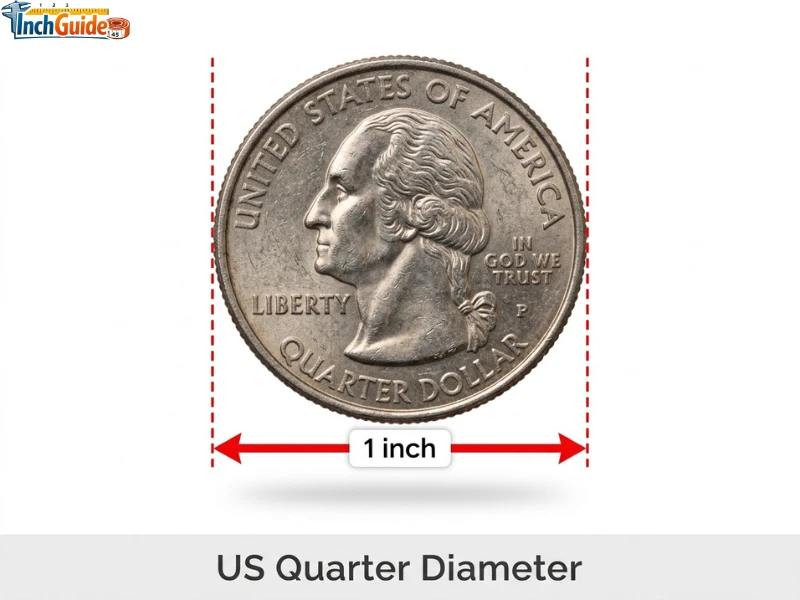
A US quarter is one of the easiest small objects to use when picturing one inch. Its diameter is just under one inch, so the coin gives you a very close visual reference for this measurement. When you look at the coin from straight above, its width across the center is almost the same as one inch.
If you do not have a ruler nearby, imagine the width of a quarter. One inch is only slightly wider than the coin. This makes a quarter a useful everyday comparison, especially when you need a quick estimate of a small length.
2. Adult Thumb (Tip to First Knuckle)
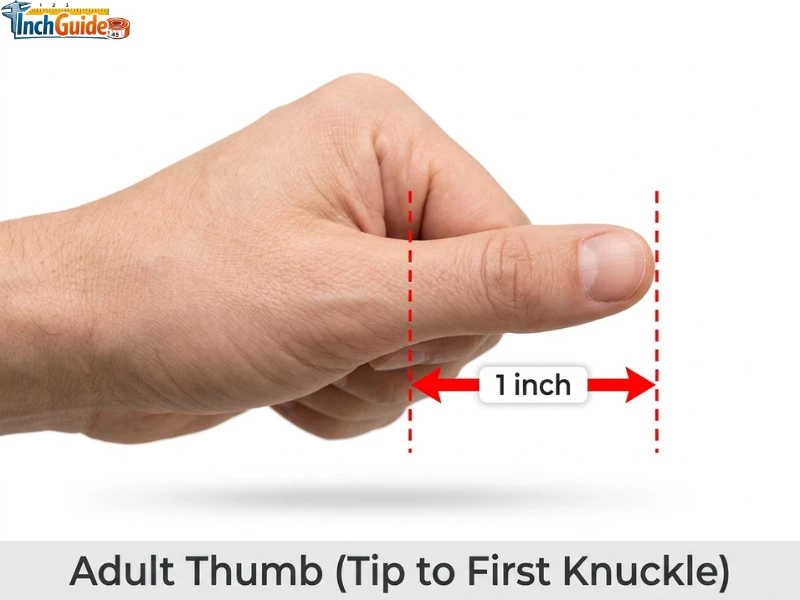
The distance from the tip of an adult thumb to the first knuckle can be close to one inch for many people. It is a convenient body-based reference because your thumb is always available when you need to make a quick estimate.
The exact length depends on your hand size, so it should be treated as an approximation rather than a precise measurement. Still, looking at the first section of your thumb can help you develop a simple sense of how long one inch is.
3. Bottle Cap Diameter
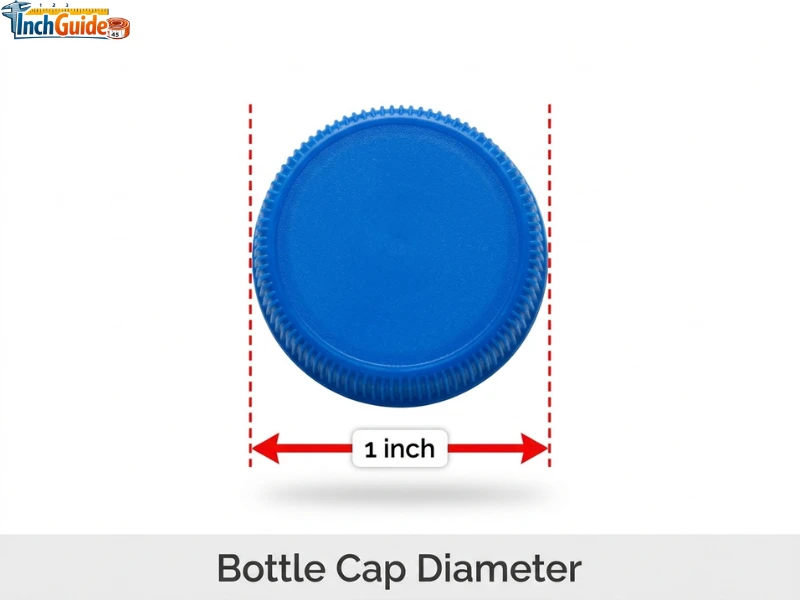
The width of a typical small bottle cap can give you another useful idea of one inch. Many familiar bottle caps are around this size, although their exact diameter changes depending on the bottle and cap design.
Place the cap flat on a surface and imagine measuring straight across its widest part. That distance can look very close to one inch. Because bottle caps come in different sizes, this comparison works best as a visual estimate rather than an exact reference.
4. Large Coat or Shirt Button
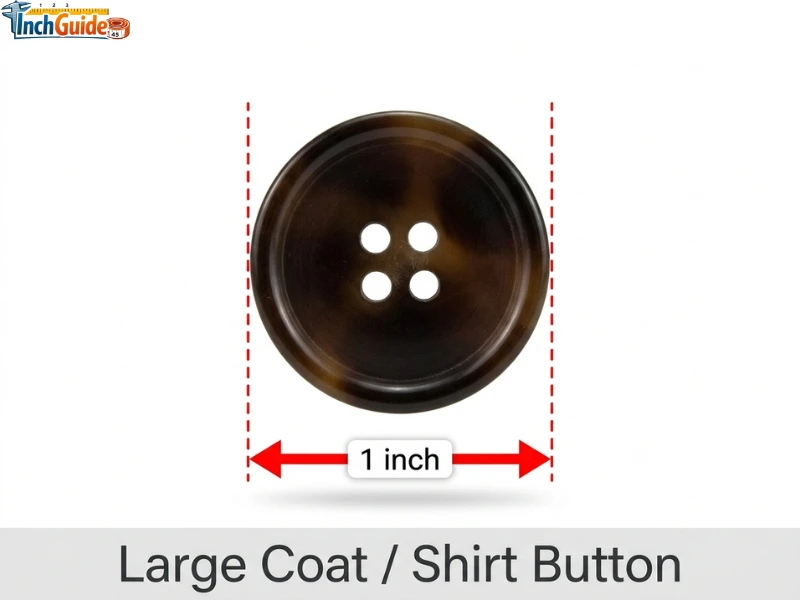
A large coat or shirt button can be roughly one inch across. Unlike tiny buttons used on shirts, larger buttons used on coats, jackets, and heavier clothing can give you a better sense of this measurement.
Look at the button from the front and focus on its full width from one edge to the other. If the button is close to one inch in diameter, it gives you a simple way to picture the size without using a measuring tool. Button sizes vary, so the comparison is approximate.
For More: How Long Is 22 Inches
5. Postage Stamp
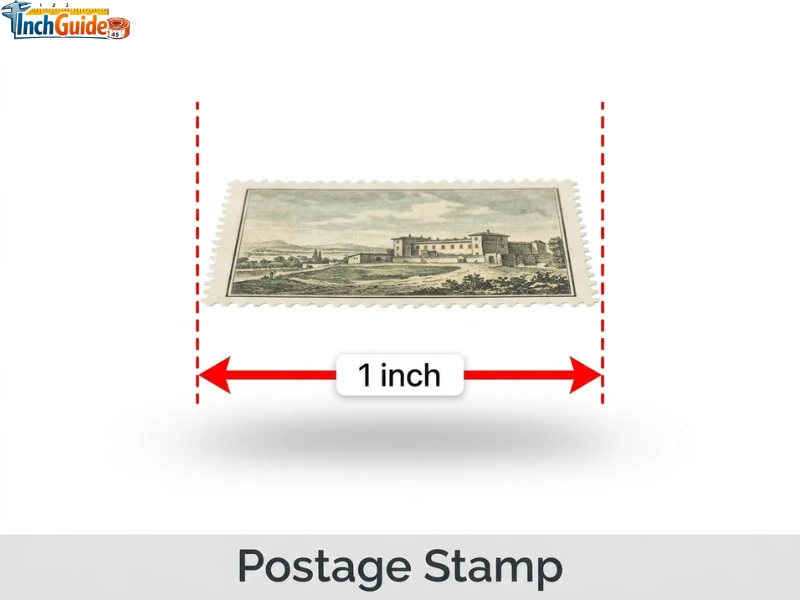
A postage stamp can help you understand one inch by looking at one of its shorter sides. Many everyday stamps have at least one dimension that is close to this measurement, although stamp sizes are not all the same.
Think of one inch as a little more than the width of a small postage stamp. The comparison becomes easier if you have a stamp in front of you and compare its edges with the one-inch marks on a ruler. Since stamps come in many shapes and formats, use this as a rough visual guide.
6. Sugar Cube Side
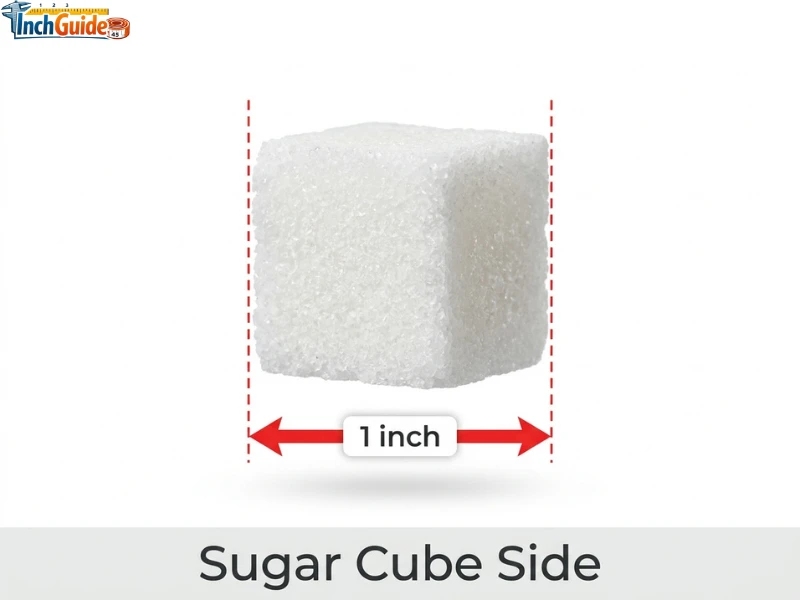
A standard sugar cube can be a handy small reference for visualizing one inch. A cube is useful because you can focus on one straight side rather than trying to judge a curved or irregular object.
The side of a sugar cube may be somewhat smaller than one inch, depending on the type and size of the cube. Even so, it gives you a compact object to compare with one inch. Imagine adding a small amount to the side of the cube, and you can get a rough sense of the distance.
7. 1-Inch Wood Screw
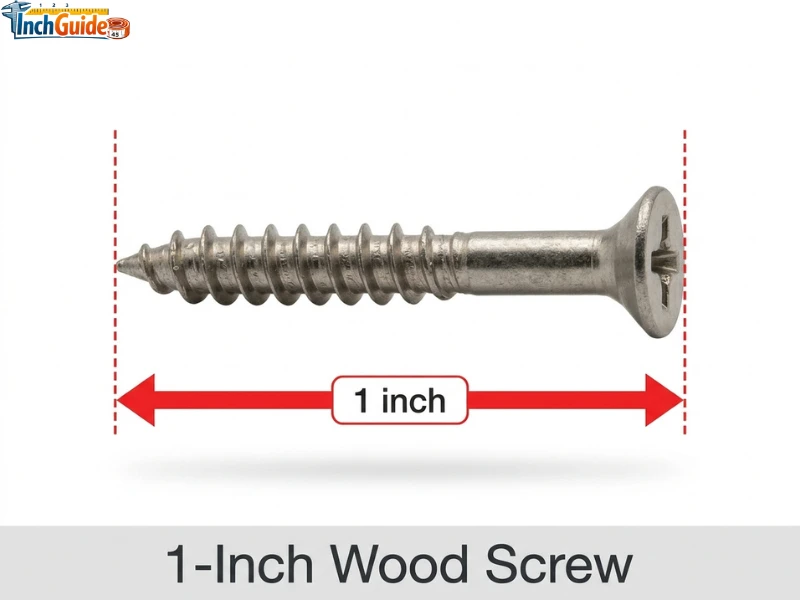
A 1-inch wood screw gives you a direct example because its stated length is one inch. This makes it different from approximate everyday objects such as buttons or bottle caps.
When thinking about the screw’s size, remember that screw length is normally measured along the fastener from the end of the screw to the appropriate starting point at its head. The head itself is not added to the stated one-inch length. Seeing a screw labeled as one inch long can therefore give you a more precise physical reference for this measurement.
8. Medium Binder Clip Mouth Width
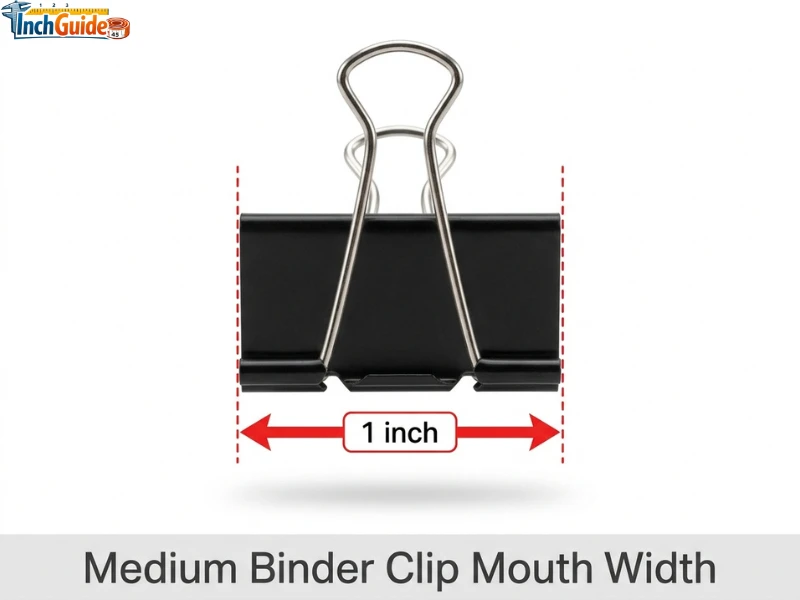
The opening or mouth of a medium binder clip can provide a rough visual comparison for one inch. Look at the width of the clip’s gripping section when it is viewed from the front. Some medium binder clips can have a width that is around this range.
This is not a fixed measurement because binder clips are made in several sizes. A smaller or larger clip may look noticeably different. For a quick estimate, though, the gripping width of a medium clip can help you imagine how much space one inch covers.
One Inch on a Ruler
A ruler is still the simplest way to see the exact length.
Start at the 0 mark and move to the first full-inch mark. The distance between those points is one inch.
On a metric ruler, that same distance reaches 2.54 cm.
On a millimeter scale, it reaches 25.4 mm.
The smaller marks between the main inch lines allow you to measure fractions of an inch. Depending on the ruler, those divisions may represent halves, quarters, eighths, sixteenths, or smaller increments.
This is why a ruler can tell you much more than whether something is one inch long. It can also show you whether an object is slightly shorter or longer than one inch.
What Does One Inch Look Like Without a Ruler?
Without a measuring tool, the best approach is to use a known reference rather than guessing from your body.
For example, if you have a manufactured item specifically labeled as one inch, place it beside the object you want to estimate.
You can also think of the measurement as a little more than 2.5 cm.
For a quick mental picture:
- ½ inch = 1.27 cm
- 1 inch = 2.54 cm
- 1½ inches = 3.81 cm
- 2 inches = 5.08 cm
Seeing these measurements as a sequence makes one inch easier to place mentally.
See Also: How Long Is 25 Inches
Can You Use Your Finger to Estimate One Inch?
You can use your finger for a rough estimate, but it should not be treated as an exact measuring instrument.
Finger and thumb dimensions vary between people. A body reference that is close to one inch for one person may be noticeably different for another.
If you need a quick guess while shopping or checking the approximate size of something, a familiar finger segment may help.
But if you are cutting material, drilling a hole, installing hardware, or checking whether something will fit, use a ruler or tape measure instead.
The goal of a body comparison is convenience, not precision.
Is 1 Inch the Same as 2.5 cm?
No.
1 inch = 2.54 cm, while 2.5 cm is slightly shorter.
The difference is:
2.54 cm − 2.50 cm = 0.04 cm
That is only 0.4 millimeters, so the two measurements look extremely close.
For casual estimating, someone may round one inch to 2.5 cm. For an exact measurement, however, one inch should be written as 2.54 cm.
This small distinction becomes more important when several measurements are added together.
One Inch Compared With Fractions of an Inch
Understanding fractions makes inch measurements easier to read.
| Inch measurement | Centimeter equivalent |
|---|---|
| ¼ inch | 0.635 cm |
| ½ inch | 1.27 cm |
| ¾ inch | 1.905 cm |
| 1 inch | 2.54 cm |
| 1¼ inches | 3.175 cm |
| 1½ inches | 3.81 cm |
| 1¾ inches | 4.445 cm |
| 2 inches | 5.08 cm |
This shows that one inch is not an isolated measurement. It sits in the middle of a useful range of small imperial measurements.
For crafts, woodworking, sewing, hardware, and DIY work, recognizing these fractions can be just as important as knowing the decimal conversion.
Why the Type of Measurement Matters
Imagine two products both described with a one-inch measurement.
One may have a 1-inch diameter.
The other may have a 1-inch thickness.
They are both one inch in the dimension being measured, but they will not look alike.
The same applies to:
- length
- width
- height
- thickness
- depth
- diameter
- opening size
This is one reason product photographs can be misleading. A picture does not automatically show the scale or the exact dimension being described.
Whenever you see “1 inch” in a specification, check the label around the number.
Where Is One Inch Commonly Used?
The inch remains useful in many areas where small physical dimensions matter.
You may encounter one-inch measurements in:
- hardware
- woodworking
- sewing
- crafting
- office supplies
- furniture fittings
- cable management
- clothing accessories
- product packaging
- manufacturing
- construction
- tools
- home improvement
The meaning can change depending on the industry.
A woodworker may care about the length of a screw. A craft maker may care about ribbon width. A furniture installer may care about a hole diameter. An office worker may care about binder ring size.
The number is the same, but the measurement context is different.
Common Mistakes When Estimating One Inch
A few simple mistakes can make an estimate inaccurate.
Assuming a nearby object is exactly one inch
A quarter, button, bottle cap, or other familiar item may be close to one inch without actually being 1 inch.
Measuring the wrong part
A product may have a 1-inch opening but a much larger outside dimension.
Confusing diameter with circumference
A circular object that measures one inch across does not have a one-inch circumference.
Treating 2.5 cm as exact
It is close enough for a rough estimate, but 1 inch is exactly 2.54 cm.
Assuming every person’s finger is the same
Body-based references are convenient, but human measurements vary.
Ignoring nominal sizes
Technical products such as O-rings may use nominal dimensions that do not equal their actual measured dimensions.
These details may seem small, but they can make a major difference when precision matters.
One Inch Versus Two Inches
Two inches is exactly twice the length of one inch.
That means:
- 1 inch = 2.54 cm
- 2 inches = 5.08 cm
The difference between them is another 2.54 cm.
If you place the two measurements side by side, the two-inch length should look twice as long as the one-inch length.
This is a useful mental check when estimating small dimensions. If something looks roughly twice as long as your one-inch reference, it may be close to two inches.
A Simple Mental Picture to Remember
If you want just one mental rule, remember:
One inch is a little more than 2.5 centimeters.
Then connect it to a straight line rather than an entire object.
Picture a line that begins at zero and ends at 2.54 cm.
That is one inch.
If you prefer imperial measurements, remember that it is 1/12 of a foot.
If you prefer metric measurements, remember 25.4 mm.
Having both references makes it easier to switch between measurement systems.
How to Measure One Inch Accurately
When accuracy matters, use a ruler or measuring tape with clearly marked units.
Follow these steps:
- Place the 0 mark at the starting edge.
- Keep the ruler straight along the measurement.
- Find the 1-inch mark.
- Read the point where the object ends.
- If the object extends past or stops before the mark, use the smaller ruler divisions to determine the fraction.
- For circular objects, decide whether you need the diameter or another dimension before measuring.
For a 1-inch hole, measure the opening itself rather than the outside edge of the surrounding component.
For a 1-inch-wide strip, measure straight across the width.
For a 1-inch-long screw, use the appropriate fastener length convention rather than simply measuring the whole package or head.
Explore our inch measurement guides for more practical size comparisons.
FAQs
How many centimeters is 1 inch?
One inch equals exactly 2.54 centimeters.
How many millimeters is 1 inch?
One inch equals exactly 25.4 millimeters.
How big is 1 inch compared with 2.5 cm?
One inch is 2.54 cm, so it is only 0.04 cm, or 0.4 mm, longer than 2.5 cm.
What does 1 inch look like without a ruler?
One inch is a short distance measuring 2.54 cm. A manufactured one-inch button, ribbon width, binder ring, or screw can help you picture it, provided you know which dimension is specified.
How long is 1 inch on a ruler?
It is the distance from the zero mark to the first full-inch mark. On a metric scale, that same distance is 2.54 cm or 25.4 mm.
What common objects are close to 1 inch?
Examples include a one-inch button, one-inch ribbon, a one-inch key ring, some cabinet knobs, and other small manufactured components. Their exact dimensions should be checked because similar-looking objects are not automatically identical.
Is 1 inch exactly 2.54 cm?
Yes. The international inch is exactly 2.54 centimeters or 25.4 millimeters.
Can I estimate one inch with my hand?
You can make a rough estimate using a finger or thumb, but hand dimensions vary. For an accurate one-inch measurement, use a ruler or measuring tape.
Final Takeaway
So, how long is 1 inch? One inch is exactly 2.54 centimeters or 25.4 millimeters. It is also one-twelfth of a foot.
The easiest way to picture the size is to imagine a straight line a little longer than 2.5 cm. From there, familiar manufactured objects can make the measurement easier to recognize.
A one-inch screw gives you a length reference. One-inch ribbon gives you a width reference. A one-inch button or key ring gives you a diameter reference. A one-inch binder shows how the same measurement can describe a ring rather than the size of an entire object.
The most important thing is to check what dimension the one-inch measurement describes.
Once you connect one inch with 2.54 cm and 25.4 mm, this small measurement becomes much easier to understand, estimate, and use in everyday situations.